

A wool suit is not a garment; it is a disciplined architectural investment defined by the synergy of European provenance and full-canvas integrity. Discerning professionals understand the quiet frustration of a wardrobe that fails to hold its shape after a single season. You've likely faced the confusion of "Super" ratings that promise luxury but deliver a silhouette that collapses after minimal wear. It's the inevitable result of a market where noise frequently obscures the reality of genuine craft.
This guide serves as a technical reference for those who view clothing as capital rather than consumption. You'll gain a deep understanding of wool varieties and the mastery of seasonal fabric selection. We'll explore why the Australian Eastern Market Indicator reaching 1934 AUD in May 2026 reflects a tightening supply of premium fibers. We also decode the new EU Digital Product Passport standards that track every fiber's origin. This exploration analyzes the technical nuances and construction standards that define a superior garment. We're moving beyond the surface to define what constitutes a permanent addition to your capital, from the tension of worsted wool to the hand-finishing required to achieve a bespoke standard of patina.
Key Takeaways
• Understand the inherent thermoregulation of wool as a foundational textile. This natural performance allows the garment to breathe and adapt across shifting climates.
• Decipher the technical nuances of the 'Super' rating system. Mastery of fiber diameter and worsted yarn construction helps you filter out the noise of surface-level marketing.
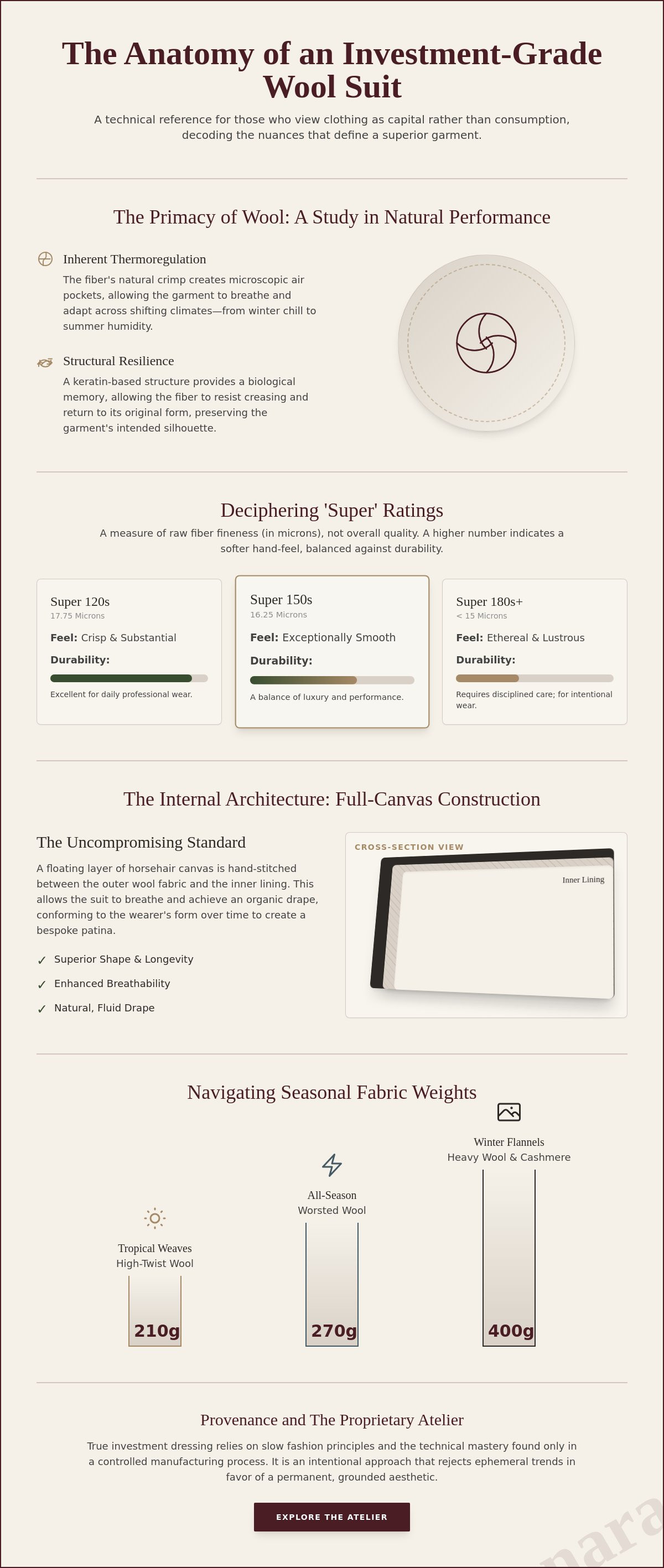
• Identify the structural integrity of full-canvas construction. This floating horsehair layer is essential for a wool suit to achieve an organic drape that improves with wear.
• Navigate the selection of seasonal fabric weights with precision. Distinguish between 210g tropical weaves and 400g winter flannels to maintain a disciplined, year-round wardrobe.
• Recognize the value of provenance and the proprietary European atelier. True investment dressing relies on the slow fashion principles and technical mastery found in a controlled manufacturing process.
The Primacy of Wool: A Study in Natural Performance and Form
The wool suit represents the definitive foundation of the modern professional uniform. It's a garment that commands respect through its inherent properties rather than external ornamentation. This enduring relevance isn't accidental; it's rooted in the biological sophistication of the fiber itself. Wool's keratin-based structure provides a secret resilience that synthetic alternatives simply cannot replicate. This protein-rich composition ensures the fiber remains supple while maintaining a structural integrity that defines the silhouette with a palpable sense of authority.
Beyond its visual appeal, the material functions as a sophisticated climate control system. The natural crimp of the fiber creates microscopic air pockets that offer exceptional thermoregulation. It keeps the wearer warm in the biting chill of a northern winter and cool during a humid afternoon. This breathability is paired with an extraordinary natural elasticity. The fiber possesses a biological memory that allows it to stretch and return to its original form, effectively resisting the permanent creasing that plagues lesser textiles. It's a material that understands the rigors of a professional life.
The Evolution of the Sartorial Silhouette
European tailoring traditions were once defined by heavy, restrictive cloths that prioritized warmth over movement. As the requirements of the professional class shifted toward global travel and climate-controlled environments, the industry transitioned toward refined wool suit fabric with higher twist counts. These modern worsteds offer a lighter weight without sacrificing the crisp lines required for a sharp drape. It's a move toward agility. The contemporary atelier now favors high-twist yarns that provide the sharpness of a traditional uniform with the ease of a second skin.
Materiality Over Marketing: The Quiet Luxury Perspective
Authentic luxury requires no logo to signal its provenance. It's felt in the hand and seen in the way light interacts with the weave. This is the essence of the "Buy less, buy better" philosophy. At Fora Leonara, we view clothing as a long-term allocation of capital rather than a fleeting expense. Our Wall Street Reserve collection embodies this discipline, utilizing dark navy wool flannel and worsted textures that prioritize substance over spectacle. The tactile experience of a hand-finished garment is the ultimate marker of quality. It's an intentional approach to dressing that rejects the noise of the modern world in favor of a permanent, grounded aesthetic.
From Fiber to Fabric: Deciphering Super Ratings and Worsted Weaves
Precision in the atelier begins long before the shears touch the cloth. It starts with the selection of the yarn. For the architectural requirements of a wool suit, worsted wool is the non-negotiable standard. Unlike woolen yarns, which are carded to retain a soft, fuzzy texture, worsted fibers are meticulously combed. This process removes shorter staples and aligns the remaining long fibers in parallel. The result is a yarn with superior strength and a smooth, lustrous finish. This smoothness facilitates the sharp drape required for a professional garment that must maintain its form from the first meeting to the final engagement.
The technical nomenclature of the industry often centers on the "Super" system. This numerical scale is frequently misunderstood by those who prioritize marketing over materiality. It's essential to understand that Super ratings measure the fineness of the raw wool, not the weave quality. A Super 150s designation indicates that the raw wool fibers are exceptionally fine, typically around 16.25 microns. While these finer fibers produce a cloth with an ethereal hand-feel, they require a more disciplined maintenance routine. They're more susceptible to friction and heat. This makes them better suited for intentional, occasional wear rather than the daily rigors of a high-pressure environment.
The Science of the Micron Count
Micron measurements determine the hand-feel and luster of the cloth. Finer fibers reflect light with greater depth, creating the subtle sheen associated with high-end tailoring. However, there's a trade-off between extreme fineness and everyday durability. For a daily investment suit, the "sweet spot" typically lies between Super 110s and 130s. These grades offer a sophisticated handle while retaining the resilience needed for frequent use. This biological precision contributes to the natural performance of wool, ensuring the garment remains a breathable asset throughout the day.
Weave Patterns and Textural Depth
The visual language of a garment is defined by its weave. Twill creates the classic diagonal ribbing found in gabardine, while sharkskin employs a two-tone weave for a sophisticated, textured appearance. Pinstripes offer a traditional authority. Beyond aesthetics, weave density affects the breathability and weight of the garment. High-twist yarns are particularly effective for travel. These yarns are twisted more tightly than standard varieties, creating a natural spring that resists wrinkling. Our Wall Street Reserve collection utilizes these technical weaves to ensure a permanent, crisp silhouette. Explore the full collection of tailored essentials to find the weave that best serves your professional requirements.
The Internal Landscape: Full-Canvas Construction and the Wool Drape
The external beauty of a wool suit is a direct consequence of its internal discipline. While mass-market offerings rely on chemical adhesives to provide structure, the European atelier adheres to a more rigorous standard. Full-canvas construction remains the gold standard of this craft. This method involves an interlining of horsehair and wool that extends from the shoulder to the hem. It's a structural foundation that remains independent of the face fabric. It's a commitment to longevity. This internal architecture allows the garment to move in harmony with the wearer rather than resisting the body's natural form.
Fused or glued interlinings represent a critical failure in construction. Over time, the heat and moisture of dry cleaning cause the adhesive to degrade. This leads to the unsightly bubbling often seen on the lapels of inferior garments. A fused jacket is static. It lacks the ability to respond to the wearer's movements or the environment. It feels stiff. It's a shortcut that prioritizes profit over the integrity of the drape. By contrast, an authentic garment relies on the tension of thread and the quality of the canvas to maintain its silhouette.
The Mechanics of the Floating Canvas
A floating canvas is meticulously hand-stitched to the wool face-fabric. This allows the material to breathe and move. Because the canvas is not glued, the wool retains its natural flexibility. It's a living architecture. As the garment is worn, the horsehair canvas begins to mold to the unique contours of the body. This creates a personalized fit that achieves a bespoke level of refinement no machine can replicate. The result is a garment that develops a character, or patina, over years of intentional use. For a deeper look into these methods, consider our guide on How a Suit Is Made: Understanding Quality and Construction.
Finishing Details: Horn Buttons and Hand-Stitching
Precision extends to the smallest components, where meticulous hand-finishing ensures longevity. Genuine horn buttons are a functional necessity. They possess a density and natural variation that plastic substitutes lack. They don't crack under pressure. Pick-stitching along the lapels and pockets is another hallmark of artisanal attention. While often viewed as a decorative flourish, it serves to keep the internal layers in place. It ensures the edges remain crisp. Inside the garment, silk linings provide essential moisture management. They offer a smooth interface between the suit and the shirt, ensuring the drape remains uninterrupted. Every detail, from the selvedge of the cloth to the final stitch, is a calculated choice in the pursuit of quiet excellence.
Seasonal Weight and Texture: Navigating the Wardrobe of the Professional
The mastery of seasonal dressing begins with a technical understanding of fabric weight. While the aesthetic of a wool suit is paramount, its functionality is dictated by the density of the weave. Grams per square meter, or GSM, serves as the definitive metric for seasonal suit selection. A discerning professional recognizes that a garment's performance in varied climates is not a matter of chance but of calculated materiality. Choosing the correct weight ensures that the drape remains crisp and the wearer remains composed, regardless of the external temperature.
Mid-weight wools, typically ranging from 270g to 300g, represent the pinnacle of investment dressing. These fabrics offer the versatility required for year-round wear in temperate urban environments. They possess enough substance to hold a sharp line while remaining breathable enough for indoor settings. Texture also plays a critical role in the visual narrative. Matte finishes suggest a disciplined, understated confidence. High-sheen worsteds, often associated with higher Super ratings, provide a more formal luster. The choice between them should reflect the specific atmosphere of your professional environment.
Spring and Summer: The Fresco and Tropical Weave
High-temperature humidity requires a specialized approach to construction. Tropical wools, often weighing as little as 210g, utilize a high-twist yarn to create a lightweight yet resilient cloth. Fresco wool is particularly prized for its open-weave structure. This allows for maximum airflow, effectively acting as a natural ventilation system. For these warmer months, an unlined or half-lined jacket is superior. It reduces bulk and allows the natural performance of the wool to take center stage. Visually, lighter greys and sand-toned wools reflect heat and provide a sense of seasonal ease.
Autumn and Winter: Flannel and the Wall Street Reserve
As the temperature drops, the requirement shifts toward insulation and textural depth. Milled flannel and brushed wools, often exceeding 400g, provide a soft hand-feel and exceptional warmth. These heavier cloths allow for a more substantial drape that feels permanent and grounded. Our Wall Street Reserve collection features deep navy wool flannels and charcoal essentials that embody this visual authority. The tactile nature of flannel adds a layer of sophistication that is unmatched in formal settings. It's a material that suggests heritage and a mastery of craft. To secure your seasonal foundation, view our selection of tailored menswear.
The acquisition of a wool suit should be viewed through the lens of asset management rather than seasonal impulse. True luxury resides in the quiet confidence of knowing exactly where and how a garment was constructed. At Fora Leonara, this transparency is not a marketing strategy but a foundational principle. Founded by Rafael Zard, the house maintains a proprietary European factory to ensure that every stitch adheres to his uncompromising vision. This ownership allows for a level of precision that third-party wholesale simply cannot achieve. It's a return to the values of the traditional atelier, where the pace is dictated by craft rather than the frantic cycles of the retail calendar. Our commitment to slow fashion is a reaction against the noise of the modern industry. We prioritize the sourcing of extraordinary materials, such as the worsted wools that now face tightening global supplies. With the Australian Eastern Market Indicator reaching 1934 AUD in May 2026, the value of high-quality fiber has never been more apparent. We embrace the new EU Digital Product Passport standards, providing a clear narrative of provenance for every garment. This level of detail is essential for the discerning professional who views their wardrobe as a collection of capital. You can learn more about our heritage and philosophy in Our Story.The European Manufacturing Standard
Maintaining a proprietary EU factory offers distinct advantages in both ethics and quality. Small-batch, artisanal runs allow our tailors to focus on the nuances of hand-finishing and the tension of the thread. It ensures that the internal architecture, from the full-canvas construction to the genuine horn buttons, meets a singular standard of excellence. This transparency of provenance is a core luxury value. It provides the assurance that your garment was produced under rigorous standards of craftsmanship and environmental responsibility. It's a disciplined approach that ensures the integrity of the drape is preserved for years to come.
Building a Permanent Wardrobe
The wool suit remains the undisputed cornerstone of a high-end capsule collection. It's the primary garment around which a disciplined wardrobe is built. By focusing on foundational principles, the wearer transitions from the exhaustion of trend-chasing to the mastery of a personal uniform. This is the essence of investment dressing. It's an intentional approach that prioritizes longevity and the intrinsic value of the garment. When a suit is constructed with this level of discipline, it becomes a permanent asset that transcends the fleeting nature of the fashion industry. To begin your journey toward a more disciplined wardrobe, Explore the Menswear Collection.
The Finality of Craft and Materiality
The acquisition of a wool suit is an exercise in discernment. We've moved beyond the surface to understand how micron counts and internal architecture dictate the life of a garment. Mastery of these technical nuances allows you to transition from the exhaustion of trend-chasing to the quiet confidence of a permanent uniform. It's an intentional approach that treats clothing as a strategic allocation of capital.
At Fora Leonara, we uphold these standards through our proprietary European atelier. By employing full-canvas construction and extraordinary Super 150s worsted wool, we ensure each piece possesses a drape and resilience that mass production can't replicate. These aren't mere features; they're the non-negotiable principles of investment dressing. Your commitment to substance over spectacle defines a wardrobe built for longevity.
Discover the Wall Street Reserve: A Study in Super 150s Wool
Embrace the discipline of quiet excellence.
Frequently Asked Questions
What is the difference between worsted wool and standard wool?
Worsted wool is defined by a rigorous combing process that removes short staples and aligns long fibers in parallel. This results in a smooth, high-tenacity yarn that produces a crisp, architectural drape. Standard wool, often referred to as woolen, is merely carded, resulting in a bulkier, fuzzier texture. Worsted is the non-negotiable standard for professional tailoring due to its resilience and sharp finish.
Are Super 150s wool suits better than Super 100s for daily wear?
Super 100s are generally superior for daily wear due to their structural resilience. While Super 150s offer an ethereal hand-feel and exceptional luster, the extreme fineness of the fibers makes them delicate. They're more susceptible to friction and heat. For a daily investment suit, a Super 120s or 130s provides the ideal balance of luxury and durability.
How can I tell if a wool suit is full-canvas or fused?
You can identify full-canvas construction by performing a pinch test on the chest and lapel. Gently pull the face fabric away from the lining; if you feel a third, independent layer of horsehair floating between them, it's canvassed. Fused jackets feel stiff and singular. This internal layer is what allows the wool suit to mold to your body over time, developing a unique patina.
Can a 100% wool suit be worn comfortably in the summer?
A 100% wool suit is exceptionally comfortable in summer if it utilizes a high-twist, open-weave construction like Fresco or tropical worsted. These fabrics allow for maximum airflow and natural thermoregulation. Selecting a garment that is unlined or half-lined further enhances breathability. Wool's ability to wick moisture ensures you remain composed even in high-temperature humidity.
What are the benefits of horn buttons on a luxury suit?
Genuine horn buttons offer functional superiority through their natural density and resistance to heat. Unlike plastic substitutes, they don't crack or melt during the pressing process. They possess a subtle, organic variation in color that complements the depth of high-quality worsted wool. This detail is a hallmark of the artisanal attention found in a dedicated atelier.
How should I store a high-quality wool suit to ensure its longevity?
Longevity is ensured by storing your garment on a wide, contoured cedar hanger to preserve the shoulder's natural drape. Always allow the suit to rest for at least forty-eight hours between wears. This allows the keratin-based fibers to shed moisture and return to their original form. Avoid plastic garment bags, which trap moisture and can degrade the natural oils of the wool.
Why is European atelier construction considered superior to mass-market manufacturing?
European atelier construction is defined by a commitment to slow fashion and proprietary quality control. Unlike mass-market manufacturing, which prioritizes speed and volume, an atelier focuses on small-batch runs and meticulous hand-finishing. This ensures that every component, from the selvedge to the pick-stitching, meets a singular standard of excellence. It's a matter of provenance and technical mastery.
Does a higher price always indicate better wool quality?
A higher price doesn't always guarantee superior wool quality, but it often reflects the integrity of the construction. Marketing noise can inflate the cost of fused, mass-produced garments. True value is found in the synergy of material sourcing and internal architecture. Look for the technical specifications of the weave and the presence of full-canvas construction rather than relying solely on the price tag.
