

Most dress linings fall into five families: silk (habotai or charmeuse), cupro (often sold as Bemberg), rayon or viscose, polyester or acetate, and natural cotton batiste, with knit tricot reserved for stretch garments. The basic rule is simple: match the lining’s weight and slip to your shell fabric, and lean toward breathable, moisture-absorbing fibers like cupro or cotton for anything worn close to skin. Slippery synthetics work fine when the priority is easy on and off rather than comfort.
TL;DR:
- Full or partial lining should be chosen based on the garment’s silhouette, opacity needs, and whether the fabric is sheer or opaque.
- Cupro (Bemberg) and silk linings offer superior breathability, moisture absorption, and anti-static properties, making them ideal for high-end or frequently worn dresses.
- Rayon, polyester, and acetate linings are durable and cost-effective, but tend to trap heat, generate static, and require careful handling, especially in warm climates.
- Proper lining construction, such as seam finishing and pattern matching, significantly influences a garment’s durability and overall quality.
- For stretch or bias-cut dresses, tricot knit linings are essential because they stretch with the shell fabric, preventing distortion.
Table of Contents
- What Dress Lining Actually Does
- Silk, Cupro, Rayon, Polyester, or Cotton: How Each Lining Fabric Behaves
- Full Lining, Partial Lining, Underlining, Flat Lining, and Interlining Compared
- How to Choose the Right Lining for Your Dress
- Care, Cost, and the Mistakes Worth Avoiding
- How Fora Leonara Thinks About Lining
- Where to Find Lining Done Right
- Sources
- FAQ
What Dress Lining Actually Does
A lining is not decoration you can skip without consequence. It does four specific jobs: it hides the body underneath a light or sheer shell, smooths over interior seams so they do not scratch or catch, gives structure to fabrics that would otherwise cling or sag, and shields the shell fabric from skin oils and sweat that wear it out faster.
That last point matters more than most people think. A silk charmeuse dress worn against bare skin for a full evening absorbs oil and perspiration directly into the fibers. A lining takes that hit instead, which is why well-made dresses often outlast cheaper ones even when the outer fabric looks identical.
You do not always need one; indeed, many summer sundresses and loose linen shift dresses skip lining entirely to allow better airflow, as seen in typical linen blend dresses for warm weather. Loose, casual cotton dresses, most linen shift dresses, and many summer sundresses skip lining entirely because the fabric is opaque enough on its own and the whole point of the garment is airflow. Adding a lining there just traps heat for no real benefit.
Lining quality is also one of the fastest tells for garment construction overall. A dress with a cheap, poorly cut lining usually has cheap construction elsewhere too, while sewists cut lining pieces from the same pattern as the shell and hem the lining about an inch shorter so it never peeks out below the hem.
Quick rundown of what lining buys you:
- Opacity, so the shell fabric does not become see-through under light
- A smoother interior finish with no exposed seams
- Structure and shape retention, especially in bias-cut or draped designs
- Protection for delicate or expensive shell fabrics from body oils and abrasion
Pro Tip: If you are unsure whether a dress needs lining, hold the fabric up to a window. If you can see your hand’s outline clearly through it, it needs either lining or a slip underneath.
Silk, Cupro, Rayon, Polyester, or Cotton: How Each Lining Fabric Behaves
Every lining fabric trades off luxury, breathability, cost, and how it handles static. Here is how the main options actually perform once you are wearing them.
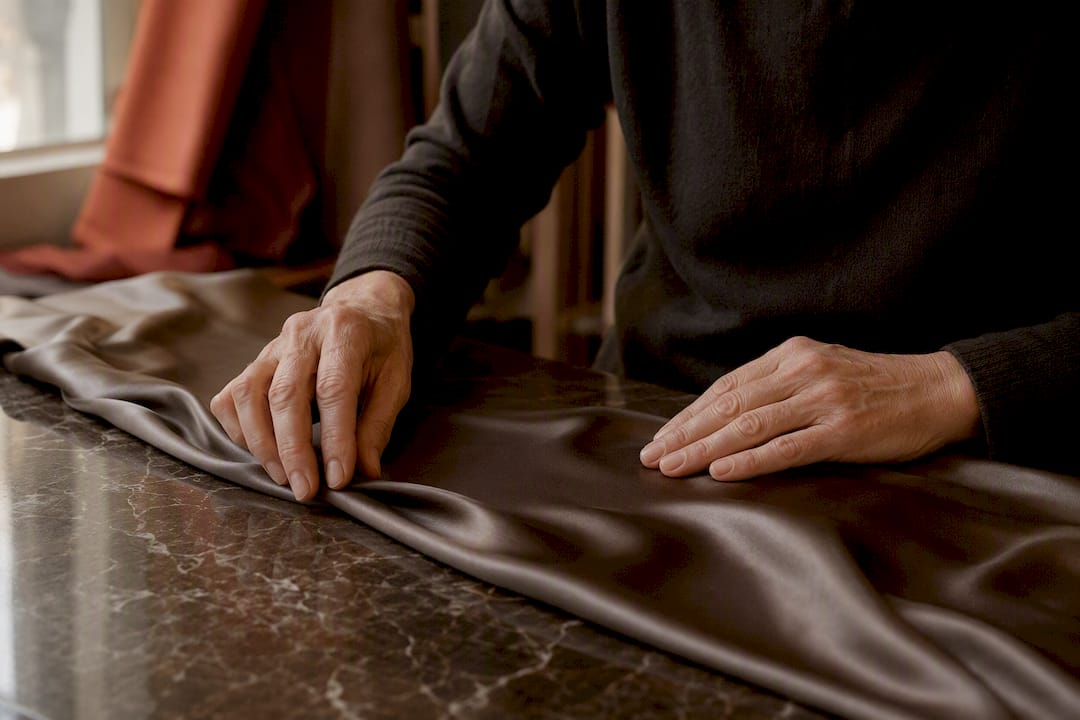
Silk habotai and charmeuse sit at the top for hand and drape. Habotai is lightweight and crisp enough to slide easily over other fabrics, while charmeuse has more sheen and a heavier, silkier fall. Both breathe well and feel cool against skin, which is why couture houses default to silk lining in formal wear. The catch: silk against a silk or satin shell can create a static cling problem in dry weather, and silk demands careful, often professional cleaning.
Cupro, commonly sold under the brand name Bemberg, is regenerated cellulose made from cotton linter waste, and it is the closest thing to silk’s luster and drape without silk’s price or fragility. It has high moisture absorbency and genuinely anti-static properties, meaning it manages sweat and humidity the way skin actually wants a lining to behave. Asahi Kasei, the fiber’s manufacturer, markets Bemberg specifically for suit and dress linings where comfort and drape matter, and it is the fabric most high-end ready-to-wear brands specify when they want a silk-like lining that survives a washing machine better than actual silk. Its main limitation is availability. Production is smaller scale than synthetics, so it costs more and is harder to source in bulk.
Rayon and viscose are the practical middle ground. They drape almost as well as silk, cost a fraction of the price, and come in nearly unlimited colors, but they shrink unpredictably if you machine wash them and lose strength when wet, so they need gentler handling than the price tag suggests.
Polyester and acetate linings are the industry default for mass-market dresses because they are cheap, durable, and slide on without effort. The trade-off is real: they trap heat, breathe poorly, and build up static that makes a dress cling to tights in cold, dry rooms. For occasional-wear formal dresses this rarely matters. For anything worn for hours in warm rooms, it does.
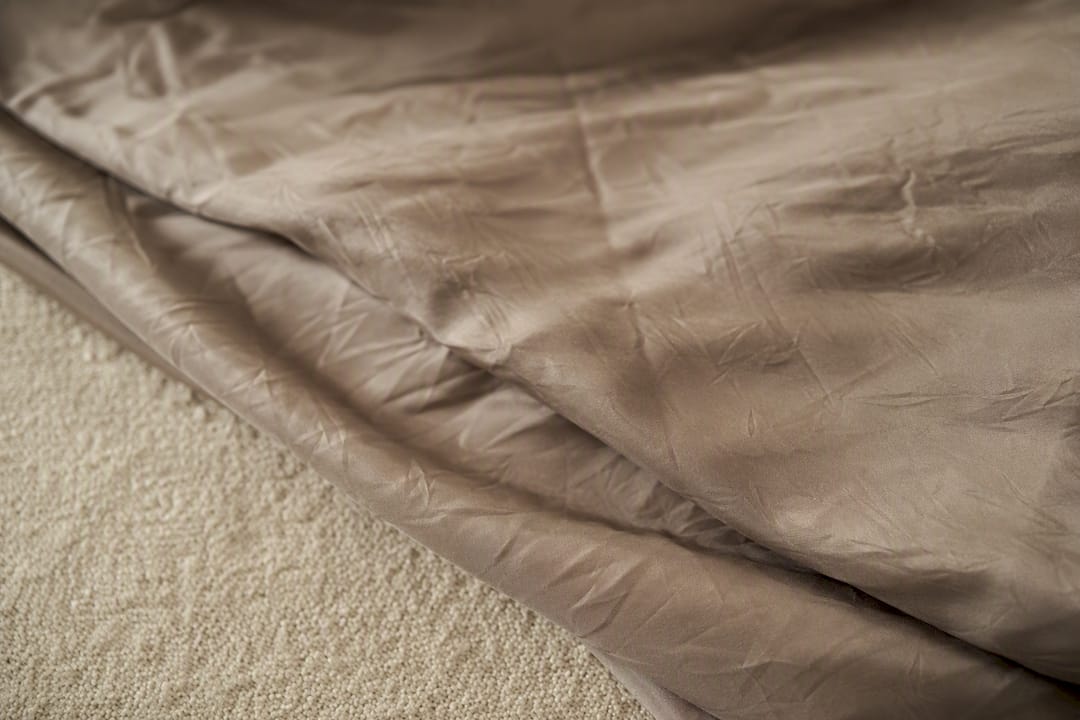
Cotton batiste and voile are the breathable, hypoallergenic choice, and they are usually the right call for warm-weather dresses, bridal wear worn during summer ceremonies, or children’s garments where skin sensitivity is a real concern. They lack the slip of silk or cupro, so they are a poor match under fabrics designed to skim the body, but against skin they outperform every synthetic option.
Tricot knit linings exist for one reason: stretch garments need a lining that stretches with them. A woven lining under a jersey dress fights the fabric’s movement and eventually distorts the shape. Tricot moves with the shell, which is non-negotiable for any fitted knit dress.
Full Lining, Partial Lining, Underlining, Flat Lining, and Interlining Compared
Construction technique changes what a lining actually accomplishes, and confusing these methods is one of the most common mistakes sewists make, since underlining will not stop a dress from clinging the way a separate slippery lining will.
- Traditional (full) lining is sewn separately from the shell fabric and attached only at the seams, hanging free inside the garment. This is standard for structured tailoring because it conceals every interior seam and adds real longevity to the piece.
- Partial or half lining covers only the areas that need it most, typically the bodice or skirt lining down to the knee. It keeps weight and heat down while still solving the opacity problem where it matters.
- Underlining is cut from the same pattern pieces as the shell and stitched to the wrong side of the fashion fabric before construction begins, so the two layers behave as one. It adds body and stabilizes sheer or loosely woven fabrics without changing how the fabric drapes.
- Flat lining cuts the lining piece wider than the shell along vertical seams, then wraps it over the seam allowance to create a clean finished edge, essentially a faux Hong Kong seam finish achieved without a full separate lining.
- Interlining sits between the shell and lining as a third layer, usually for warmth or added structure in cold-weather garments, and is rare in dresses outside of winter coats or heavily structured formal wear.
Pro Tip: If a fabric is sheer but you still want it to drape naturally rather than gain stiffness, choose underlining over full lining. Underlining stabilizes without adding the extra bulk a separate lining layer introduces.
How to Choose the Right Lining for Your Dress
Work through this in order rather than picking a fabric first, because the shell dictates everything downstream.
- Identify your shell fabric and silhouette. A bias-cut satin gown behaves nothing like a structured wool sheath, and the lining needs to move the same way the shell does.
- Decide how much coverage you need. Full opacity calls for full lining; a design with intentional sheer panels calls for partial lining.
- Match lining weight and slip to the shell. A heavy lining under a delicate chiffon will drag it out of shape; a lightweight lining under structured wool will not support it.
- Check stretch compatibility. Any knit or bias-cut dress needs a tricot or bias-cut lining that moves with it, never a stiff woven.
- Weigh care and cost against how often you’ll wear the piece. A once-a-year gala dress can justify silk or cupro; an everyday piece may not.
Fast recommendations by dress type:
- Satin or formal gowns: cupro or silk charmeuse, both of which move with the drape rather than fighting it. For deeper guidance on how satin behaves under different treatments, Fora Leonara’s comparison of silk and satin is worth a read before you commit to fabric.
- Chiffon and other sheers: lightweight silk habotai or a soft rayon, sometimes underlining instead of a separate lining layer.
- Lace: nude or skin-tone cupro or silk, since the lining color shows through the lace pattern.
- Knit or stretch dresses: tricot lining exclusively. A woven lining here is a construction error, not a style choice.
- Wool or cold-weather dresses: cupro or a substantial rayon for comfort, with interlining added only if warmth is the actual goal. For more on how heavier fabrics pair with lining, see Fora Leonara’s guide to suit fabrics, which covers similar weight-matching logic for tailored pieces.
If you’re buying ready-to-wear, ask the retailer what the lining is made from and whether it is full or partial. If you’re sourcing lining fabric for a sewing project, buy a swatch and drape it against your shell fabric before cutting. What looks fine on the bolt can behave completely differently once it’s hanging against the actual dress.
Care, Cost, and the Mistakes Worth Avoiding
Silk and cupro linings generally need dry cleaning or careful hand washing, since machine agitation degrades both fibers faster than the shell fabric wears. Polyester and most rayon blends tolerate machine washing on gentle cycles, which is a real factor if you’re outfitting a dress you’ll actually wear often rather than store.
- Static is the most common complaint with synthetic linings; cupro and cotton manage moisture and resist static naturally, while polyester needs an anti-static spray as a workaround, not a fix.
- Spending more on cupro or silk pays off on pieces worn for hours against skin or dry cleaned rarely.
- Polyester or acetate linings are perfectly acceptable for occasion wear you’ll dry clean once and store, where comfort matters less than cost.
- The most common buying mistake is choosing lining weight by price alone rather than by how the shell fabric actually moves.
How Fora Leonara Thinks About Lining
Founder Rafael Zard built Fora Leonara’s atelier practice around restraint: lining goes into a garment only when it improves comfort, structure, or how long the piece lasts, never as a default. Look for appropriately weighted lining, fully finished seams, and attachment points that stay invisible from the outside. Those details separate a garment built to last from one that only looks that way on a hanger.
Where to Find Lining Done Right
Reading about lining fabrics only gets you so far. At some point you want to feel the difference between a dress lined in polyester and one finished in cupro, and that difference is exactly what separates a piece you replace in two years from one you wear for a decade. Fora Leonara’s ready-to-wear collection is built on that distinction: every garment leaving the European atelier gets the lining its fabric actually calls for, sourced and cut with the same discipline the brand applies to its shell fabrics.

If you gravitate toward quiet, investment-grade pieces without, logos shouting for attention, the Timeless Elegance – Set in Stone piece shows the construction standard in practice, right down to the interior finish. Professionals building a wardrobe meant to outlast a season or two tend to start with The Wall Street Reserve, the brand’s signature line for exactly that kind of understated durability. Browse the full ready-to-wear collection and check the construction notes on any piece before you buy. That’s where the lining choice actually shows.
Sources
- What’s a lining to do? — The American Sewing Guild
- What is Cupro/Bemberg lining? — ApparelX News
- Bemberg brochure — Asahi Kasei
- How to add lining to a garment — Sewgoth
FAQ
What fabric is best for lining a dress?
Cupro (Bemberg) and silk habotai are generally the best all-around choices because they combine breathability, drape, and anti-static behavior, though cotton batiste is better for warm-weather or sensitive-skin garments.
What is the best lining fabric for a satin dress?
Cupro or silk charmeuse works best under satin because both fabrics have enough slip to let the satin drape freely without dragging or bunching at the seams.
What lining should I use inside a skirt?
Rayon or polyester lining works for most skirts since they hold shape well and cost less, but switch to cupro or silk if the skirt fabric is delicate or worn frequently against bare legs.
What is the best lining for a suit?
Bemberg-brand cupro is the standard choice in quality tailoring because it manages moisture and resists static better than polyester linings, which matters over a full day of wear.
Is cupro better than polyester for lining?
Cupro outperforms polyester in breathability, static resistance, and moisture absorbency, though polyester remains cheaper, more durable against abrasion, and easier to machine wash.
