

The correct dress shirt sleeve length places the cuff at the base of your thumb, right at the wristbone, so about a 1/4 inch to 1/2 inch of cuff shows beneath a jacket sleeve. The measurement that gets you there is center back of the neck to wrist, the standard used on nearly every dress shirt size chart. Other methods exist for jackets and casual shirts, but for a dress shirt, this is the number that matters.
TL;DR:
- The most accurate dress shirt sleeve measurement is from the center back of the neck to the wrist, typically ranging from 32 to 37 inches.
- Using the shoulder seam to wrist or underarm to wrist measurements can lead to shorter or more variable sleeve lengths, especially if brands do not specify their method.
- For proper fit under a jacket, about a quarter to half an inch of cuff should peek out, with half an inch being the more classic, formal choice.
- When buying dress shirts, always compare real measurement figures rather than relying solely on label ranges, as sizing can vary across brands.
- Tailors can usually adjust sleeve length easily if the measurement is off, but lengthening is more complex and usually requires leaving extra fabric allowance when manufacturing.
Table of Contents
- What Is Dress Shirt Sleeve Length, and Which Measurement Method Applies?
- How to Measure Your Sleeve Length Step by Step
- How Long Should Shirt Sleeves Actually Be?
- How to Read Sleeve Length on a Size Label
- Common Sleeve Length Mistakes and What a Tailor Can Fix
- How Shirt Construction Changes the Way Sleeves Fit
- Making Sure Your Shirt Sleeve Works Under a Jacket
- Fora Leonara’s Approach to a Timeless Sleeve Fit
- Fora Leonara for Men Who Want the Sleeve Fit Right the First Time
- Sources
- FAQ
What Is Dress Shirt Sleeve Length, and Which Measurement Method Applies?
Sleeve length sounds like one number. It is actually three, depending on who is measuring and what garment they’re measuring for. Confusing them is the single most common reason a “34/35” sleeve fits perfectly at one brand and falls short at another.
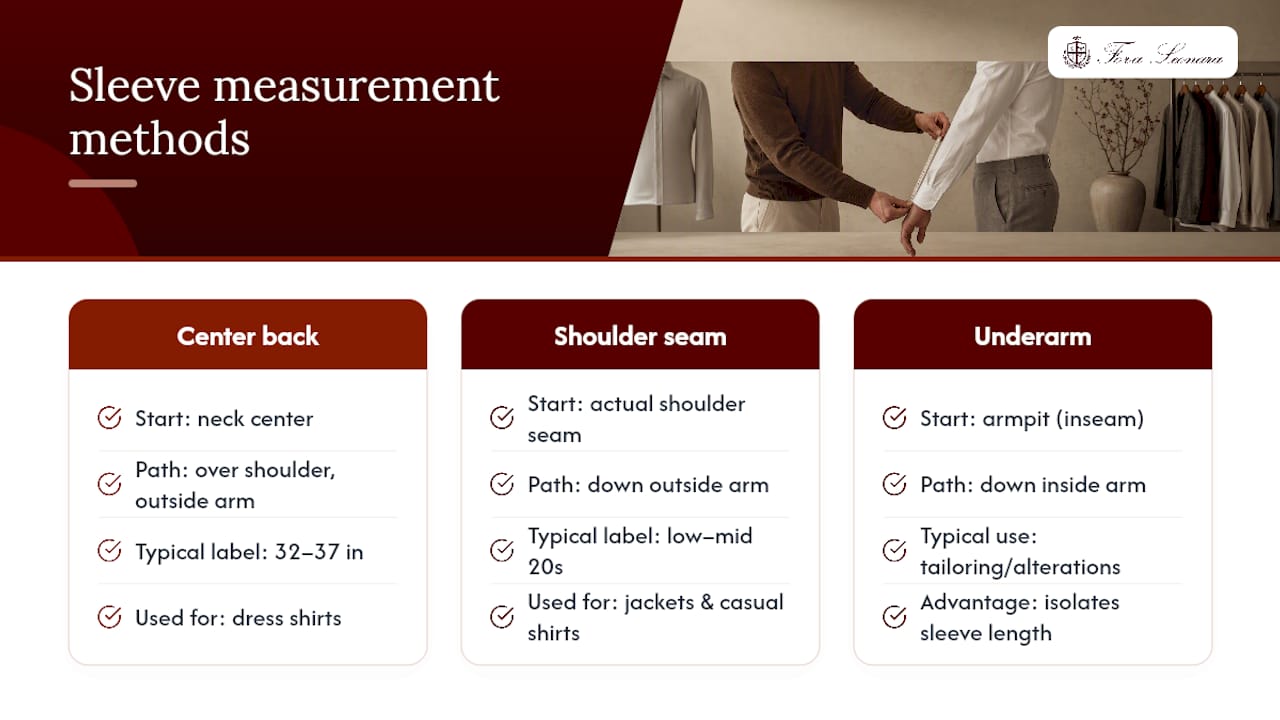
Method 1: Center back to wrist. The tape starts at the center of the back of the neck, runs across the shoulder, down the outside of the arm, and ends at the wristbone. This is the standard for dress shirts, and it produces the higher numbers you see on shirt labels, typically 32 to 37 inches.
Method 2: Shoulder seam to wrist. The tape starts where the shoulder seam actually sits, not at the spine, and runs down to the wrist. Jacket makers and some casual-shirt brands use this method, which is why a jacket sleeve measurement can read a full inch or two shorter than a dress shirt measurement for the same arm.
Method 3: Underarm to wrist (sleeve inseam). This one starts at the armpit and runs down the inside of the arm to the wrist. Tailors use it constantly because it isolates the sleeve itself from shoulder width, which makes it the most reliable number when altering an existing garment.
If a brand doesn’t tell you which method it used, the number itself is a decent clue—as discussed in this helpful designer size conversion guide. Anything sitting in the low 30s is almost always Method 1, while a number in the low to mid 20s points to Method 2. Keep all three figures saved somewhere on your phone. Cross-shopping shirts and jackets without them is how a lot of men end up with sleeves that are technically “sized right” and visually wrong.
How to Measure Your Sleeve Length Step by Step
You need three things: a flexible fabric tape measure, a second person, and a button-front shirt that already fits reasonably well through the shoulders. Measuring your own arm alone almost always produces a shorter, inaccurate number because you can’t hold the tape straight while your arm is bent behind you.
- Put on a shirt that fits well in the shoulders and button it completely, including the cuffs.
- Stand naturally with your arm relaxed at your side and your elbow bent very slightly, the way it sits when you’re not thinking about your posture.
- Have your assistant place the tape at the center back of your neck, at the top of the spine.
- Run the tape across the top of your shoulder, following the seam, then straight down the outside of your arm.
- Stop the tape where your hand meets your wrist and widens, at the wristbone or base of the thumb.
- Record the number, then repeat the whole process a second time to confirm it.
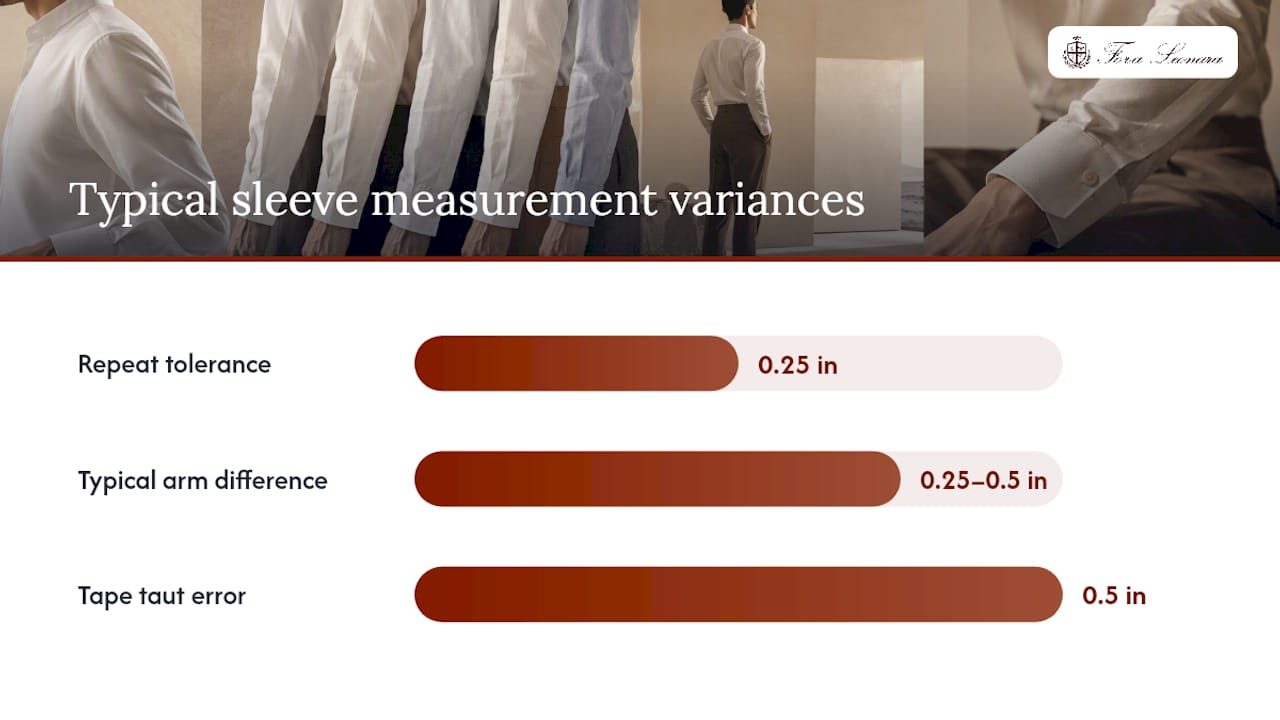
- If the two readings differ by more than a quarter inch, take a third measurement and use the middle value.
Keep the tape snug against the arm but not pulled tight. A tape that’s stretched taut will shave a half inch off your real measurement, and that’s often enough to push you into the wrong size bracket. This is essentially the approach detailed by The Tie Bar, and it holds up whether you’re measuring for a dress shirt or checking an existing one against a size chart.
Pro Tip: Measure both arms. Most men have a difference of a quarter to half an inch between their right and left arm, and it’s usually more pronounced if one arm is dominant. Shop to the longer measurement and let a tailor take in the shorter sleeve rather than the reverse.
How Long Should Shirt Sleeves Actually Be?
Numbers on a tape measure only matter if they translate into how the shirt looks and moves on your body. Two rules do almost all the work here.
- The cuff should end exactly at the wristbone, at the base of your thumb, not an inch past your hand and not stopping mid-forearm.
- Under a jacket, you want roughly a 1/4 inch to 1/2 inch of cuff visible beyond the jacket sleeve, with a half inch being the more classic, formal target.
- A hair more cuff show reads as intentional and dressy; a lot more reads as a shirt that’s simply too big.
- Zero cuff show, or a jacket sleeve that swallows the cuff entirely, is one of the fastest ways to make a tailored outfit look unfinished.
Cuff type shifts this slightly. A French cuff folds back on itself, which adds bulk and can make a sleeve read shorter even at the same measurement, so some men add a touch of extra length when ordering French-cuff shirts. A barrel cuff with a close, fitted cut behaves closer to the raw number on the tape.
How to Read Sleeve Length on a Size Label
Shirt labels pair two numbers, like 16.5/34-35 or a simple 32/33. The first number is neck size. The second, whether it’s a single figure or a range, is the sleeve measurement, and that pairing exists for a practical reason.
- A range like 34/35 means the shirt is cut for that sleeve length but built with enough cuff and placket adjustability to fit comfortably across roughly two inches.
- If your measurement lands right on the boundary between two labeled ranges, size up rather than down. A slightly long sleeve is a five-minute tailoring fix; a short one usually means returning the shirt.
- Different brands round differently, so a 34/35 from one label and a 33/34 from another can fit nearly the same arm. This is why the measurement itself, not the label, is the trustworthy number.
- Height-based sizing charts (a 5’10" man “usually” wears a 34/35) are fine as a rough starting point, but arm length varies enormously at the same height. Measure before you rely on an estimate.
Common Sleeve Length Mistakes and What a Tailor Can Fix
Most sleeve problems trace back to a handful of repeatable mistakes, not bad luck with sizing.
- Starting the tape in the wrong place. Beginning at the shoulder tip instead of the center back, or stopping at the base of the palm instead of the wristbone, throws the whole measurement off by an inch or more.
- Measuring a rounded arm instead of a straight one. A fully straight arm compresses the measurement; a slight elbow bend gives you the length you actually need for movement.
- Ignoring the shirt’s cut. A slim-fit shirt and a classic-fit shirt in the “same” sleeve length can wear differently because of how much room sits at the shoulder and upper arm.
When the fit is off, know what a tailor can realistically do. Shortening a sleeve is quick, inexpensive, and nearly always possible. Lengthening is a different story: it depends entirely on how much fabric allowance was left in the seam when the shirt was constructed, and a tailor may need to remove the cuff entirely to add length back. If a shirt runs more than an inch short, buying the next size up is usually smarter than hoping for a lengthening job. When you do book an alteration, hand your tailor the actual measurement in inches, not just the label size, along with which arm needs the adjustment.
How Shirt Construction Changes the Way Sleeves Fit
Two shirts with identical sleeve measurements can wear completely differently, and the reason is almost always in the shoulder and upper arm, not the cuff. Armhole height and sleeve cap shape determine whether a sleeve stays put when you reach forward or rides up toward your elbow. A high, tight armhole restricts movement even on a correctly measured sleeve.
Taper matters just as much. A close-cut sleeve through the bicep and forearm can pull the cuff upward when you bend your elbow, which is why some men need slightly more length on a slim-fit shirt than on a classic cut, even with the same arm. Cuff width and button placement play a smaller but real role, too. A cuff that’s too loose slides down over the hand no matter how correct the sleeve length is, while a properly fitted cuff holds its position through the day.
Making Sure Your Shirt Sleeve Works Under a Jacket
Because jacket makers typically measure shoulder seam to wrist rather than center back to wrist, expect your jacket sleeve number to run about an inch shorter than your dress shirt measurement for the same arm. That gap is normal, not a sizing error.
To check the pairing in real life, button the shirt, put the jacket on over it, and look in a mirror with your arms relaxed at your sides. If too much cuff shows, the jacket sleeve likely needs lengthening rather than the shirt shortening. If none shows, the reverse is usually true. Fuller jacket sleeves pair naturally with a French cuff, while a slim, tapered jacket sleeve looks cleaner with a narrow barrel cuff.
Fora Leonara’s Approach to a Timeless Sleeve Fit
Some luxury fashion brands build their shirting around the same principle that runs through this entire guide: sleeve length is a construction detail, not an afterthought. These shirts may be cut and finished in specialized ateliers, where armhole placement, sleeve taper, and cuff proportion are set to hold their shape through a full day of wear, not just look correct on a hanger. That discipline is part of what defines The Wall Street Reserve, the house’s signature line for men who want a shirt that behaves the same way under a jacket as it does on its own.
Before booking a virtual atelier appointment or a local alteration, gather three things: your center-back-to-wrist measurement for both arms, a photo of yourself in a shirt you already like the fit of, and any preference on cuff style.
Pro Tip: If you’re between two labeled sleeve ranges, bring both numbers to your fitting rather than guessing. A tailor working from real measurements will get you to a correct sleeve in one pass instead of two.
Fora Leonara for Men Who Want the Sleeve Fit Right the First Time
Ready-to-wear shirts built to a single generic sleeve chart will always ask you to compromise somewhere, whether that’s cuff show under a jacket or room through the upper arm. Fora Leonara’s ready-to-wear shirts are cut in a European atelier with the same construction standards described throughout this guide: correct armhole height, a sleeve taper that won’t ride up, and cuffs proportioned to sit exactly where they should.

For a professional who wears dress shirts most days of the week, that precision compounds. A sleeve that’s a half inch off is a minor annoyance once. It’s a daily irritation across a wardrobe. If your measurements put you between sizes, or you simply want a second opinion before you order, some brands offer virtual private atelier appointments to walk through fit before you buy. Start by browsing the ready-to-wear collection and take your center-back-to-wrist measurement first. It’s the single number that will tell you the most about how a shirt is going to sit on you.
Sources
- How to Measure Sleeve Length for Dress Shirts and Jackets
- Sleeve length for suits, jackets and shirts — Gentleman’s Gazette
- How to measure sleeve length for dress shirts — The Tie Bar
FAQ
What is a 34/35 sleeve length?
A 34/35 sleeve label means the shirt is built for a center-back-to-wrist measurement of 34 to 35 inches, with enough cuff adjustability to fit comfortably across that range.
What is the sleeve length of a 32/33 dress shirt?
A 32/33 label indicates a center-back-to-wrist sleeve measurement of 32 to 33 inches, which is on the shorter end of standard dress shirt sleeve ranges.
What is the average sleeve length for a 5’8" man?
Height-based estimates are a rough starting point, but arm length varies enough between individuals that measuring directly is far more reliable than estimating from height.
What is standard dress shirt sleeve length?
Standard dress shirt sleeves typically fall between roughly 32 and 37 inches when measured center back of the neck to wrist, which is the method used across most dress shirt size charts.
How much cuff should show under a jacket?
About a 1/4 inch to 1/2 inch of dress shirt cuff should be visible beyond the edge of a jacket sleeve, with a half inch being the more classic, formal target.
