

Minimalist mens style means a curated, neutral-first wardrobe where fit and texture do the work that logos and trends used to do. The immediate move is simple: build a capsule around a small set of neutrals plus one accent color, then run a three-pile audit on what you already own. Fora Leonara built its entire approach around this discipline, and two methods make it concrete:
- Three-pile audit: sort everything into keep, remove, and uncertain
- Three-outfit test: before buying anything new, confirm it can form at least three outfits with pieces you already have
Key Takeaways
Minimalist mens style works because it removes decision fatigue by pairing a disciplined neutral palette with a small set of correctly fitted, high-quality pieces.
| Point | Details |
|---|---|
| Run the three-pile audit | Sort keep, remove, and uncertain, expect to shed roughly 30% of your current closet. |
| Apply the three-outfit test | Before buying anything new, confirm it forms at least three outfits with pieces you already own. |
| Limit your palette | Choose three or four primary neutrals plus one accent color, and use texture, not color, for visual interest. |
| Prioritize tailoring over price | Spend on shoulders, sleeves, and waist suppression before spending on a higher-priced garment. |
| Build with quality basics | Fora Leonara’s ready-to-wear pieces, cut in a European atelier, are designed as capsule anchors that hold their fit over years, not seasons. |
Table of Contents
- What Is Minimalist Men’s Style, Really?
- Building Your Essential Mens Wardrobe: The Core Pieces
- How to Audit Your Closet: The Three-Pile Method
- Choosing Your Color Palette and Working With Texture
- Six Outfit Formulas You Can Copy Today
- Why Fit Matters More Than Price
- Finishing Touches That Actually Matter
- Where Fora Leonara Fits Into Your Capsule
- Sources
- FAQ
What Is Minimalist Men’s Style, Really?
Minimalist mens fashion is not the absence of style. It’s the removal of everything that isn’t earning its place in your closet. The core principles are fit, palette, and texture, in that order of importance. A shirt that fits your shoulders correctly will always look more expensive than a logo-heavy piece that doesn’t.
This is different from “basic” dressing, which often just means boring. Minimal menswear tips center on intentionality: fewer garments, chosen with more care, worn more often. That’s also the underlying logic behind quiet luxury, a movement Fora Leonara has built its entire catalog around. The idea isn’t new, but it has become the dominant framing for how style-conscious men are rethinking their closets in 2026.
Building Your Essential Mens Wardrobe: The Core Pieces
An essential mens wardrobe can be built around a modest number of pieces if chosen carefully.
- White crew or henley tee — layers under everything, works alone in summer
- Charcoal or navy wool trousers — the office anchor piece
- Dark selvedge or raw denim — the weekend equivalent
- Oxford shirt in white or light blue — dresses up or down depending on what’s under it
- Linen shirt — warm-weather staple with texture built in, like the Stylish Men’s Casual Linen Shirt - Perfect Fit for Any Occasion
- Unstructured blazer — the single piece that elevates a casual outfit into smart-casual
- Merino crewneck sweater — replaces a jacket in shoulder seasons
- Overshirt or shacket — lightweight layering for spring and fall
- Heavier wool overcoat — your one true winter investment
- Neutral chinos or tapered trousers — the daily bottom for casual days, like the Optic White Sartorial Linen Trousers
- Clean white sneaker
- Leather derby or loafer
- Neutral boot
- Leather belt — matched to your shoe tone
- Slim watch
You don’t need four jackets for four seasons. Two does the job: one heavier overcoat and one lightweight overshirt cover nearly every temperature range you’ll face outside of extreme climates.
Pro Tip: Spend where wear is visible and frequent, outerwear, shoes, and tailoring, and economize on basics like plain tees. Nobody notices a $20 white tee under a well-cut blazer, but everyone notices a coat that fits badly.

How to Audit Your Closet: The Three-Pile Method
Most closets contain a significant proportion of dead weight. Testing that directly with a structured audit reveals fast how much of what you own actually gets worn, and Apartment Therapy’s decluttering research backs up that reduction range.
Here’s the method:
- Pull everything out of your closet and drawers, no exceptions
- Sort into three piles: keep (worn in the last 12 months and fits well), remove (hasn’t been touched in a year, or doesn’t fit), and uncertain (everything else)
- Apply the 12-month rule to the keep pile ruthlessly, if you can’t remember the last time you wore it, it goes in uncertain
- Trial the uncertain pile for 30 days, wear only from it when possible, then reassess
Before adding anything new, run the three-outfit test: can this item combine with at least three things you already own to form complete outfits? If not, skip it. This single rule prevents most impulse purchases and keeps a capsule from filling up with orphaned pieces that never get worn.
Choosing Your Color Palette and Working With Texture
Limit your entire wardrobe palette to five or seven tones. Pick three or four primary neutrals, think navy, charcoal, olive, and stone, then add one accent color you actually enjoy wearing, like burgundy or forest green.
- Navy and charcoal pair with almost anything, including each other
- Stone and olive work as a lighter counterbalance in warmer months
- An accent color should show up in small doses: a sweater, a scarf, never head to toe
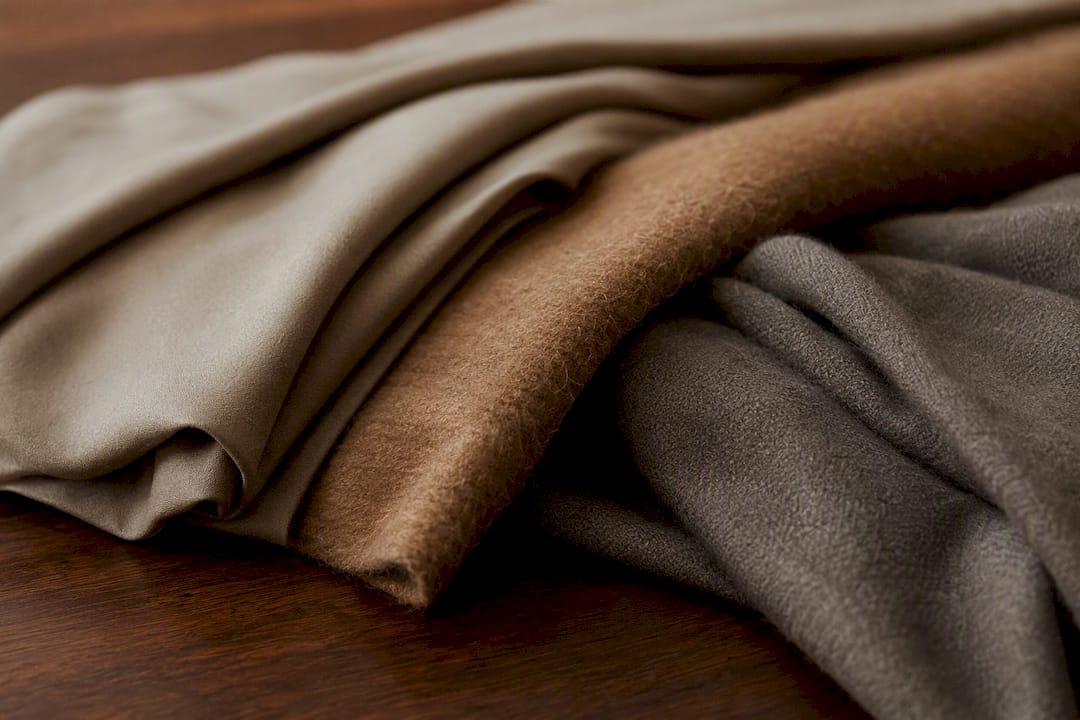
Because minimalist palettes are intentionally quiet, texture becomes your main tool for visual interest. Top style guides consistently point to texture and proportion over color as the real drivers of interest in a pared-down wardrobe. A good rule: one clear textural contrast per outfit. Suede loafers against wool trousers. A ribbed knit under a smooth wool coat. Two textures create depth; three starts to look busy.
Pro Tip: If an outfit feels flat, don’t reach for a new color. Reach for a different fabric weight or finish instead.
Six Outfit Formulas You Can Copy Today
Casual minimalist outfits work best as repeatable formulas, not one-off looks. Here are six that cover most of your week.
- Weekend errand run: white tee, raw denim, clean sneaker. Substitute the tee for a merino crew in cooler weather.
- Smart-casual dinner: oxford shirt (untucked), tapered chinos, leather loafer. Swap the oxford for a knit polo in summer.
- Office standard: wool trousers, tucked oxford shirt, unstructured blazer, derby shoe. Trousers should have a slight break; the blazer stays soft in the shoulder, never boxy.
- Weekend layered look: overshirt over a tee, dark denim, boot. Substitute the overshirt for a merino sweater on colder days.
- First date: merino sweater, tapered trousers, loafer, slim watch. Keep the palette to two tones maximum.
- Travel day: overcoat or overshirt, tee, dark denim, sneaker. Layers should be easy to remove through security and on the plane.
Every formula shares pieces with at least one other formula. That overlap, not the number of items, is what makes a small wardrobe function like a much larger one.
Why Fit Matters More Than Price
Fit is the single most decisive factor in how put-together an outfit reads, more than fabric, more than brand. A $150 shirt altered correctly at the shoulders will outperform an $800 shirt that hangs wrong. Rafael Zard, founder of Fora Leonara, built the brand’s European atelier model specifically around this principle: tailoring closes the gap between a mid-price garment and a luxury one faster than any other single change.
Fit is what separates a deliberate, quiet-luxury look from a wardrobe that just happens to contain expensive clothes. The tailoring is where the actual craftsmanship shows.
When you visit a tailor, check these four points every time:
- Shoulder seam: should sit exactly at the edge of your shoulder bone, not beyond it
- Sleeve length: should end at the wrist bone, showing a quarter inch of shirt cuff
- Trouser break: minimal to no break for a modern silhouette
- Waist suppression: jackets should follow your torso without pulling at the button
Expect $20 to $60 for shirt and trouser alterations, more for jacket restructuring. Invest there, and in outerwear and shoes, before you invest in another basic tee. For deeper reading on building this out methodically, Fora Leonara’s guide on building a minimalist professional wardrobe walks through the same priorities in more detail.
Finishing Touches That Actually Matter
Small details anchor a minimalist outfit more than any single garment does. Get these right and the whole wardrobe reads intentional.
- Shoes: stick to two or three archetypes, a clean white leather sneaker, a leather derby or loafer, and a neutral boot, and rotate them to extend the life of each pair
- Watch: one slim, simple watch in a metal that matches your belt buckle and any other hardware
- Belt: leather, matched in tone to your primary shoe color
- Wallet: slim, leather, no visible branding
- Maintenance routine: check hems monthly, lint-roll before wearing wool or knits, polish leather shoes every two to three weeks, and let shoes rest a full day between wears
None of this is expensive. It’s just consistent, which is the entire point of a capsule approach.
Where Fora Leonara Fits Into Your Capsule
Everything in this guide points toward the same conclusion: fewer pieces, chosen for fit and material, beat a full closet of compromises. Fora Leonara exists for exactly that reader. Every garment is cut in the brand’s own European atelier, with no visible branding and no seasonal gimmicks, built instead around pieces meant to anchor a wardrobe for years rather than one season.

If you’re a professional rebuilding your closet around the principles above, start with the ready-to-wear collection, where the neutral tones and tailored cuts are designed to slot directly into a three or four-color capsule. The signature line, The Wall Street Reserve, was built specifically for men who want investment-grade tailoring without a logo doing the talking. For a coordinated capsule starting point, the Timeless Elegance set in Dark Mocca pairs a neutral tone with the kind of fit precision this guide keeps circling back to. Browse the collection and see which pieces would replace the weakest links in your current closet.
Sources
- Closet decluttering rule of three (Apartment Therapy)
- How To Pull Off the Minimalist Aesthetic (Primer)
FAQ
What Is the 3-3-3 Rule for Men’s Clothing?
The 3-3-3 rule asks you to build outfits from a limited set, typically three tops, three bottoms, and three pairs of shoes, worn on repeat over a set period, usually three months. It forces you to test genuine versatility rather than relying on a closet full of single-use pieces.
What Should a Man Have in a Minimalist Wardrobe?
A minimalist wardrobe should cover roughly 10 to 25 pieces built around three or four neutral tones, including a few well-fitted shirts, one or two pairs of trousers, an unstructured blazer, a versatile jacket, and two or three shoe archetypes.
Does Gen Z Like Minimalism?
Younger buyers have shown growing interest in quality over quantity, partly as a response to fast fashion’s disposability, though preferences vary widely and plenty of Gen Z shoppers still mix minimalist basics with statement pieces.
How Many Outfits Can a Small Capsule Actually Create?
A well-built 15 piece capsule with shared neutrals and one accent color can typically generate 20 or more distinct outfits, since most tops, bottoms, and layers are designed to interchange freely.
Is Fora Leonara Suited to Building a Capsule Wardrobe?
Yes. Fora Leonara’s ready-to-wear pieces are cut in neutral, quiet-luxury tones with no visible branding, making them straightforward to combine into a small, fit-focused capsule built around the principles in this guide.
Recommended
- How to Build a Minimalist Professional Wardrobe | Fora Leonara Journal
- Quiet Luxury Outfits for Men: Timeless Understated Style | Fora Leonara Journal
- Smart Casual for Men: The Quiet Luxury Professional’s Code | Fora Leonara Journal
- The Art of Discretion: 2026’s Business Casual for Men | Fora Leonara Journal
