

Aim for 12 to 18 core pieces if you’re mostly hybrid or full-time in-office, and closer to 30 if your role demands more client-facing variety. Six categories carry the entire structure: a blazer, tailored trousers, a white button-down, one piece of quality knitwear, a dress or skirt, and two pairs of shoes with a structured bag. Keep the palette to neutrals plus one accent color, and the math works in your favor fast: a well-chosen 15 to 30 piece capsule can generate 30 to 80 outfit combinations, depending on how much you layer.
Here’s the checklist to work from before you buy anything else:
- One or two blazers in navy, black, or camel
- Two to three pairs of tailored trousers in complementary neutrals
- Three to four white or ivory button-down shirts
- One to two pieces of fine knitwear (merino or a silk blend)
- One versatile dress or skirt that pairs with the blazer
- Two pairs of shoes and one structured bag that work across every outfit above
Key Takeaways
A minimalist work wardrobe of 12 to 18 core pieces, built around a blazer, tailored trousers, and a disciplined neutral palette, produces enough outfit combinations to cover a full work month without repeats.
| Point | Details |
|---|---|
| Match capsule size to schedule | Use 12 pieces for remote, 18 for full-time office, 30 for client-facing or travel-heavy roles. |
| Prioritize the blazer | One or two well-fitted blazers act as the bridge piece across nearly every outfit formula. |
| Audit before buying | Track three months of actual wear to find real gaps instead of guessing what’s missing. |
| Alter before replacing | Shoulder, sleeve, and hem fixes raise perceived quality more than buying new pieces. |
| Invest where wear is highest | Fora Leonara’s tailored blazers and trousers are built for cost-per-wear value over fast-fashion turnover. |
Table of Contents
- What Is a Minimalist Work Wardrobe, and How Many Pieces Do You Need?
- The Core Pieces Worth Owning, and Why Each One Matters
- Five Outfit Formulas That Multiply Everything You Own
- How to Audit Your Closet Before You Buy Anything Else
- Where to Invest and Where to Save on Fabric and Fit
- Care and Repair Habits That Extend the Life of Every Piece
- Adjusting the Formula for Your Dress Code
- Building Your Wardrobe With Fora Leonara
- Sources
- FAQ
What Is a Minimalist Work Wardrobe, and How Many Pieces Do You Need?
A minimalist work wardrobe, sometimes called a work capsule wardrobe, is a small, deliberately coordinated set of professional clothing built so nearly every piece works with every other piece. The goal isn’t owning less for its own sake. It’s owning fewer things that actually perform, so you stop standing in front of a full closet with nothing to wear.
The right size depends on your calendar, not your closet envy. A 12-piece framework suits someone who’s remote most days and only needs office-ready outfits occasionally, since fewer pieces still cover the rotation when you’re not wearing them daily anyway. An 18-piece framework fits the person in the office four or five days a week, giving enough variety that colleagues don’t clock a repeat every Tuesday. A 30-piece framework makes sense if you’re client-facing, travel for work, or move between formal and casual settings often. Most capsule guides land on 18 to 20 pieces as the practical core for full-time office workers, with smaller counts reserved for hybrid schedules.
The multiplication math is the part people underestimate:
- 12 pieces, mixed and layered well, can produce 20+ distinct outfits
- 18 pieces typically generate 40 to 50 combinations once you factor in shoes and accessories
- 30 pieces, with a disciplined neutral palette, can stretch past 70 outfit combinations
The Core Pieces Worth Owning, and Why Each One Matters
Every category earns its place through fit, not quantity.
- Blazer. This is the piece that does the most work in the entire wardrobe. It functions as a bridge piece across dress codes, softening jeans for a casual Friday and sharpening a dress for a board meeting. Fit at the shoulder seam first. Everything else can be tailored, but a shoulder that’s off will never sit right. One or two blazers in navy or black cover almost every scenario.
- Trousers. Own two to three pairs in straight or tapered silhouettes. Prioritize hem length and waist fit over fabric pattern. A trouser that pools at the ankle undercuts even the sharpest blazer above it.
- Shirts and blouses. Rotate three to four in cotton poplin or a silk blend. Poplin holds structure through a long day; silk blends soften a stiffer suit.
- Knitwear. One or two pieces in merino or a silk blend earn their spot when you need warmth without bulk under a blazer.
- Shoes and bag. Two shoe options, one closed-toe flat or loafer and one low heel, plus a single structured bag, will cover nearly every dress code you encounter.
- Accessories. A good leather belt and one or two pieces of minimal jewelry change the read of an outfit without adding a single new garment.
Pro Tip: When budget is tight, spend the extra money on tailoring your blazer and trousers before buying anything new. A $40 alteration often does more for how put-together you look than a $200 impulse purchase.
Five Outfit Formulas That Multiply Everything You Own
Formulas beat inspiration boards because they’re repeatable on a Monday morning with no decisions left to make.
- Blazer + blouse + trouser. The default formal look. Swap the blouse color and it reads as a new outfit.
- Knit + midi skirt. Softer and slightly more relaxed. Add the blazer over it for client meetings.
- Dress + blazer. The fastest formula in the rotation. One dress becomes three outfits depending on which blazer and shoes you layer over it.
- Dark jeans + button-down. For casual-Friday offices or hybrid days. Add the blazer and it’s suddenly meeting-ready.
- Tailored trouser + shell top. A quieter, minimal-jewelry look for focused desk days.
Small swaps carry the real variety: change the shoes, add a belt, or trade the knit for a blouse under the same blazer. One blazer paired with three different tops already produces nine distinct combinations before you touch a single other piece.
How to Audit Your Closet Before You Buy Anything Else
Buying more before you know what you already wear is how closets get cluttered in the first place.
- Track three months of actual wear. Note what you reach for repeatedly and what hasn’t left the hanger. A three-month audit of what you actually wore reveals your functioning wardrobe, not your aspirational one.
- Sort into four piles. Keep, alter, discard, donate. Anything that hasn’t been worn in the window and doesn’t fit a clear formula above goes.
- Identify missing combinations, not missing items. If you own three blazers but no trousers that pair with two of them, that’s the gap to fill, not another blazer.
- Prioritize alterations that raise perceived quality. Shoulder and sleeve fixes on blazers, waist and hem adjustments on trousers, deliver the largest visible improvement for the smallest cost when your piece count is low.
Where to Invest and Where to Save on Fabric and Fit
Not every category deserves the same budget. Spend where wear and structure matter most: blazers, tailored trousers, and outerwear. Save on basics like plain tees or undershirts that see heavy rotation and low visibility.
Fabric tells you almost everything before you try a piece on:
- Midweight wool (around 250 to 320 grams) holds structure through a full season without wrinkling by 2 PM
- Linen blends breathe for summer but wrinkle fast, so reserve them for lighter meeting days
- Silk blends in blouses drape rather than stiffen, which reads as more expensive even at a lower price point
- Check lining, stitch density, and shoulder padding on a blazer before checking the label
A minimalist wardrobe rewards cost-per-wear thinking over sticker price. A $400 blazer worn twice a week for five years costs pennies per wear next to a $60 blazer replaced every season.
Fora Leonara’s ready-to-wear collection is built around exactly this logic, tailored in a European atelier with construction meant to outlast a single season.
Care and Repair Habits That Extend the Life of Every Piece
A small wardrobe only stays functional if every piece holds up. Steam instead of iron where you can, and hand-wash knitwear rather than tossing it in the dryer, since heat is what actually shortens a sweater’s life. Save dry cleaning for wool and structured blazers a few times a season rather than after every wear.
Small repairs matter more here than in a large closet. Replace a missing button the week it falls off, not the month after. Re-hem trousers when they start pooling, and re-sole shoes before the heel wears through the leather.
- Rotate 3 to 4 items per season rather than overhauling the whole wardrobe at once
- Store off-season pieces folded, not crushed on a shelf, to keep shoulders and creases intact
- Cedar blocks in storage boxes keep moths away from wool and knitwear
Pro Tip: *Keep a small sewing kit and a garment steamer at home.
Adjusting the Formula for Your Dress Code
A capsule built for a law firm looks different from one built for a creative agency, even if the underlying structure stays the same. The six categories don’t change. What changes is fabric weight, color range, and how far you can push the accent piece.
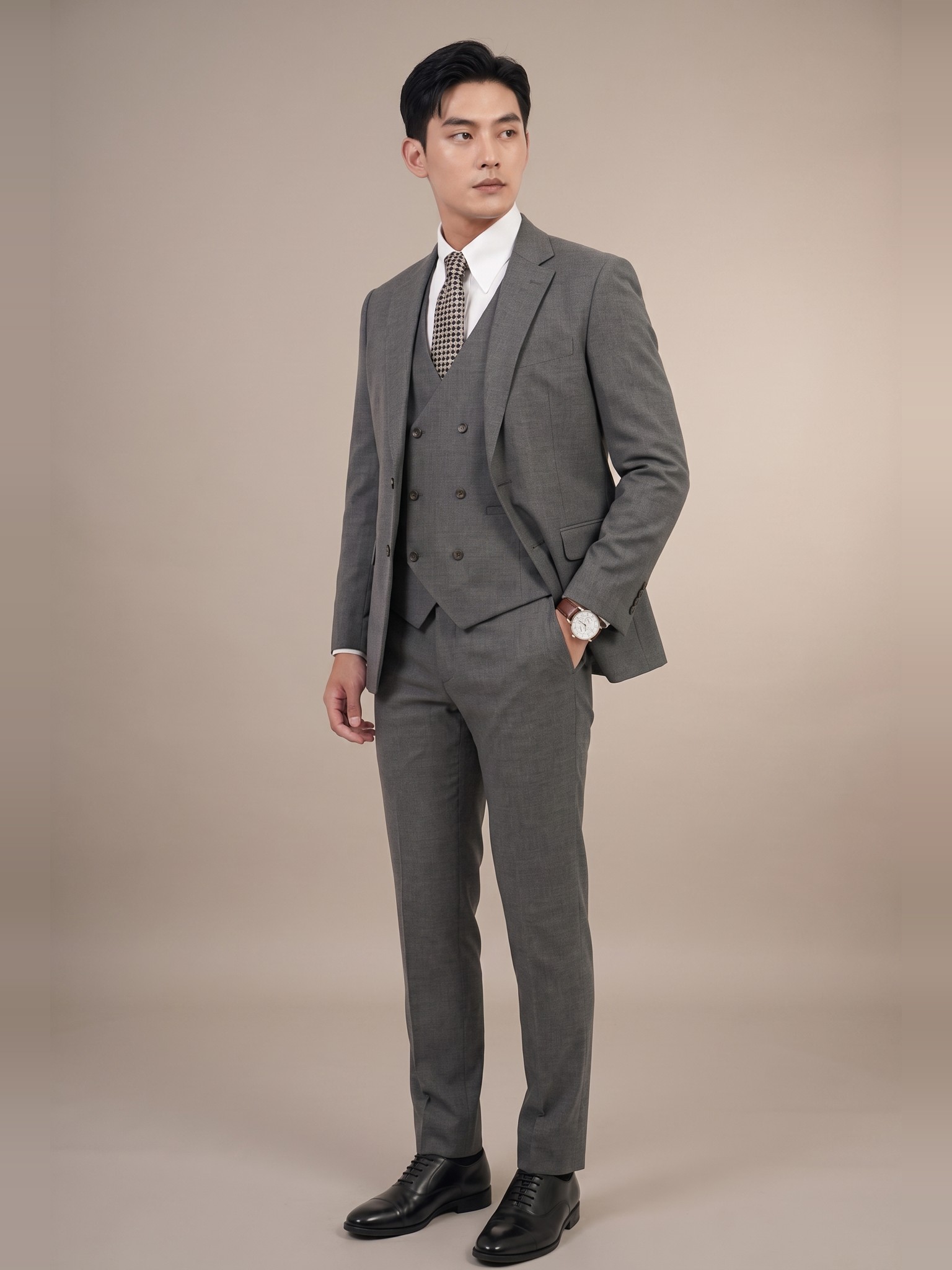
In conservative environments, law, finance, consulting, lean into darker neutrals: navy, charcoal, black, with white and ivory shirting. Skip the accent color or keep it subdued, like a deep burgundy scarf rather than anything bright. Blazers should sit structured and fully lined, and trousers stay tapered rather than wide-leg.
In creative or hybrid-first offices, the same six categories flex. Swap one blazer for a softer unstructured version, add a bolder accent color like rust or forest green, and let one pair of shoes be a clean sneaker instead of a loafer. The dress or skirt category can lean more directional since fewer meetings demand full formality.
Hybrid and remote schedules change the math more than the dress code does. If you’re on camera two or three days a week, prioritize what shows from the waist up: knitwear, blouses, and one sharp blazer for video calls, while trousers and shoes can shrink to a smaller rotation since fewer people see them. A remote-heavy week might run on 12 pieces total, with the blazer reserved almost entirely for calls rather than daily wear.
Building Your Wardrobe With Fora Leonara
Fora Leonara exists for exactly the reader who just finished this audit and doesn’t want to shop twenty different stores to fill six categories. Every piece is tailored in a European atelier, with the shoulder fit and stitch density that make a small wardrobe read as intentional rather than sparse. The signature line, The Wall Street Reserve, was built specifically around the blazer and trouser categories this article treats as the highest-value investment, in wool weights and construction meant to survive years of daily wear, not one season.

If you’re rebuilding around 12 to 18 pieces, start with the ready-to-wear collection and identify the one or two blazers that will anchor your rotation. Women building out a full capsule can browse the women’s category page for the trousers, knitwear, and dresses that pair directly with those pieces. Start with one blazer, check the fit at the shoulder, and build outward from there.
Sources
For deeper guidance on building this out piece by piece, see how Fora Leonara approaches a minimalist professional wardrobe and timeless fabric and silhouette choices. Readers curious about an even smaller starting point can review the 10-item wardrobe concept.
- Minimalist Workwear: Professional Looks With Fewer Pieces | MinimalistRig
- How to Dress for the Office, the Minimalist Way — Vogue
- Workwear Capsule Wardrobe: 20 Pieces for the Office
FAQ
What is the 3-3-3 rule for clothes?
The 3-3-3 rule asks you to pick 3 tops, 3 bottoms, and 3 pairs of shoes and wear only those for a set period, usually a month, to see how few pieces you actually need in rotation. It’s a useful test before committing to a full capsule, though most work wardrobes end up slightly larger to cover formality shifts.
What are the 33 items in a minimalist wardrobe?
There’s no single fixed list of a specific item count; some minimalist fashion challenges recommend distinct counts not focused on workwear. For office dressing specifically, a 15 to 30 piece capsule built around the six core categories in this guide works better than chasing an exact count.
What is the 5-4-3-2-1 capsule wardrobe?
Definitions of this framework vary across sources, and there’s no consistent industry standard behind the numbers. Rather than following an unverified formula, base your piece counts on the 12/18/30 frameworks tied to your actual office schedule.
What is the 70/30 rule for wardrobe?
The 70/30 rule generally suggests spending roughly 70% of your wardrobe budget on staple, high-wear pieces like blazers and trousers, and the remaining 30% on accent pieces or trend items. That principle lines up directly with prioritizing investment on blazers, tailored trousers, and outerwear while saving on basics.
How many blazers do I actually need for a minimalist work wardrobe?
One or two well-fitted blazers in navy or black cover nearly every professional scenario, since the blazer functions as a bridge piece across formal and casual outfits alike. A third blazer only makes sense once you’re past 20 pieces total and need more color variety.
Recommended
- How to Build a Minimalist Professional Wardrobe | Fora Leonara Journal
- Building a Timeless Wardrobe: Essential Luxury Pieces | Fora Leonara Journal
- The Architecture of Restraint: Minimalist Designer Dresses | Fora Leonara Journal
- The Enduring Allure of the 2026 Capsule Wardrobe | Fora Leonara Journal
