

For most men who want a lasting, versatile suede jacket, genuine suede in a bomber or shacket silhouette is the smarter starting point. Faux suede works as a practical alternative if you’re on a tighter budget or live somewhere wet. Genuine suede rewards you with texture and a natural patina over years; faux trades that longevity for easier care and a lower price tag.
TL;DR:
- Genuine suede develops a distinct patina and character over time, while faux suede resists water and requires less care but lacks aging qualities.
- The most versatile starting styles are the bomber and shacket, especially in earth tones, which suit casual, transitional, and smart-casual occasions.
- Proper fit hinges on precise shoulder placement, sleeve length, and chest ease; attention to construction details ensures a polished look.
- Regular routine care, including applying protector spray, brushing the nap, and professional cleaning, significantly prolongs suede’s appearance and lifespan.
- Quality suede varies across price points, with construction and sourcing quality outweighing cost, and lining, backing, and stitching being key indicators of durability.
Table of Contents
- Which Suede Jacket Styles Actually Suit Your Wardrobe?
- Genuine Suede vs. Faux: What Actually Changes Over Time
- How Should a Suede Jacket Fit on Your Frame?
- How Do You Keep a Suede Jacket Looking Intentional?
- Three Outfit Formulas That Make Suede Work Harder
- Where Suede Jackets Fit in Men’s Fashion History
- Suede vs. Full-Grain Leather: What You Gain and Lose
- Can You Wear Suede Jackets Year Round?
- Where to Find Quality Suede Jackets
- Common Suede Repairs and When to Call a Professional
- Is Suede Leather Environmentally Sustainable?
- Fora Leonara’s Approach to Suede: Built for the Long Wear
- Sources
- FAQ
Which Suede Jacket Styles Actually Suit Your Wardrobe?
Six silhouettes dominate the men’s suede category, and each one signals something different about the occasion you’re dressing for. The bomber is the workhorse: ribbed cuffs, a zip front, and a boxy fit that works over a tee or a light sweater on weekends. The trucker jacket, with its structured collar and chest pockets, reads slightly dressier and pairs well with a shirt underneath. Biker jackets bring asymmetric zips and a snug cut. They lean edgier and suit a night out more than an office day.
The shacket, or suede button-down, has become the breakout piece for early spring layering. Retailers report sell-through in neutral tones, and it’s easy to see why: the collar sits like a shirt, the hem falls at the hip, and it layers over a tee or under a coat without bulk.
Here’s a quick way to sort them by occasion:
- Bomber: weekend errands, casual dinners, travel layering
- Trucker: office-casual Fridays, daytime meetings outside the office
- Biker: date nights, evening events with an edge
- Shacket/button-down: transitional weather, smart-casual layering
- Aviator/flight: cold-weather statement piece, often shearling-lined
Check the collar shape and hem length before anything else. A shacket with a spread collar and a hip-length hem will layer more cleanly than one cut long and boxy.
Genuine Suede vs. Faux: What Actually Changes Over Time
Genuine suede develops character. The nap shifts and softens with wear, and light scuffing often reads as a feature rather than damage. Editors describe this as a pleasing patina that well-made suede acquires naturally. That aging process is part of why genuine suede costs more; the tanning and finishing process is labor-intensive, and the leather itself is a byproduct of a smaller cut of the hide.
Faux suede closes some of that gap in practical terms. It resists water better, needs no protector spray, and costs a fraction of the price. It still falls short in two places: the texture reads flatter under direct light, and the material doesn’t age. It just wears out.
Construction matters regardless of which you choose:
- Lining: a smooth lining (cotton or silk-blend) prevents the jacket from clinging to shirts underneath
- Backing: genuine suede backing should feel supple, not stiff or plasticly
- Seam finish: check for even stitching along the shoulder and side seams; puckering signals rushed construction
Vogue’s fall coverage notes that suede spans the entire price spectrum, and construction quality, not the price tag alone, is what separates a jacket that lasts from one that doesn’t.
How Should a Suede Jacket Fit on Your Frame?
Three measurements decide whether a suede jacket looks intentional or borrowed. The shoulder seam should sit exactly at the edge of your shoulder bone; if it droops even slightly, the whole jacket reads oversized. Sleeve length should end at the wrist bone, short enough to show a half inch of shirt cuff if you’re layering underneath. Chest ease matters more with suede than with wool, since the material doesn’t stretch the way knit does.
Leave enough room for a slim sweater if you plan to wear the jacket into colder months, but size down if you mostly wear it over a tee. Layering a suede bomber over anything bulkier than a midweight sweater usually strains the shoulder seam and ruins the silhouette.
Good construction shows up in the details. A clean shoulder line with no pulling at the seam, a hem that sits level all the way around, and lapels or a collar that lie flat without curling are the fastest tells that a jacket was cut correctly rather than mass-produced to a generic block.
How Do You Keep a Suede Jacket Looking Intentional?
Suede rewards routine care and punishes neglect fast. A few basics keep it looking deliberate rather than tired.
- Apply a suede protector spray before the first wear, and patch-test it on an inside seam first to check for discoloration.
- Brush the nap regularly with a dedicated suede brush, working in one direction to lift dirt and restore texture.
- Blot wet spots immediately with a dry cloth and let the jacket air-dry away from direct heat; never use a hair dryer or radiator.
- Avoid oil-based products near the collar. Sunscreen and hair product residue are common culprits for permanent stains.
- Send the jacket to a professional leather cleaner for deep stains or discoloration rather than attempting to treat it yourself.
This basic routine of testing sprays, brushing the nap, and using professional cleaning for stubborn stains is standard guidance across care experts, and it holds whether the jacket is genuine or faux.
Pro Tip: Store your suede jacket on a wide wooden hanger, never folded in a drawer. Creasing sets into the nap over time and doesn’t fully brush out.
Three Outfit Formulas That Make Suede Work Harder
Suede’s texture does most of the styling work for you, which is why simple formulas tend to outperform complicated ones. Styling experts suggest pairing a bomber-style suede jacket with a button-down shirt and denim for a look that reads sophisticated without trying hard.
For casual days, layer a suede bomber over a plain white tee and dark denim, then finish with clean white sneakers or suede desert boots. For smart-casual, the shacket goes over an oxford shirt and tailored chinos. Add loafers, and you’ve got an outfit that works for a client lunch or a dinner reservation. For colder weather, a shearling-lined aviator sits well over a merino crewneck with wool trousers and leather boots.
Color does a lot of the heavy lifting here. Editors consistently point to earth tones like tan, chestnut, and olive as the most versatile because they pair easily with denim and neutral separates. If you want more contrast, navy or black suede reads sharper against lighter shirting.
A few pairing rules worth keeping in mind:
- Stick to one textured piece per outfit. Suede plus a chunky knit plus distressed denim starts to look busy.
- Minimal sneakers or leather boots ground the outfit better than anything flashy.
- Save statement belts or bags for a different day. Suede’s texture is the accessory.
Where Suede Jackets Fit in Men’s Fashion History
Suede entered mainstream American style in the mid-20th century, largely through motorcycle and aviation culture. Pilots wore suede-trimmed flight jackets for their softness against skin, and by the 1950s, suede had crossed into everyday menswear as a rugged, textured alternative to smooth leather.
The 1960s and 70s pushed suede further into the spotlight, with musicians and actors adopting fringed suede jackets as a symbol of a more relaxed, expressive masculinity. That decade also cemented the trucker and bomber shapes as staples, cuts that had originated in military and workwear contexts but softened into civilian style.
By the 1980s and 90s, suede had settled into a quieter role: less about statement fashion, more about texture and material richness within a tailored wardrobe. That’s largely where it sits today. The shacket’s current popularity is really a continuation of that arc, an old material finding a new, more structured shape suited to how men actually layer clothing now. Suede’s history is less about trend cycles and more about a fabric that keeps getting reinterpreted for whatever era of menswear it lands in.
Suede vs. Full-Grain Leather: What You Gain and Lose
Suede and full-grain leather come from the same hide, but the finishing process changes almost everything about how they perform. Suede is the inner split of the hide, buffed to create that soft, napped surface. Full-grain leather keeps the outer layer intact, which makes it tougher and more weather-resistant.
The trade-off works in suede’s favor on texture and weight. A suede jacket feels lighter and softer against a shirt, and the matte finish looks more relaxed than the sheen of full-grain leather. That makes suede a stronger pick for casual and smart-casual dressing, where a glossy leather jacket can look slightly try-hard.
Where suede loses ground is durability against moisture and abrasion. Full-grain leather shrugs off light rain and resists scuffing far better. Suede stains more easily and needs more deliberate care. Genuine suede also tends to cost more per comparable quality tier than full-grain leather, since usable suede splits are a smaller yield from each hide.
Neither material is objectively better. A full-grain leather biker jacket suits a rougher, all-weather wardrobe. Suede suits a wardrobe built around texture, subtlety, and pieces you’re willing to treat with more care in exchange for a softer, quieter look.
Can You Wear Suede Jackets Year Round?
Suede works best in fall and early spring, when temperatures sit in the 45 to 65 degree Fahrenheit range and rain is more of an occasional risk than a daily one. That’s precisely why the shacket and bomber silhouettes surge in popularity during those transitional windows.
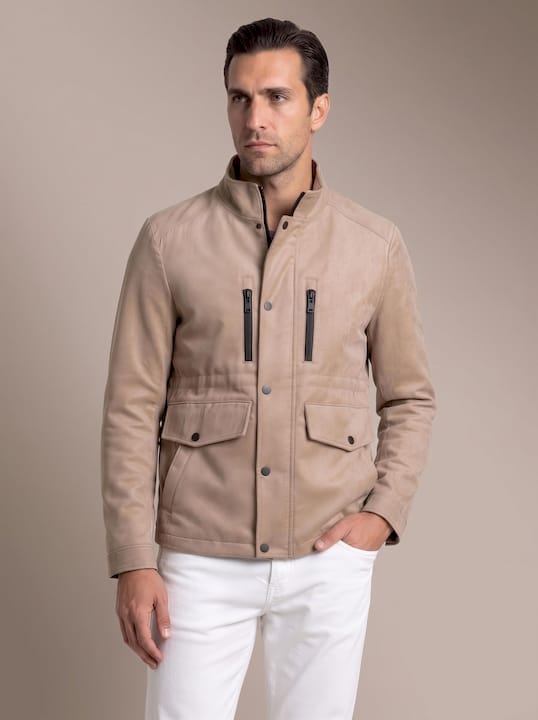
Winter wear is possible but depends heavily on lining. A shearling-lined aviator holds up fine in cold, dry climates, but unlined suede offers little insulation on its own and needs a heavier layer underneath in real cold. Wet winter climates are the bigger issue. Suede and snow slush don’t mix, and repeated exposure to road salt and moisture accelerates staining.
Summer is suede’s weakest season, mostly due to heat retention and humidity, which can affect the nap’s texture over time. If you live somewhere with a genuinely humid summer, faux suede is the more forgiving choice since it resists moisture damage better.
The practical rule: treat suede as a three-season piece anchored in fall, with occasional cold-weather use if the jacket is lined, and skip it during peak summer heat or sustained wet spells.
Where to Find Quality Suede Jackets
Quality suede shows up across a wide range of price points, from mall retailers to small-batch tailoring houses, and the difference usually comes down to construction rather than the label. Larger retailers carry broad size ranges and standardized fits, which matters if you fall outside a typical medium-large range. Buyers should specifically verify extended size ranges and clear return policies before ordering online, since suede’s fit issues are harder to fix after the fact than with woven fabrics.
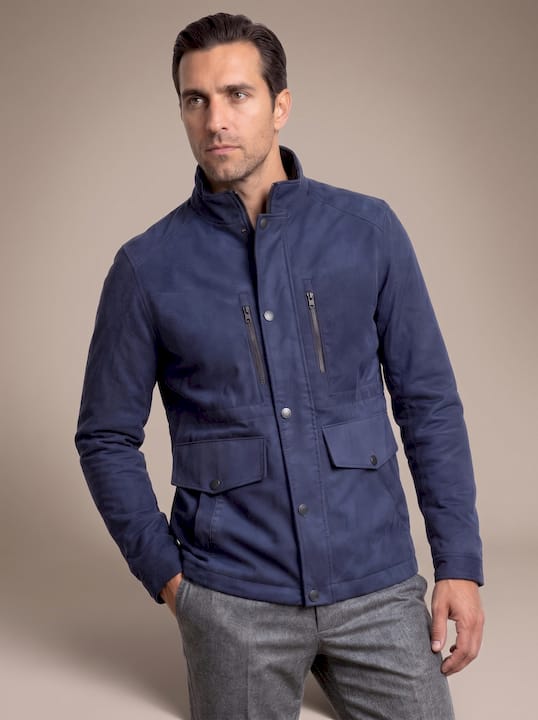
At the other end, smaller ateliers and direct-to-consumer luxury houses tend to offer tighter quality control since they’re producing in smaller runs. This is where you’re more likely to find even nap consistency and hand-finished seams, details that get lost at scale.
If you’re shopping general streetwear retailers instead, prioritize brands that are explicit about material sourcing and construction over ones leaning on logos. A useful framework for this kind of quality-first shopping applies to suede as much as anything else in a durable wardrobe: buy fewer pieces, but make sure each one is built to hold up.
Whichever route you take, try the jacket on with the layers you’d actually wear underneath. Suede’s structure doesn’t forgive an online-only guess the way a cotton shirt might.
Common Suede Repairs and When to Call a Professional
Most suede damage falls into a handful of repeatable categories, and knowing which ones are DIY-safe saves you from making a small problem permanent. Light surface scuffs usually lift with a suede eraser or a clean pencil eraser rubbed gently in the direction of the nap. Matting, where the nap flattens in high-friction spots like cuffs or the underarm, responds well to a wire suede brush worked in short strokes.

Oil-based stains are the trickiest repair and the one most worth leaving to a professional. Once oil sets into the nap, home remedies like cornstarch or talcum powder only draw out surface residue; deeper staining needs a leather specialist with suede-safe solvents. The same goes for color loss or fading from sun exposure, which usually requires professional re-dyeing rather than a home fix.
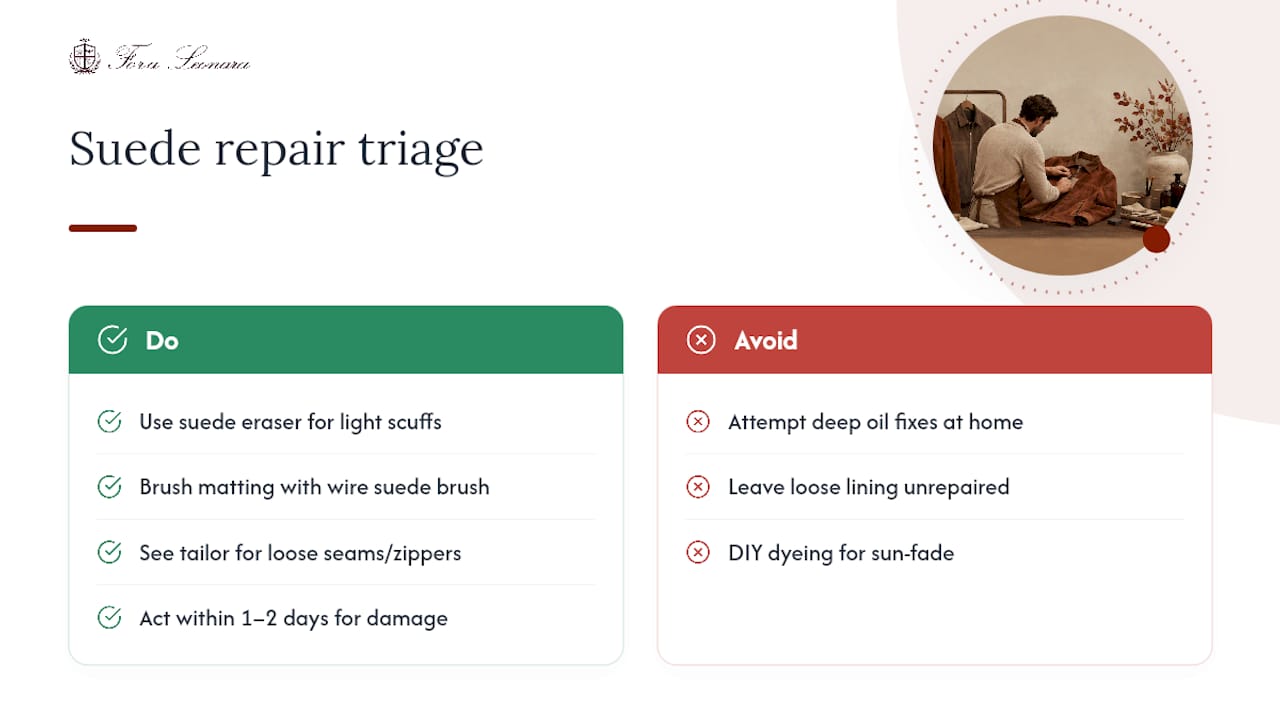
Loose seams, popped stitching, or a broken zipper pull are mechanical issues, not material ones, and a tailor or leather repair shop can typically handle them in a single visit. Don’t ignore a loose lining seam; left alone, it tends to widen and eventually separates the lining entirely from the shell.
A rule worth following: if a stain or tear happened recently, act within a day or two. Suede repairs get harder and more expensive the longer a problem sits untreated.
Is Suede Leather Environmentally Sustainable?
Suede’s environmental footprint tracks closely with leather in general, since both come from animal hides that are typically a byproduct of the meat industry rather than a product raised specifically for leather. That byproduct status is often cited as an argument in suede’s favor compared to purely synthetic materials, since it uses a material stream that would otherwise go to waste.
Where suede’s footprint gets heavier is in the tanning process. Chrome tanning, still common across much of the leather industry, uses chemicals that require careful wastewater treatment to avoid environmental contamination. Vegetable-tanned and other lower-impact tanning methods exist but are less common for suede specifically, since the buffing process that creates suede’s nap works more predictably on chrome-tanned hides.
Faux suede sidesteps the animal and tanning questions entirely, but introduces a different problem: most synthetic suede is a polyester or polyurethane blend, meaning it’s petroleum-based and doesn’t biodegrade. It also sheds microplastics during washing, an issue genuine leather doesn’t have.
Neither material offers a clean answer on sustainability. The most consistent guidance across both camps is durability itself: a suede jacket, genuine or faux, that lasts a decade has a smaller footprint per year of wear than one replaced every two seasons. Buying fewer, better-made jackets remains the most reliable lever a buyer actually controls.
Fora Leonara’s Approach to Suede: Built for the Long Wear
Fora Leonara sources its suede through its own European atelier, where construction runs through the same discipline applied to its tailoring: even nap, clean seam finishing, and linings chosen to move well against dress shirts rather than cling to them. Nothing carries a visible logo. The material and the cut are meant to do the talking.
For the buyer weighing a bomber against a shacket, Fora Leonara’s Dark Navy Suede Jacket fits the quiet-luxury brief this article has been making the case for: a refined silhouette in a color that reads sharp against denim or wool trousers without shouting for attention. It sits alongside pieces from The Wall Street Reserve, the house’s signature line built around exactly this kind of restrained, investment-grade dressing. If you’re weighing quiet luxury against louder alternatives, the quiet-luxury approach to menswear explains the thinking behind pieces designed to outlast a season rather than define one.
Browse the full ready-to-wear collection to see current suede and outerwear offerings, or explore the broader men’s category for pieces that pair with a suede jacket season after season. Fora Leonara also offers virtual private atelier appointments for readers who want fit guidance before committing to a piece; reach out through the collection page to schedule one.
Sources
A few outside resources are worth bookmarking alongside this guide. Ape to Gentleman’s breakdown of six sophisticated suede outfits offers concrete pairing ideas beyond what’s covered here. Who What Wear’s coverage of the suede button-down trend tracks why the shacket silhouette keeps selling out. Vogue’s fall styling guide is useful for seeing how suede holds up across price points and seasons. For construction literacy that transfers directly to evaluating suede quality, how a suit is made breaks down stitching and lining standards worth applying to any garment.
- How To Wear A Suede Jacket: 6 Sophisticated Outfits For Men
- Suede button-down jackets are in every chic early spring wardrobe
- How to style a suede jacket—6 fall-ready outfits to try
FAQ
What Is the Best Starter Suede Jacket for Men?
A genuine suede bomber or shacket in an earth tone like tan or chestnut offers the most versatility for a first purchase, pairing easily with denim, chinos, and knitwear.
Is Faux Suede Worth Buying Instead of Genuine?
Faux suede makes sense on a tighter budget or in a wet climate, since it resists moisture better and needs no protector spray, but it won’t develop the patina or texture genuine suede does over time.
How Do You Protect a Suede Jacket From Rain?
Apply a suede protector spray after patch-testing it on a hidden seam, and avoid heavy rain entirely when possible since water can leave permanent watermarks on the nap.
Can You Wear a Suede Jacket in Winter?
Only if it’s lined, such as a shearling-lined aviator; unlined suede offers little insulation and performs poorly in wet or snowy conditions.
Does Fora Leonara Make Suede Jackets?
Yes. The brand produces suede pieces including a Dark Navy Suede Jacket through its European atelier, built with disciplined construction applied across tailoring.
