

Expect $15 to $60 for simple hems, $30 to $150 for common waist and sleeve adjustments, and $120 to $800 or more for suit work, depending on fabric and construction. That’s the honest range across most American tailoring shops in 2026, and the spread exists for a reason: a cotton chino hem takes ten minutes on a machine, while a canvassed jacket sleeve with a working buttonhole means detaching the sleeve at the shoulder. Fabric weight, lining, and how many pieces you bring in one visit all move the number up or down.
The fastest way to get an accurate quote is to bring the garment in person, along with the shoes or belt you’ll wear with it, and ask the tailor to itemize each fix separately.
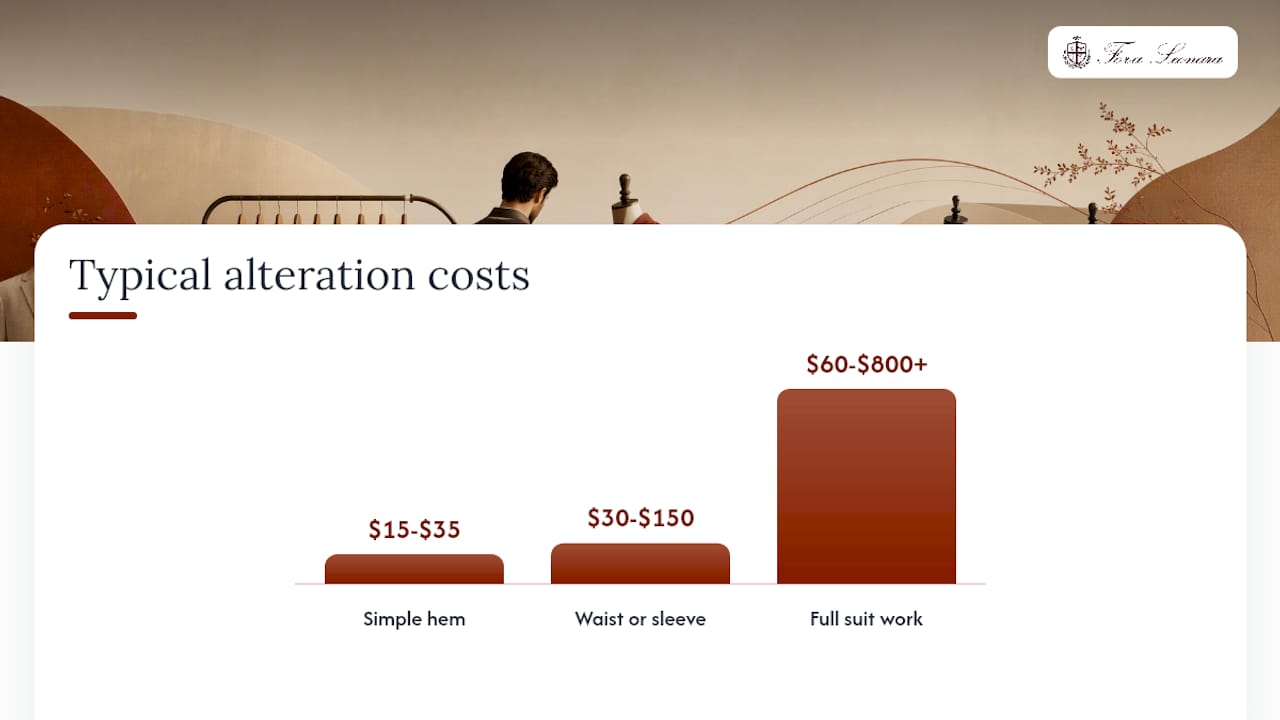
- Simple hem (pants, skirt): $15 to $35
- Waist take in/let out: $20 to $50
- Sleeve shortening (shirt or jacket): $20 to $75
- Zipper replacement: $20 to $60
- Dress or formalwear alteration: $50 to $250
- Full suit alteration package: $60 to $800+
Pro Tip: Ask for a written, line-item estimate before any work starts. A verbal “around $80” can balloon once the tailor opens the seams and finds a lining that needs replacing.
Key Takeaways
Tailoring alterations cost is driven mainly by labor hours and fabric complexity, and getting an in-person quote before work begins is the single best way to avoid surprise charges.
| Point | Details |
|---|---|
| Know your ranges | Simple hems run $15 to $35; suit overhauls run $60 to $800+ depending on complexity. |
| Ask about fittings | Confirm whether the quoted price includes a second fitting before comparing shops. |
| Bundle your visits | Bringing multiple items in one trip typically lowers the per-item labor cost. |
| Apply the 20 to 30% rule | If alterations exceed that share of the garment’s original price, replacing it often makes more sense. |
| Match the tailor to the garment | Canvassed jackets and fine wool need atelier-level experience, not a counter tailor. |
Table of Contents
- How Much Do Alterations Cost by Garment Type?
- What Makes One Tailor’s Quote Higher Than Another’s?
- How Long Does a Tailoring Job Take, and What Does Rush Service Cost?
- Should You Alter It or Replace It?
- What Are the Real Limits of Alteration Work?
- When Does a Premium Tailor Make Sense?
- Sources
- FAQ
How Much Do Alterations Cost by Garment Type?
Pricing splits cleanly by garment category, and knowing the low and high ends helps you spot a fair quote from an inflated one.
Pants and jeans. A basic hem runs $15 to $35 on lightweight fabric, but denim or lined trousers push that to $25 to $50 or more because the thicker seams and topstitching take longer and often need a heavier machine. Taking in or letting out a waist adds $20 to $50. Tapering a leg, a common request for slim-fit jeans, typically costs $25 to $60 depending on how much fabric moves.
Shirts and blouses. Shirt sleeve alterations to shorten length at the cuff usually cost $20 to $40; taking in the body for a slimmer fit runs $25 to $50. A dress shirt with a French cuff or monogram costs more to handle correctly.
Dresses and skirts. Simple dress hemming usually starts at an affordable price, but formal gowns with lining, boning, or beading typically require significantly more investment. Complex bodice or structural alterations are costlier.

Suits and jackets. This is where spend tiers matter most. A basic package (hem trousers, minor waist adjustment) lands around $60 to $150. A standard package (jacket sleeves, trouser waist, taper) runs $150 to $300. A complex overhaul, meaning shoulder work, relining, or a full recut, climbs to $300 to $800 or higher, especially in major coastal cities where labor and rent push shops toward the top of every range.
Coats and specialty items. Relining a coat or jacket can cost several hundred dollars on its own, separate from any fit adjustments, because the old lining has to come out before the new one goes in.
Two practical notes worth remembering:
- Bundling several fixes into one visit, say a jacket sleeve plus trouser hem, usually lowers the per-item labor charge because the tailor sets up once instead of twice.
- Lined garments, heavy denim, and anything with handwork (buttonholes, beading, monograms) will sit at the top of every range listed above, not the middle.
What Makes One Tailor’s Quote Higher Than Another’s?
Most tailoring quotes boil down to one formula: labor hours multiplied by an hourly rate, and that rate varies significantly by shop tier and region. A dry cleaner’s counter tailor might charge $25 to $40 an hour; a dedicated alterations boutique often runs $50 to $90; a specialist atelier working on tailored menswear can bill $100 or more per hour for handwork.
On top of labor, watch for these add-ons:
- Lining replacement or repair
- Functioning buttonholes (sleeve or jacket front)
- Hand-stitched hems versus machine hems
- Heavy leather, suede, or beaded fabric, which needs special equipment
- Rush service, often a flat fee or percentage surcharge
Pro Tip: When comparing two quotes, ask each shop whether the price includes a second fitting. Many shops build in one fitting but charge extra for follow-up adjustments, which can quietly close the price gap between a “cheap” and “expensive” quote.
How Long Does a Tailoring Job Take, and What Does Rush Service Cost?
Turnaround time depends almost entirely on how many structural layers the tailor has to open up.
- Simple jobs (hem, basic waist take in): usually ready in one to three days.
- Moderate jobs (sleeve shortening with buttonholes, dress alterations): typically three to seven days, since sleeves on structured jackets require detaching at the shoulder.
- Complex work (suit overhauls, relining, formalwear with beading): often one to three weeks, sometimes longer during wedding or holiday season.
Rush service, getting a job done in 24 to 48 hours, commonly adds a flat fee or a percentage on top of the base price. It’s worth paying when you have a fixed event date, but skip it for anything you can plan two weeks ahead. If your garment needs more than one fitting, which is common for jackets and gowns, book your first appointment with enough runway that a second fitting doesn’t collide with your event.
Should You Alter It or Replace It?
A practical guideline is to evaluate whether alteration costs approach a significant portion of the garment’s purchase price; if so, replacement might be more economical, particularly for lower-quality garments. More durable or high-quality pieces often justify higher alteration investments.
- A $40 fast-fashion dress rarely justifies a $60 alteration.
- A $600 wool suit with quality canvassing can easily justify $200 to $300 in alterations, because the cost-per-wear drops the longer the garment stays in rotation.
- Sentimental or rare pieces (a father’s suit, a vintage coat) often justify alteration spending that ignores the percentage rule entirely.
- Bundling every needed fix into one tailor visit almost always beats paying for separate trips.
What Are the Real Limits of Alteration Work?
Not every fit problem can be fixed, and knowing the limits saves you a wasted consultation. Ready-to-wear garments typically allow only one to two inches of letting out at a waist or seam, since most manufacturers leave minimal seam allowance. Shoulder width on a jacket is rarely adjustable without a full rebuild, because the sleeve, canvas, and shoulder pad all have to come apart together.
- Patterned fabric (plaid, stripes) requires careful matching at every seam, which adds time and cost.
- Lined garments cost more to alter because the lining often has to be opened and resewn separately from the shell.
- A garment cut too small in the shoulders or chest may be effectively unalterable without specialist reconstruction.
When Does a Premium Tailor Make Sense?
Canvassed jackets, fine wool, and silk demand a specialist because the sleeve, shoulder, and lining are built as one structural unit, not layered add-ons. Cutting into that construction without atelier-level experience risks the garment’s drape permanently. That’s the standard Fora Leonara applies across its European atelier work, where every alteration on a canvassed piece is treated as construction work, not a quick fix.
When you’re deciding who touches an investment garment, ask about:
- Experience with canvassed or half-canvassed jackets specifically
- Examples of prior relining or shoulder work
- Whether buttonholes are hand-worked or machine-made
Pro Tip: A $700 wool suit altered well can outlast five fast-fashion suits combined, so the cost-per-wear often favors paying more for the right hands.
Sources
- Suit alterations cost: How much do tailors charge in the US?
- Average Cost of Alterations – Current Cost
- How Much Do Clothing Alterations Cost?
FAQ
What is a reasonable price for alterations?
A reasonable price is $15 to $35 for a simple hem, $30 to $150 for waist or sleeve adjustments, and $60 to $800 or more for full suit work, with the higher end reflecting lined fabrics or handwork.
How much does it usually cost to alter clothes?
Most everyday alterations (hems, simple waist takes, sleeve shortening) fall between $15 and $75 per job, while formalwear and suits can run several hundred dollars for complex changes.
How much does it usually cost to get your clothes tailored?
Getting a garment professionally tailored typically costs $20 to $60 for a single fix like a hem or zipper, and $150 to $300 for a standard suit package covering multiple adjustments.
How much does it typically cost to alter a pair of jeans?
Hemming jeans usually costs $15 to $35, though heavier denim or a tapered fit can run $25 to $60 because of the extra topstitching and thicker seams involved.
Recommended
- Perfect Trouser Break Guide for a Polished Professional Look | Fora Leonara Journal
- Silk vs Satin: What to Choose for Investment Tailoring | Fora Leonara Journal
- Architectural Integrity: The Pinnacle of Sartorial Capital | Fora Leonara Journal
- Merino Wool Benefits for Tailored Professional Wear | Fora Leonara Journal
