

Timeless style is dressing in well-fitted, high-quality pieces in a neutral palette that work across seasons, occasions, and years without looking dated. The single best way to get there is building a small capsule wardrobe of tailored staples, buying for fit and fabric first, trend second. Done right, this means fewer decisions each morning, more mileage from every piece, and a closet that still looks right in a decade.
TL;DR:
- Most capsule wardrobe pieces should be tailored to fit perfectly, with shoulder seams at the natural shoulder and sleeves ending at the wrist; poor fit ages garments quickly.
- High-quality fabrics like wool, cotton, silk, and linen hold their shape and breathe better, especially when inspected by touch for weight and drape, reducing wear and aging.
- Building a timeless wardrobe involves prioritizing neutral, versatile essentials first, with a small, intentional selection of trend accents limited to accessories or one garment per season.
- A staggered, six-month process focusing on outerwear, tops, bottoms, and accessories helps avoid clutter and ensures each item adds real value and coherence.
- Regularly assess and tailor off-the-rack pieces, replacing garments when their fabric thins or seams fail, to maintain an polished, long-lasting wardrobe.
Table of Contents
- What Timeless Style for Women Actually Means
- Your Timeless Wardrobe Essentials Checklist
- How to Build a Capsule Wardrobe Step by Step
- Five Outfit Formulas That Never Miss
- Fit Checks and Tailoring Fixes That Change Everything
- Fabrics That Age Well and How to Care for Them
- Adding Color and Trends Without Dating Your Closet
- How Fora Leonara Approaches an Investment Wardrobe
- Ready to Build Your Own Timeless Capsule?
- Sources
- FAQ
What Timeless Style for Women Actually Means
Fashion cycles fast enough that “trendy” has an expiration date built in. Timeless style rejects that clock. It leans on four qualities: fit, quality, simplicity, and versatility. A garment that hits all four still looks intentional whether you bought it last week or eight years ago.
This is different from “classic,” though the words get used interchangeably. Classic usually refers to specific silhouettes, the trench, the tailored blazer, the little black dress, that have proven their staying power for decades. Timeless is the broader principle: choosing pieces (classic or not) that resist obsolescence because of how they’re made and how they fit you.
Fit and proportion come first
Nothing ages a garment faster than a poor fit, and nothing makes an inexpensive piece look expensive faster than a good one. Before you buy anything, check three things: shoulder seams sit at the edge of your natural shoulder, sleeves end at the wrist bone, and the garment follows your body’s line without pulling or ballooning. Vogue’s guide to wardrobe basics treats cut and proportion as the actual foundation of a closet, more important than the fabric printed on the label. A $2,000 coat with shoulders too wide reads cheaper than a $200 coat that fits.
Quality you can verify without a label
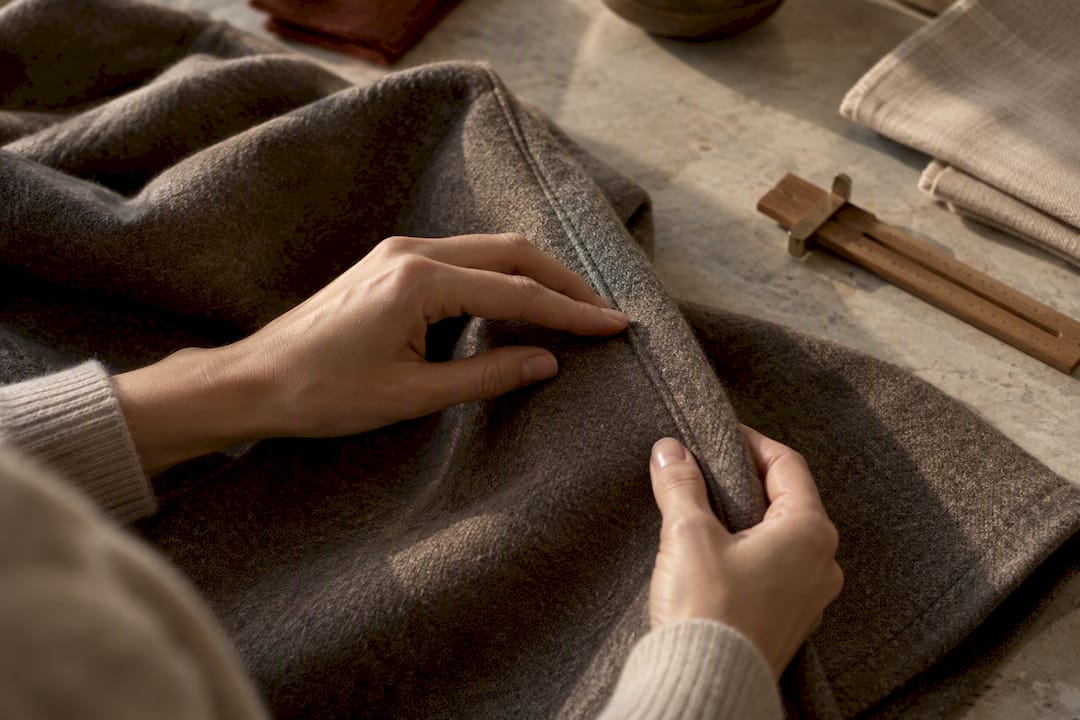
Quality isn’t a marketing word, it’s something you can check with your hands. Run your fingers over the seams. Are they straight and reinforced, or loose and puckered? Hold the fabric up to light. Does it have weight and drape, or does it look thin and see-through? Natural fibers, wool, cotton, silk, linen, tend to age better than synthetic blends because they hold shape and breathe.
Simplicity and restraint in every choice
Loud logos, oversized hardware, and busy prints date a piece the fastest because they tie it visually to the year it was designed. Restraint doesn’t mean boring: a camel coat with clean lines and no branding will outlast a logo-covered version from the same season, every time.
- Choose muted hardware (matte gold, tonal buttons) over shiny, oversized branding
- Favor solid neutrals and subtle texture over graphic prints
- Ask if you’d still wear it if the label were removed
Versatility: the 80/20 rule
Apply an 80/20 split to every purchase. Roughly 80% of your closet should be interchangeable neutral basics that mix with almost everything else you own. The remaining 20% is where personality and seasonal color live. This single filter eliminates most impulse buys, because a piece that only pairs with one other item in your closet fails the versatility test before you even try it on.
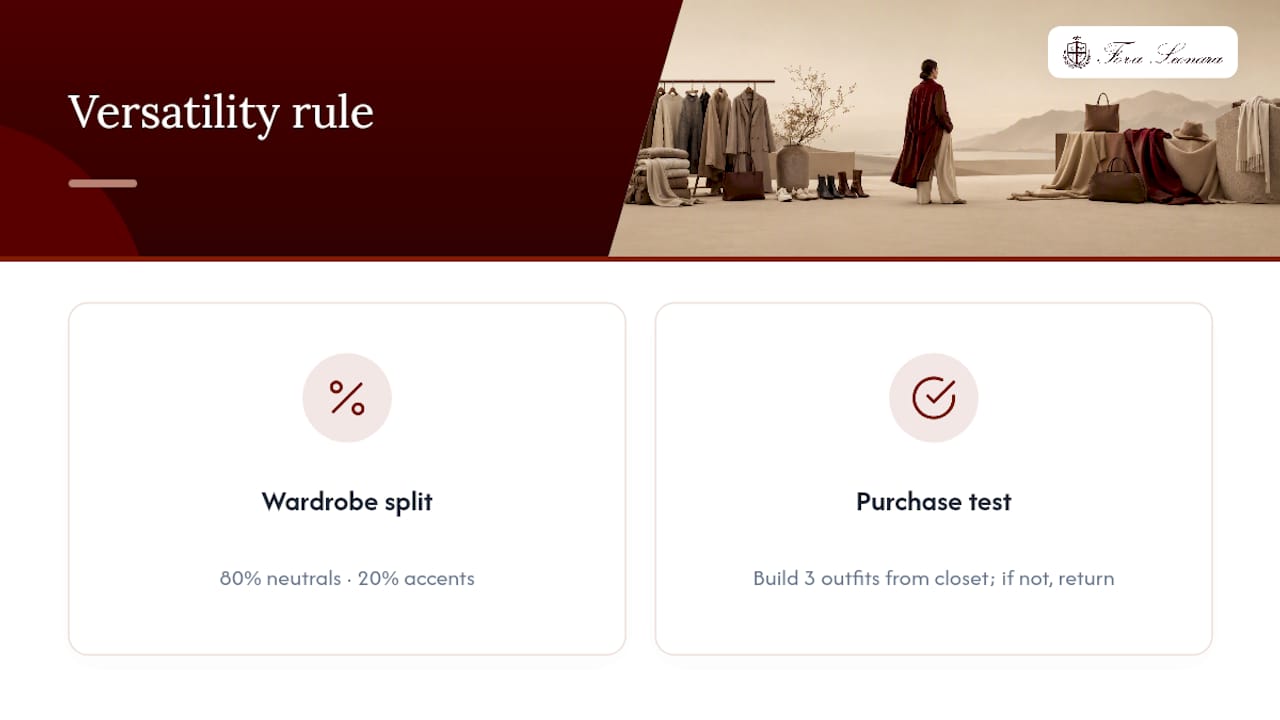
Pro Tip: Before buying anything, ask if you can build three different outfits with it using only what’s already in your closet. If you can’t picture two, put it back.
Your Timeless Wardrobe Essentials Checklist
A classic wardrobe women can build on for years starts with a short list of anchors — not a shopping spree. Marie Claire’s rundown of core basics points to five categories that show up in nearly every durable wardrobe: a trench, a blazer, a little black dress, a crisp white shirt, and quality knitwear. Here’s how to prioritize them, in order of how hard they work.
- A tailored blazer in navy, black, or camel. This single piece transforms jeans into a work-appropriate outfit and dresses down a silk shell for weekend brunch. Buy one exceptional blazer before you buy three mediocre ones.
- A crisp white shirt in cotton poplin. It layers under sweaters, tucks into trousers, and works loose over a swimsuit. Look for a fabric with enough structure to hold its shape after washing.
- A little black dress with a simple, flattering line, no trend details that scream a particular year. One good LBD covers dinners, weddings, and client events.
- Well-fitted trousers in wool or a wool blend, straight or slightly tapered. These are the piece most women skip and most regret skipping.
- A trench or tailored coat in a neutral shade. Outerwear gets seen more than almost anything else you own, so it deserves the biggest single investment in your capsule.
- Quality knitwear, at least one crewneck and one turtleneck in cashmere or a cashmere blend. Knitwear softens tailored pieces and works alone with denim.
- Dark, well-fitted denim, one pair, no distressing, no logo stitching.
On accessories, Marie Claire and other capsule guides consistently point to the same four workhorses: a neutral leather tote, a pair of loafers, simple gold jewelry, and a classic pump. Each one extends the life of outfits you already own rather than adding a new silhouette to manage.
For quantities, aim for 1 to 2 blazers, 2 to 3 white or neutral tops, one LBD, 2 pairs of trousers, and one investment coat as your opening set. That’s roughly a dozen pieces that combine into 20 or more outfits before you add a single seasonal item.
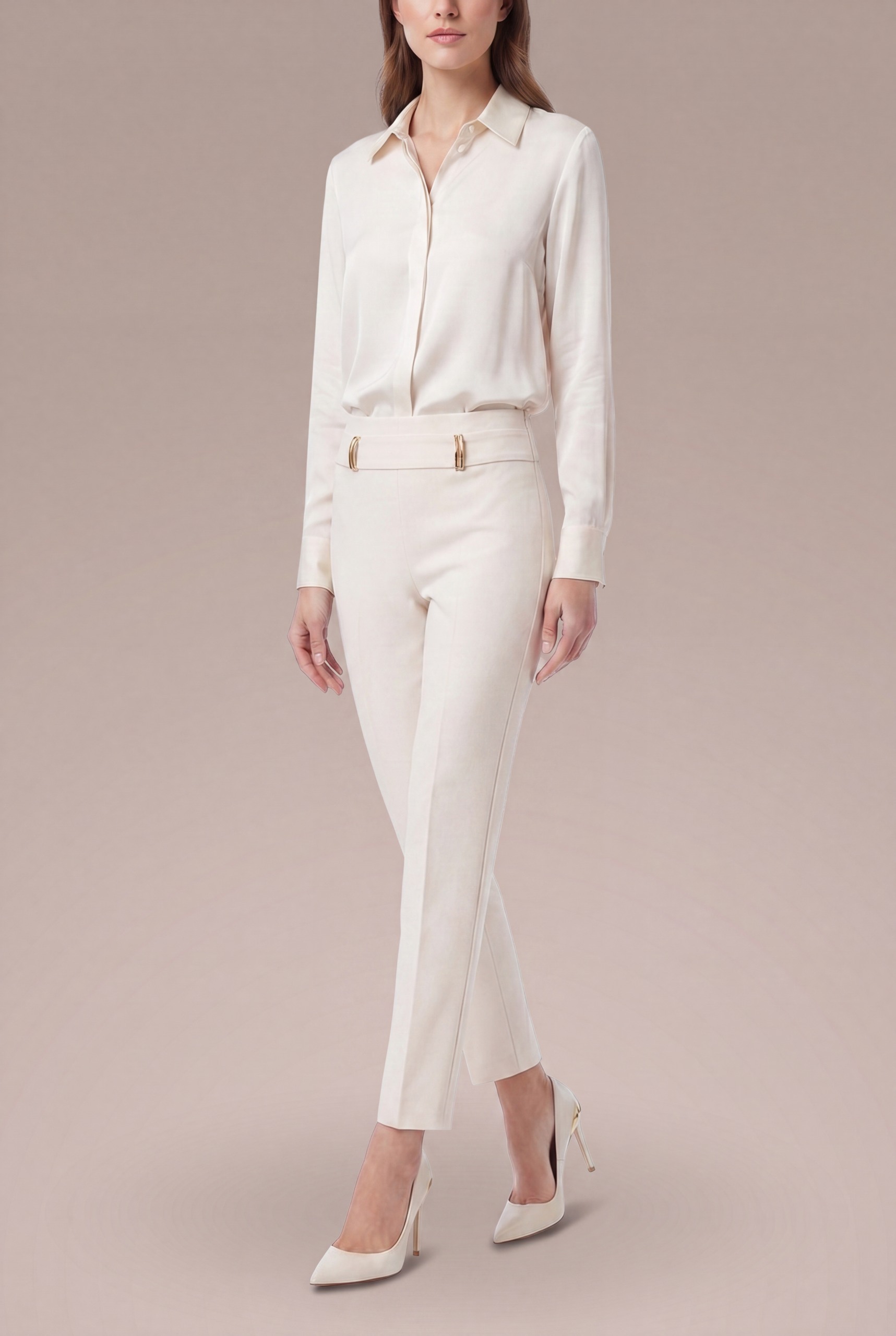
Budget in tiers rather than spreading money evenly. Put the largest share toward the coat and the blazer, the two pieces every outfit is built around. Save on basics you’ll replace more often, like a plain cotton tee, where a mid-range price point holds up fine.
Know when to retire something. Replace a garment when the fabric has thinned to the point of translucency, when seams have failed twice, or when no amount of steaming restores its shape. A blazer that’s been re-lined once is an investment; a blazer that needs its third lining is a candle for the donation pile.
How to Build a Capsule Wardrobe Step by Step
Buying everything at once is how closets end up full of pieces that don’t talk to each other. A staggered build, spread across roughly six months, lets you shop with intention and correct course as you go. The 22-piece capsule system from 1ABEL, eight tops, six bottoms, eight accessories, is a useful structural reference for how the math works out.
- Month 1: anchor the outerwear and one suiting piece. Buy your coat and your blazer first. These are the two most visible, most expensive, and hardest-to-replace items, so get them right before building around them.
- Month 2: fill in tops. Add the white shirt, a neutral knit, and one more versatile top. This is where fabric weight matters most, since tops touch your skin and get worn most frequently.
- Month 3: bottoms. Wool trousers, dark denim, and one skirt if your lifestyle calls for it. Fit-check every pair in motion, sitting, walking, reaching, not just standing in front of a mirror.
- Month 4: the dress and one statement layer. The LBD and a second coat or jacket for temperature range.
- Month 5: accessories. Tote, loafers, one pump, simple jewelry. These finish outfits and are usually the cheapest category relative to how much use they get.
- Month 6: audit and patch gaps. By now you’ll know what’s missing because you’ve been wearing the capsule for months. Fill exactly those gaps, nothing more.
Before buying anything new in month one, audit what’s already hanging in your closet. Pull every piece you’ve worn in the last 90 days and lay it out. What you’re wearing repeatedly tells you your real style, not your aspirational one. What’s untouched for a year is a candidate to sell or donate before it takes up budget-planning headspace.
If the fabric itself has failed, thinning, pilling badly, or the weave has loosened, replacement is the better use of money.
Pro Tip: Keep a running note on your phone of exactly what outfits you reach for on repeat. After three months, that list becomes your most honest shopping guide, better than any influencer’s “10 must-haves” post.
InStyle’s approach to classic wardrobes makes a related point worth repeating here: a capsule reduces decision fatigue because every piece has already been vetted to work with everything else. That’s the real payoff of the staggered build, not just a tidier closet, but fewer wasted minutes every single morning.
Five Outfit Formulas That Never Miss
Once the essentials are in place, getting dressed becomes an exercise in mixing five combinations rather than solving a new puzzle every day.
- Polished professional: blazer, white shirt, wool trouser, loafer. Add a simple gold pendant if the meeting calls for slightly more polish.
- Elevated weekend: crisp white tee, dark denim, tailored coat over the top, clean white sneaker. This formula reads as put-together without looking like you tried.
- Date night or evening: the LBD, minimal gold jewelry, a pump or a mule depending on the venue. Skip the statement bag here; let the dress do the work.
- Travel uniform: a knit layer under a tailored coat, straight trousers, loafers you can walk a terminal in. Everything in this combination layers, which matters more than any single piece when you’re moving through climate changes in one day.
- Casual-chic: a quality knit tucked loosely into a midi skirt, finished with a loafer. This formula bridges errand-running and casual lunches without a wardrobe change in between.
The formulas work because every piece in them already passed the versatility filter from your essentials list. None of these outfits require a single-use item that only pairs with one other thing you own.
Fit Checks and Tailoring Fixes That Change Everything
Off-the-rack clothing is built for an average body, and almost nobody is exactly average everywhere. A $50 alteration budget on a $300 blazer often does more for how expensive you look than another $300 spent on a different blazer entirely.
Run through this checklist by garment type:
- Blazers and jackets: shoulder seam sits at the edge of your actual shoulder, not beyond it; sleeve ends at the wrist bone.
- Trousers: waist sits without gapping when you sit down; hem breaks cleanly at the shoe, no bunching.
- Shirts: enough room to move your arms forward without the back pulling, but no excess fabric pooling at the waist.
- Dresses: shoulder seams match your shoulder line; the waist seam, if there is one, sits at your actual waist, not above or below it.
Five alterations solve the vast majority of fit problems: taking in the waist, shortening sleeves, hemming trousers or a skirt, taking in the sides of a blazer, and adjusting shoulder seams. Costs run roughly $15 to $30 for a simple hem, up to $75 to $150 for shoulder or full-jacket alterations, depending on your region and the tailor’s experience.
Choose a tailor the way you’d choose a hairstylist: ask friends who dress well where they go, then bring one garment as a test before committing your whole capsule to that person. At the first visit, ask them to pin the garment while you’re standing, sitting, and walking, since a fit that looks perfect standing still can fail the moment you move.
Pro Tip: If you’re building a layering-friendly piece like a coat, size it slightly generous through the shoulders and chest so a sweater fits underneath without straining the seams. Fitted pieces worn alone should size to your body exactly.
Fabrics That Age Well and How to Care for Them
Fiber content decides more about a garment’s lifespan than almost anything else on the label. Natural fibers, cotton, wool, silk, linen, and cashmere, breathe, hold their shape through repeated wear, and develop a better patina than synthetics, which tend to pill, lose shape, and look tired within a season or two.
Check the label for fiber content first, then look for weight cues where they apply. Heavier fabric generally survives more washes and more wear. Capsule-wardrobe fabric guidance points to specific benchmarks worth knowing: a tee around 220 GSM (grams per square meter) holds its shape far better than a flimsy 140 GSM version, a crewneck in the 420 to 550 GSM range resists pilling, and 14-ounce denim outlasts lighter weights by years, not months.
- Wash wool and knitwear cold, on the delicate cycle, and lay flat to dry, never tumble dry cashmere
- Store knits folded, not hung, to prevent shoulder stretching
- Rotate shoes rather than wearing the same pair daily, so soles and structure recover between wears
- Address pilling early with a fabric shaver rather than letting it spread
Dry cleaning earns its cost on structured pieces, blazers, coats, tailored trousers, where home washing risks distorting the shape permanently. A 2024 study cited in fashion coverage found that well-made clothing carries measurably higher repurchase intent among consumers than fast fashion, a reminder that the upfront cost of quality fabric tends to pay for itself in years of wear rather than seasons.
Adding Color and Trends Without Dating Your Closet
Build your base around a tonal cluster, three or four neutrals that sit near each other on the color wheel: black, navy, camel, and gray work together in almost any combination. This is what makes a capsule feel put-together even before you add a single trend piece.
Reserve a small portion of your wardrobe for seasonal accents, such as a bold shoe, a printed scarf, or a single statement bag. Vogue describes this as a “yin-yang” balance: a durable neutral core that gives you the confidence to experiment at the margins, because a passing trend that misses next season only costs you one small piece, not your whole closet.
- Keep trend pieces to accessories or one garment per season, never multiple at once
- Favor classic scale over exaggerated proportions when trying a new silhouette
- Skip anything with a print or logo tied to a specific year or meme cycle
- Test a trend on a lower-cost piece before committing budget to an expensive version
How Fora Leonara Approaches an Investment Wardrobe
Rafael Zard founded Fora Leonara on a simple premise: quiet luxury holds up better than loud fashion, both aesthetically and financially. Every piece is tailored in a European Union atelier, with careful attention to fabric sourcing, fit, stitching, and finish.
That control over the supply chain shows up in the materials, wool, cotton, silk, and leather chosen for weight and drape rather than the cheapest available option. It’s the same principle Fora Leonara’s own writing on quiet luxury lays out: garments without visible branding, built to be judged on cut and craftsmanship rather than a logo.
- Start a capsule with one anchor piece from a category you wear most often, a blazer, a coat, or a knit
- Use a virtual styling appointment to get fit guidance before committing to a full wardrobe.
- Reference the brand’s guide to building a timeless wardrobe for a deeper walkthrough of sequencing purchases
- Treat each purchase as a decision about longevity, not a seasonal refresh
Ready to Build Your Own Timeless Capsule?
Reading about fit checks and fabric weights only gets you so far. At some point, someone needs to look at your shoulders, your proportions, and your closet and tell you honestly what’s missing. That’s what The Atelier does: a virtual private styling appointment where Fora Leonara works through your actual wardrobe gaps instead of handing you a generic checklist.

The Atelier walks you through fit, fabric, and priority order the same way this article has, except tailored specifically to your body and your closet, not a hypothetical reader’s. If you’d rather start browsing before booking, three categories make the strongest first move: a linen shirt for warm-weather versatility, a tailored coat like the camel wool cozy coat for your outerwear anchor, or a full suit if your wardrobe still lacks a proper tailored foundation. The full ready-to-wear collection covers every category discussed above, shirts, knitwear, trousers, dresses, and coats, all cut in the same EU atelier with no visible branding.
Book a virtual atelier session on the Fora Leonara site, or start with one anchor piece from the product catalog and build outward using the month-by-month order above.
Sources
- Vogue wardrobe essentials guide
- Marie Claire — best basics 2026
- InStyle — classic wardrobe that lasts
FAQ
What Is Timeless Fashion Style?
Timeless fashion style means dressing in well-fitted, high-quality garments in a neutral palette that stay relevant regardless of seasonal trends. It relies on four filters, fit, quality, simplicity, and versatility, applied to every purchase rather than chasing what’s currently popular.
What Is the 3-3-3 Rule for Clothes?
The 3-3-3 rule is a minimalist styling challenge where you pick 3 tops, 3 bottoms, and 3 shoes (sometimes with accessories added) and wear only that mix for three weeks. It’s a useful test for whether your closet has enough interchangeable, timeless pieces, if you struggle to make it work, that’s a sign your wardrobe needs more versatile basics rather than more trend pieces.
How Do I Look Ten Pounds Thinner in My Clothes?
Fit does more for silhouette than fabric color or cut alone, a well-tailored garment that follows your actual body line reads slimmer than a looser, ill-fitting piece in a “flattering” dark shade. Structured shoulders, a defined waist, and trousers that break cleanly at the shoe all create a longer, cleaner line than baggy or oversized fits.
What Are Some Timeless Outfits for Women?
A blazer with a white shirt and wool trousers covers most professional settings, while a little black dress with minimal jewelry handles evening occasions. For casual days, a quality knit tucked into a midi skirt with loafers reads polished without trying too hard, all built from the same core essentials checklist.
Does Fora Leonara Offer Personal Styling Help?
Yes. The Atelier is Fora Leonara’s personal styling service, offered through virtual private appointments to help build or refine a capsule wardrobe. Pricing details are available directly through Fora Leonara.
