

Black tie optional means the event is formal. A tuxedo or a full-length evening gown is fully appropriate, but a dark, well-tailored suit or a dressy cocktail outfit also works. “Optional” refers to the tuxedo, not the formality. Check the invitation’s timing and venue before deciding how far to lean into black tie.
TL;DR:
- A dark, well-tailored suit in navy or charcoal can be an acceptable alternative to a tuxedo if it is worn with the right accessories and fit.
- Avoid casual pieces such as denim, sneakers, flip-flops, short-sleeve shirts, or casual fabrics like cotton or linen in favor of formal, polished options.
- Women’s attire should include full-length gowns, tailored jumpsuits, or dressy cocktail dresses made from luxe fabrics like silk or velvet to meet formal standards.
- Evening events at luxury venues require more formal outfits, while daytime weddings in relaxed settings allow lighter colors and less structured looks.
- Prioritize fitting and fabric quality over trendy or branded items, and consider professional styling or tailoring to elevate a dark suit or dress to formal attire.
Table of Contents
- What “black tie optional” actually asks of you
- Men’s options: tuxedo vs. dark suit
- Women’s and gender-neutral options for the same dress code
- How to read the room before you get dressed
- Common mistakes that undercut a formal look
- Quick outfit templates you can copy
- The Fora Leonara approach to finishing a formal look
- Shop the pieces or book a fitting before the wedding season rush
- Sources
- FAQ
What “black tie optional” actually asks of you
The phrase draws a line between a choice and a requirement. Strict black tie means every man in the room wears a tuxedo, full stop. Black tie optional keeps the formal atmosphere but gives men a second acceptable path: a dark, sharply tailored suit instead of a rented dinner jacket.
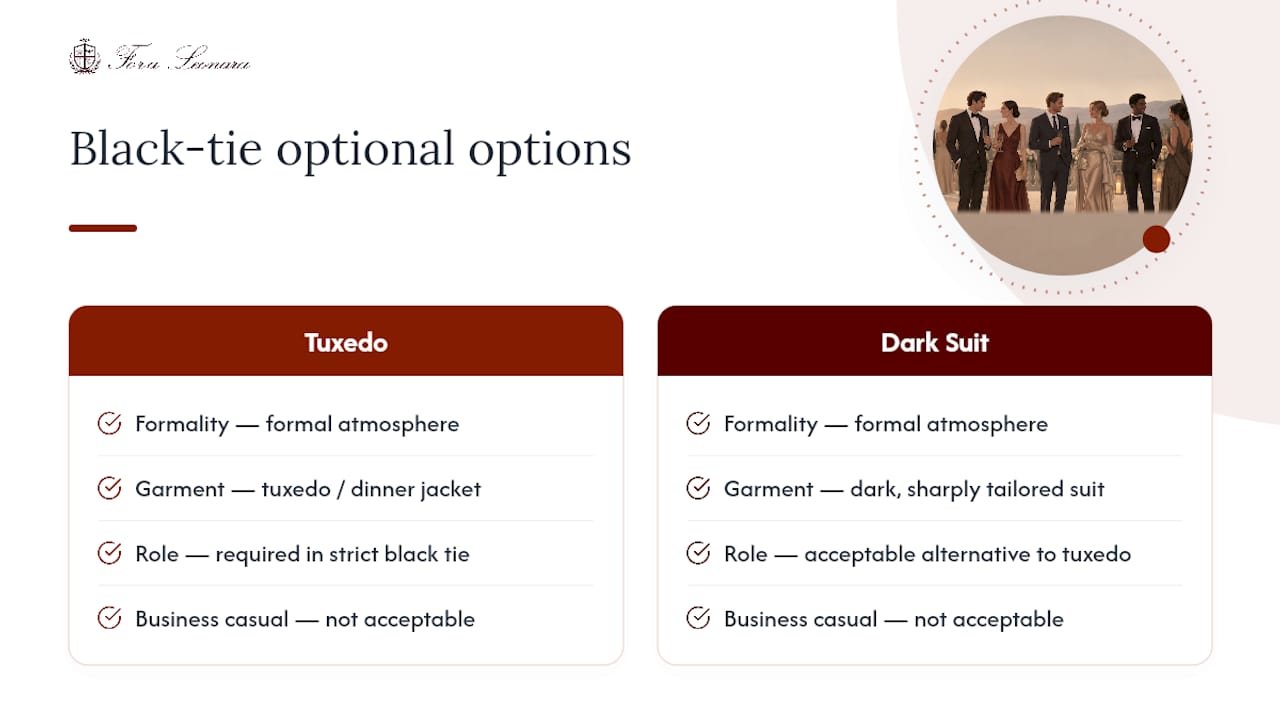
You will also see wording like “black tie preferred,” “black tie encouraged,” or “black tie invited.” These variants generally communicate the same practical message: hosts want a formal room, and they will accept a well executed suit or dress if you skip the tuxedo. None of them mean business casual.
The golden rule when the wording still feels vague: lean formal. Read the invitation twice, scan the wedding website for a moodboard or photo gallery, and note how the wedding party is dressed in any posted pictures. Those cues tell you more than the dress code line ever will.
Men’s options: tuxedo vs. dark suit
A tuxedo is still the traditional answer, and it removes all guesswork. A proper dinner jacket comes with satin lapels, a formal shirt with a pleated or marcella front, and a bow tie rather than a long necktie. Patent leather oxfords or well-shined cap toes finish the look. This is the safest, most literal read of the dress code.
The dark suit route works just as well when it is treated with the same seriousness. Menswear commentators note that whether you choose a tuxedo or a suit, you need to commit fully to that level of formality and execute it well. A charcoal or midnight navy wool suit, cut close through the shoulder and body, reads formal in a way a boxy off-the-rack suit never will.
Accessories decide whether a suit lands as elegant or merely office-appropriate:
- A silk pocket square, folded flat rather than fanned
- Cufflinks on a French cuff shirt instead of buttons
- A leather belt that matches your shoes exactly, or no belt at all with suspenders
- Polished leather oxfords or derbies, never rubber-soled dress shoes
Skip brown shoes with a black or navy suit, skip casual woven belts, and never wear sneakers no matter how “elevated” the style claims to be.
Women’s and gender-neutral options for the same dress code
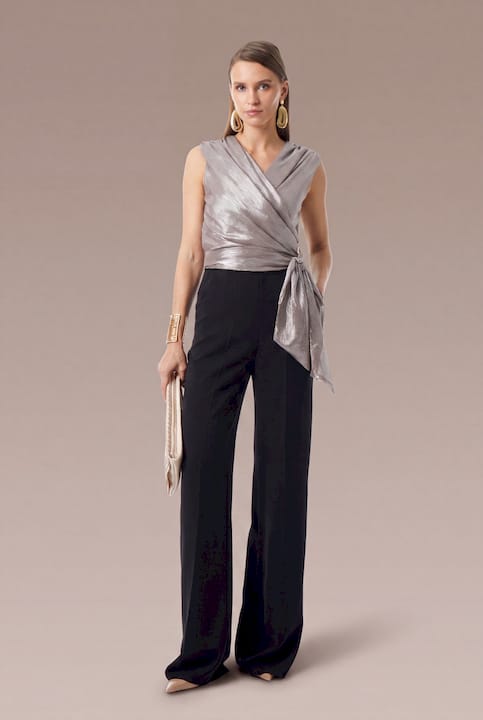
A floor-length evening gown is the most literal parallel to a man’s tuxedo, and it remains the safest choice for an evening reception at a formal venue. A tailored jumpsuit or a wide-leg pantsuit in a fluid, evening-weight fabric works just as well. Fashion editors note that fabric and finish carry more weight than strict length in many modern settings, and stylists point out that a well-cut jumpsuit or pantsuit in a rich fabric like silk crepe or matte satin can read every bit as black-tie-appropriate as a gown.
A dressy cocktail-length piece is acceptable when the venue and time of day allow it. The key word is dressy: think silk, velvet, or structured crepe, not jersey or cotton.
What to leave in the closet:
- Casual sundresses or anything in linen or cotton jersey
- Denim in any form, including a denim jacket layered over a dress
- Flat casual sandals, espadrilles, or anything beach-adjacent
- Costume jewelry that reads loud rather than polished
Pair your outfit with a structured clutch, not a tote, and choose jewelry that is deliberate rather than statement-heavy. For a deeper look at building this outfit from the invitation down to the shoe, Fora Leonara’s guide on what women should wear to a black tie optional event walks through the same decision points in more depth.
How to read the room before you get dressed
Three details tell you almost everything about how far to lean into formality: the hour, the address, and the wedding party’s own wardrobe. Evening receptions at luxury hotels or private clubs call for the tuxedo or gown route. Daytime weddings at a garden, vineyard, or barn venue give you room to wear lighter colors and a less formal silhouette while still looking put together.
Use this three-step check before you commit to an outfit:
- Read the invitation closely for any qualifying language, like “black tie preferred” or a note about the reception venue.
- Check the couple’s wedding website for photos of the ceremony space, reception room, or engagement shoot; a black-and-white ballroom shot signals something very different from a sunlit vineyard.
- If you are still unsure after both steps, ask the couple directly. A short text beats guessing wrong.
Fashion outlets consistently flag this dress code as one of the most confusing in modern etiquette, and the advice from Vogue and GQ lands in the same place: when the invitation gives you no further clues, err on the side of the tuxedo or the sharpest dark suit in your closet. Overdressing at a formal wedding rarely draws attention. Underdressing does.
Common mistakes that undercut a formal look
Black tie optional trips people up because “optional” gets misread as a license to relax. It is not. The dress code still asks for a formal register, and a handful of casual pieces will sink an otherwise solid outfit fast.
Skip these outright:
- Denim of any kind, including a “elevated” dark-wash jean
- Sneakers, even minimalist leather ones marketed as dressy
- Flip-flops or casual sandals for women
- Short-sleeve shirts or knit polos in place of a dress shirt
- Novelty prints, sequined casualwear, or anything designed to grab attention rather than complement the room
Etiquette writers echo this directly. Miss Manners advises taking the word “optional” seriously in intent, not literally, and favoring the more formal choice whenever you are unsure. Quick fixes are usually simple: swap casual sandals for heeled pumps, trade a soft-collar shirt for a proper tuxedo shirt, and replace a canvas belt with polished leather.
Quick outfit templates you can copy
For men, the full tuxedo kit: dinner jacket, formal shirt, bow tie, cummerbund or waistcoat, patent leather shoes.
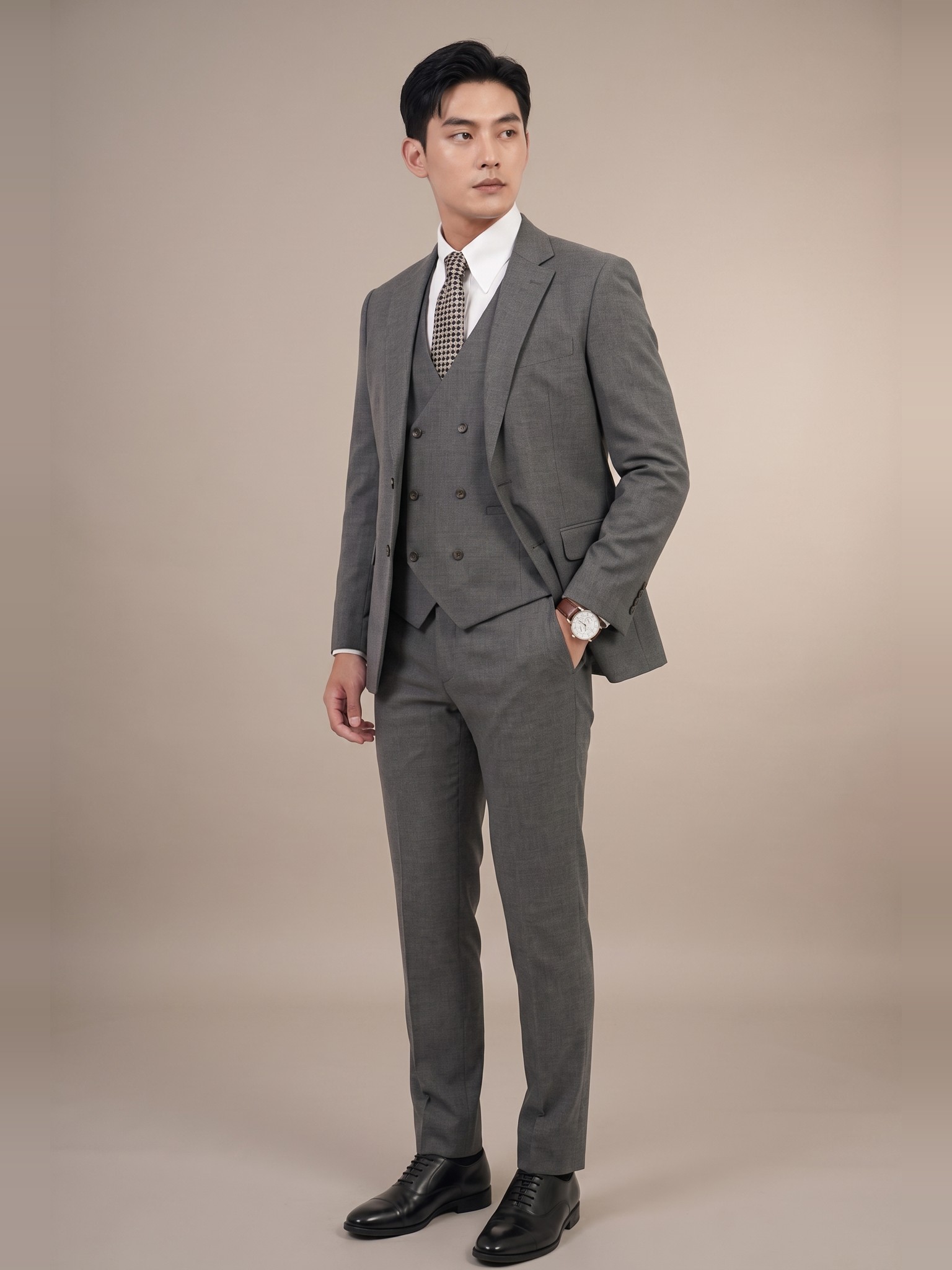
The formal dark suit kit: charcoal or midnight wool suit, French cuff dress shirt, silk tie, pocket square, black leather oxfords.
The rental fallback: rent the jacket and trousers, but buy or bring your own shirt and shoes, and get the rental hemmed at least a few days ahead.
For women, the floor-length gown kit: silk or crepe gown, structured clutch, understated jewelry, strappy heels.
The dressy cocktail kit: velvet or satin cocktail dress, statement earrings, a small clutch.
The formal jumpsuit kit: wide-leg silk jumpsuit, minimal jewelry, heeled sandals or pumps.
Pro Tip: Steam or press your outfit the morning of the event rather than the night before. Fabric relaxes overnight in a garment bag, and a fresh press right before you leave holds its shape through photos and dancing alike.
The Fora Leonara approach to finishing a formal look
Formality lives in the details most guests overlook. A tuxedo shirt with the right collar structure, shoes with a genuine leather sole, or a pocket square in the correct weight of silk all shift how formal an outfit reads, often more than the jacket itself.
Fit does more work than fabric choice alone. A dark suit that skims the shoulder and breaks cleanly at the shoe reads more formal than a rented tuxedo that fits poorly. That is the logic behind The Atelier, Fora Leonara’s personal styling service, which offers virtual appointments for guests who want a second opinion on fit or need help assembling a black-tie-optional outfit under time pressure. Browsing a piece like the tuxedo shirt or reading through one tailored piece and one accessory shows how a small, well-chosen investment changes the read of an entire outfit without adding a single logo.
Shop the pieces or book a fitting before the wedding season rush
Fora Leonara builds its formalwear the way a good black-tie-optional outfit is supposed to work: no shortcuts, no loud branding, just tailoring and fabric that carry the formality on their own.

The house’s Classic Gray 3 Piece Suit is built for this dress code, offering a dark, structured alternative to a rental tuxedo designed to maintain its formality throughout an event. For women, the Dune Veil Dress gives you the floor-length option without the search through a dozen department stores. Both come from garments crafted in a European atelier, where the focus stays on cut and material rather than trend cycles.
If you would rather talk through the decision than guess alone, book a virtual session with The Atelier and get styling input before you buy or rent anything. For a broader look at what is available right now, the full product catalog covers suits, dresses, shirts, and the accessories that finish a formal outfit properly. Formal wedding season books up fast, so give yourself at least a couple of weeks of lead time for fittings or alterations.
Sources
- Black tie guide — Gentleman’s Gazette
- Vogue — What is ‘Black Tie Optional’?
- GQ — Why black-tie-optional is the worst dress code
FAQ
Can you wear a normal suit to a black tie optional event?
Yes, a dark, well-tailored suit is an acceptable substitute for a tuxedo under this dress code. The key is fit and fabric: a sharply cut charcoal or navy wool suit reads formal, while a casual or poorly fitted one does not.
What should you avoid wearing to a black tie optional wedding?
Skip denim, sneakers, flip-flops, and casual sandals no matter how the invitation phrases the dress code. Short-sleeve shirts, knit polos, and overly casual daytime fabrics also fall short of the formal standard the event calls for.
Can a woman wear a black dress to a black tie optional wedding?
A black dress works well as long as it is formal in cut and fabric, such as a floor-length gown or a dressy cocktail dress in silk, velvet, or crepe. A casual black sundress or jersey knit would not meet the same bar.
Does black tie optional mean I can wear a blue suit?
A dark navy suit is one of the most reliable choices under this dress code, right alongside charcoal gray. Lighter blues or casual summer-weight suits read less formal and work better for daytime or relaxed-venue weddings than evening black-tie-optional events.
