

Ply counts how many yarn strands are twisted together; gauge counts how many stitches are knitted per inch. Neither one alone tells you if a sweater is warm, durable, or well made. For layering under a blazer, prioritize a finer gauge. For a standalone winter piece, prioritize higher ply and a tighter knit. The two specs work together, and buying on one number alone is how shoppers end up disappointed.
TL;DR:
- Ply indicates the number of yarn strands twisted together, which primarily affects the yarn’s thickness, warmth, and structure, not its quality.
- Gauge measures the knitting density, with higher gauge numbers producing finer, lighter, and more drapey fabrics, while lower gauges create chunkier, warmer knits.
- The combination of ply, gauge, and yarn count determines a garment’s weight, warmth, and suitability, with construction quality often outweighing raw spec numbers.
- Fine gauge and higher ply typically serve layering pieces, while lower gauge and higher ply are better for standalone winter wear with increased warmth and durability.
- Care routines should match specs: fine gauge pieces require gentle handling, whereas chunkier, high-ply knits tolerate more demanding maintenance, including regular de-pilling.
Table of Contents
- Cashmere Ply vs Gauge: The Two Specs Shoppers Confuse
- What Ply Means: How Yarn Strands Shape Weight and Structure
- What Gauge Means: Reading Stitches Per Inch
- How Ply, Gauge, and Yarn Count Work Together
- How to Choose Cashmere Ply and Gauge for Your Wardrobe
- How Fora Leonara’s Atelier Inspects a Cashmere Piece
- How Cashmere Ply and Gauge Standards Evolved
- How Manufacturing Technique Affects Ply and Gauge Quality
- Caring for Cashmere Across Different Ply and Gauge Levels
- Find Your Ply and Gauge in Fora Leonara’s Ready-to-Wear Collection
- Sources
- FAQ
Cashmere Ply vs Gauge: The Two Specs Shoppers Confuse
Most product pages throw around “2-ply” or “12-gauge” as if they mean the same thing. They do not, and understanding cashmere ply starts with separating the yarn from the knit.
Ply describes the yarn itself, before a single stitch is made. It’s the number of individual strands spun together into one thread. Ply indicates how many individual yarn strands are twisted together, and more plies generally create a thicker, stronger yarn with greater warmth and structure. A 1-ply yarn is a single strand; a 4-ply yarn is four strands twisted into one.
Gauge, by contrast, describes the knitting itself. It has nothing to do with the yarn’s construction and everything to do with how tightly that yarn gets worked into fabric. You could knit a 2-ply yarn on a tight gauge or a loose one, and get two very different garments from the identical yarn.
This is gauge measurement in knitting terms borrowed directly from industrial machine settings, not something specific to cashmere. The confusion between the two specs is exactly why so many buyers get burned on quality, paying premium prices for a sweater that’s thin in one case and stiff in the other, without knowing which spec to blame.
What Ply Means: How Yarn Strands Shape Weight and Structure
Ply is a yarn-construction number, not a quality score. A brand labels a garment 1-ply, 2-ply, 4-ply, and so on based on how many strands were twisted together before knitting began.
- 1-ply: Used for the lightest possible pieces, like fine scarves or ultra-sheer layering tops.
- 2-ply: The most common cashmere ply count for sweaters. It balances softness, drape, and reasonable durability.
- 4-ply to 6-ply: Used in structured knits, cardigans, and cold-weather pieces where body and warmth matter more than drape.
- 8-ply and above: Reserved for chunky, deliberately bulky knitwear, think cable sweaters or heavy outerwear-style pieces.
Higher ply generally means a thicker, warmer, more structured yarn, but higher ply does not automatically mean higher quality. A poorly spun 4-ply yarn from short, inconsistent fibers can pill faster and feel rougher than a well-made 2-ply yarn from long-staple fiber. Ply tells you about thickness and warmth potential. It says nothing about the fiber grade, the spinning quality, or how the garment was finished. That’s the biggest misconception in cashmere shopping: treating ply count like a proxy for luxury when it’s really just a structural spec.
What Gauge Means: Reading Stitches Per Inch
Gauge measures knitting density: how many stitches, or how many needles per inch, went into building the fabric. Gauge refers to knitting density, the number of stitches per inch, and higher gauge produces finer, lighter, and smoother fabric while lower gauge yields chunkier, warmer knits. It’s usually written as a number followed by “G” or “GG” (gauge groups), like 12G or 7GG.
The counterintuitive part: a higher number means a finer knit, not a bulkier one. That trips up a lot of first-time cashmere buyers.
- 4G to 7G: Chunky, cable-knit territory. Visible stitches, heavy hand-feel, built for warmth over refinement.
- 8G to 10G: The everyday-sweater range. Substantial but not bulky, common in crewnecks and cardigans.
- 12G to 14G: Fine gauge, smoother surface, better drape. Common in dressier knitwear meant to layer under a jacket.
- 16G to 18G: Very fine, almost fabric-like knits, often used for lightweight shirting-style cashmere pieces.
Manufacturers publish these GG or gauge values on spec sheets-614748), and the market generally runs from about 4G on the chunky end to 18G on the fine end. Finer gauges cost more per unit of fabric weight, since it takes more stitches, more machine time, and finer, cleaner yarn to hit a high gauge without the fabric looking sparse or uneven.
How Ply, Gauge, and Yarn Count Work Together
Neither ply nor gauge means much in isolation. The variable that ties them together is yarn count, written as Nm. A higher Nm denotes a finer yarn, and yarn count interacts with both ply and gauge so that a high-Nm 2-ply can end up lighter and drapier than a low-Nm 2-ply. Two garments labeled identically as “2-ply” can feel completely different depending on how fine the individual strands were spun before they were plied.
This is why construction often matters more than any single spec: a tightly knitted, lower-ply garment can trap as much warmth as a loosely knitted, higher-ply one. Gauge and tension do real work that ply alone can’t explain.
Here’s how common combinations actually translate in a finished garment, based on standard market pairings:
| Gauge / Ply | Weight & Texture | Warmth | Best For |
|---|---|---|---|
| Fine gauge / 2-ply | Fine, smooth, drapey | Moderate warmth | Layering under blazers, dressier occasions |
| Medium gauge / 2-ply | Medium weight, soft hand | Moderate warmth | Everyday crewnecks and cardigans |
| Medium gauge / 4-ply | Structured, substantial | High warmth | Cold-office sweaters, standalone daily wear |
| Low gauge / High ply | Chunky, dense, heavy | Very high warmth | Deep winter outerwear-style knits |
The takeaway: a tight 12G knit in a lower ply can outperform a loose, low-gauge knit in drape and refinement, while a dense low-gauge, high-ply combination wins on raw warmth every time.
How to Choose Cashmere Ply and Gauge for Your Wardrobe
Buying decisions get easier once you know which spec to weigh for your actual use case.
- Prioritize gauge for layering pieces. If a sweater goes under a jacket or blazer, look for fine gauge. Bulk under tailoring reads sloppy, not luxurious.
- Prioritize ply and lower gauge for standalone winter wear. A 4-ply to 6-ply garment knitted at lower gauge will carry more warmth without needing a coat over it.
- Check for yarn count (Nm) on the product page. If a seller lists it, use it to compare two “2-ply” garments against each other; higher Nm usually means a lighter, more refined result.
- Ask about garment weight or GSM if specs are missing. A GSM comparison gives you a physical number to compare across brands when gauge and ply aren’t disclosed.
- Weigh cost against use. Fine-gauge pieces drape better but cost more per garment. Higher-ply pieces tend to hold their shape longer under regular wear.
Pro Tip: Email customer service and ask directly for the Nm, gauge, and ply together, not separately. A brand that can answer all three in one reply is almost always working from a real spec sheet, not marketing copy.
If you’re building a winter wardrobe with layering in mind, match your heaviest pieces to lower gauge and higher ply, and save the fine gauges for anything worn under a coat.
How Fora Leonara’s Atelier Inspects a Cashmere Piece
Fora Leonara, founded by Rafael Zard, tailors its knitwear in a European atelier, where every piece runs through a hands-on check before it’s approved for the collection. The process doesn’t rely on trusting a spec sheet.
- Inspect the seam and cut edge: a clean, tightly bound edge signals a well-controlled ply and gauge combination.
- Compare weight in hand against a known reference garment of similar size.
- Run a drape test, letting the fabric hang unsupported to see how it falls.
- Note pilling resistance by lightly rubbing the cuff or hem area.
Cut-edge inspection and weight comparison catch what a spec sheet can hide, and fine-gauge knitting explains part of why refined cashmere costs more: it takes more stitches and finer yarn to hit 14G or 16G without the fabric looking thin. Pieces like the cashmere camel crewneck list gauge and material details up front for exactly this reason.
How Cashmere Ply and Gauge Standards Evolved
Cashmere knitting standards weren’t always this precise. For most of the 20th century, ply counts and gauge numbers were largely internal factory specs, rarely shared with the buyer at all. Scottish and Italian mills set their own gauge conventions based on the machinery they owned, and a “2-ply” sweater from one mill could differ noticeably from another’s.
Standardization crept in as cashmere moved from a niche luxury fiber to a global commodity traded across Mongolia, China, and Europe. As mills modernized and machine-knitting technology became more consistent, gauge numbers started functioning as a shared language between factories and retailers, letting a buyer in New York specify “12G” and get a comparable result from a mill in Italy or Inner Mongolia.
Ply counts followed a similar path, shifting from a rough description of yarn thickness to a more codified spec tied to specific yarn counts (Nm). That shift matters for shoppers today: when a modern brand lists both gauge and ply, it’s usually because the supply chain behind it can actually verify those numbers, not just estimate them. The gap between vague, old-style marketing language (“luxuriously soft”) and specific technical labeling (“12G, 2-ply, Nm 2/28”) reflects decades of the industry slowly getting more transparent about what shoppers are actually buying.
How Manufacturing Technique Affects Ply and Gauge Quality
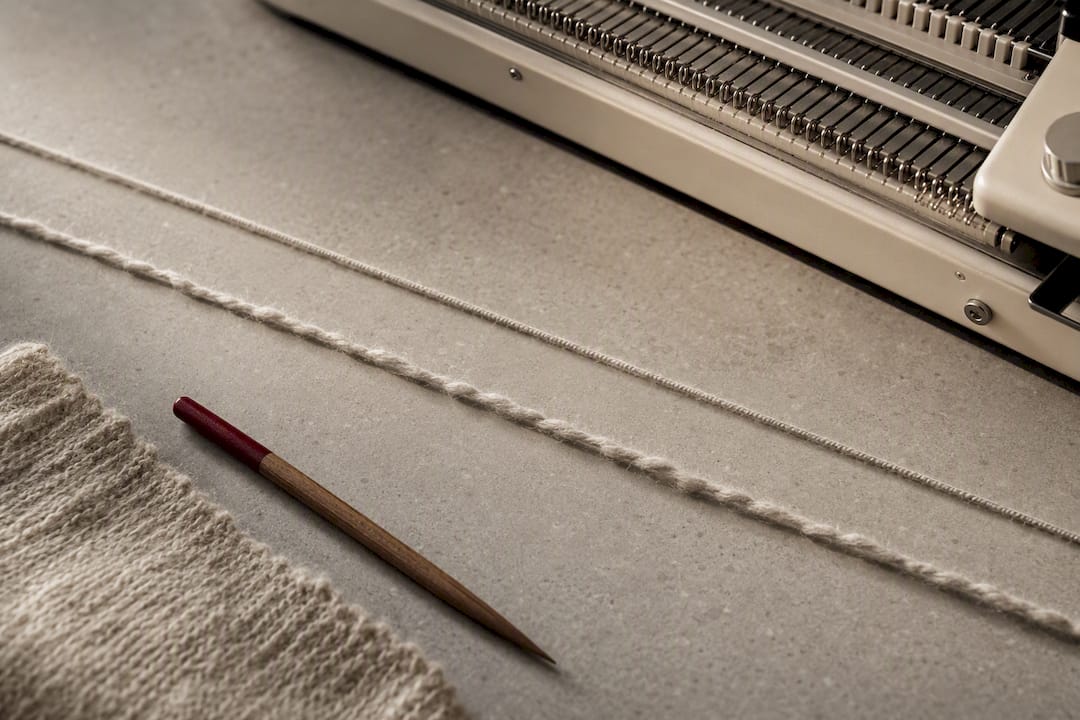
The same ply and gauge numbers can produce wildly different garments depending on how the yarn was spun and how the knitting machine was run. Spinning technique determines whether a 2-ply yarn ends up smooth and even or slightly uneven with thin spots that weaken the fabric over time.
Machine tension during knitting matters just as much as the gauge setting itself. Two sweaters knitted on the same 8G machine can come out different weights if one was run at higher tension than the other, since tension affects how tightly the stitches pack together within that fixed gauge. This is part of why construction quality often outweighs the raw spec: a mill with tighter process control can make a lower-ply garment perform like a higher-ply one.
Fiber sourcing feeds directly into this. Longer cashmere fibers spin into stronger, more consistent yarn at any given ply count, which is part of why two “4-ply” sweaters from different mills can differ so much in hand-feel and pilling resistance. Finishing steps, like washing, brushing, and pressing, also shape the final result, softening the hand of a tighter gauge or opening up the loft of a looser one. None of this shows up in a “12G, 4-ply” label, which is exactly why tactile inspection still matters even when the numbers on the tag look identical between two garments.
Caring for Cashmere Across Different Ply and Gauge Levels
Care routines shift depending on both specs, and treating every cashmere garment the same way is a common way to shorten its lifespan.
Fine-gauge pieces, 12G and above, need gentler handling. The tighter, thinner knit structure is more prone to snagging on rough surfaces like Velcro or coarse zippers, and it shows wear at friction points, like underarms and cuffs, faster than a chunkier knit. Hand washing in cool water with a mild detergent, then laying flat to dry, protects the drape that makes fine gauge worth buying in the first place.
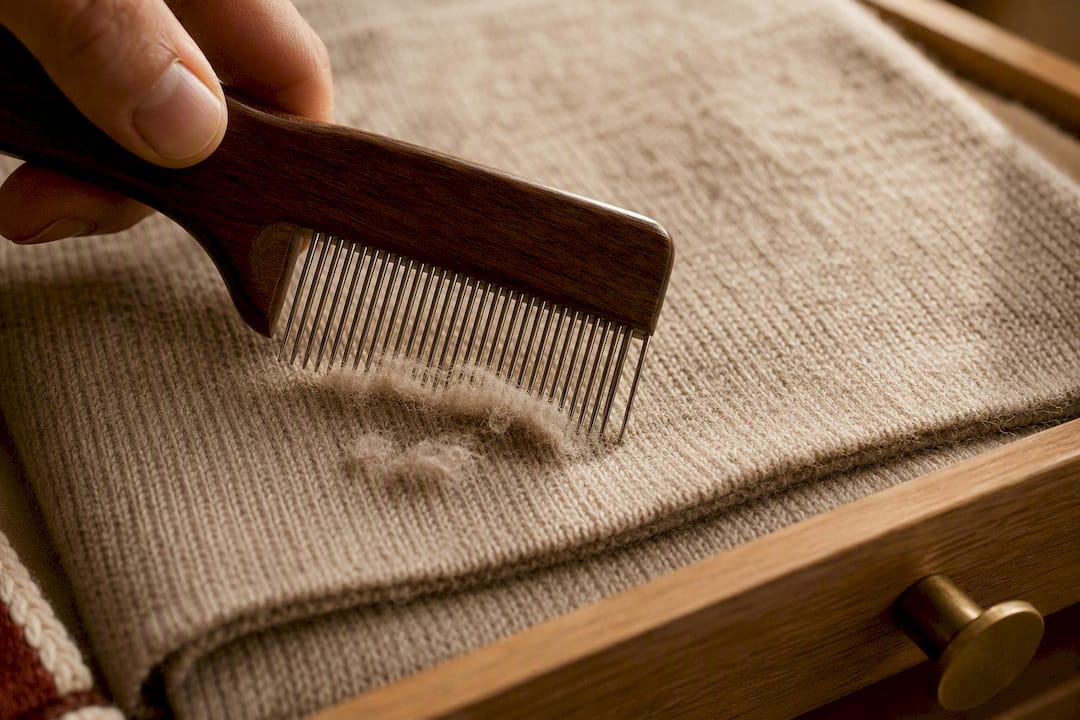
Higher-ply, lower-gauge garments (think lower gauge, 4-ply and up) tolerate more handling but need different attention around pilling. The looser knit structure and thicker yarn strands create more surface friction points, so these pieces benefit from a cashmere comb or de-pilling tool every few wears, something a delicate fine-gauge piece rarely needs as urgently.
Storage matters across the board, but the stakes are higher for structured, high-ply pieces: folding rather than hanging prevents shoulder stretch in heavier knits, since the yarn’s added bulk puts more strain on a hanger over time. Cedar blocks and breathable garment bags protect both ends of the spectrum from moths, but fine-gauge pieces should never be stored under heavier folded knits, since sustained pressure can leave permanent flattening in a tight, delicate stitch structure.
Find Your Ply and Gauge in Fora Leonara’s Ready-to-Wear Collection
Once you know your priorities, layering calls for fine gauge, standalone winter wear calls for higher ply. Shopping gets a lot faster. Fora Leonara builds its knitwear in a European atelier with those exact specs documented up front, so you’re not left guessing between two identical-sounding “2-ply” labels.

The house’s Wall Street Reserve line was built with exactly this kind of layering in mind: pieces cut for wear under tailoring, without the loud branding that usually comes with luxury knitwear. If you want a heavier standalone piece instead, the ready-to-wear collection spans both ends of the gauge spectrum, with material specs listed on every product page rather than buried in customer service replies. Browse the collection, check the listed gauge and ply against what this guide covers, and pick the piece that matches how you actually plan to wear it, layered under a jacket or standing on its own through winter.
Sources
- Cashmere Knit Gauge & Ply Guide | Ochre Knitwear
- Understanding Cashmere Ply and Thickness: A Complete Guide - Estate Cloth
- Cashmere demystified: yarn count, gauge & ply explained simply – COMOBOCA
FAQ
Is 2-ply or 3-ply cashmere better?
Neither is inherently better; 2-ply tends to drape more and suits everyday sweaters, while 3-ply adds warmth and structure at a small cost to softness and flexibility.
What is the best grade of cashmere?
Grade depends on fiber length and diameter more than ply or gauge alone; the finest grades use long, uniform fibers that spin into smoother yarn regardless of the final ply count.
What is the thickest ply of cashmere?
Commercial cashmere yarns can go up to 8-ply or higher for deliberately chunky, heavy knitwear, though most sweaters on the market use 2-ply to 6-ply.
Is a 2-ply cashmere sweater good?
Yes, 2-ply is the most common ply count for cashmere sweaters and offers a solid balance of softness, drape, and durability when knitted at a moderate gauge like 8G to 12G.
