

Flannel is a brushed, napped cloth prized for softness and next-to-skin comfort, while tweed is a coarser, textured wool weave built for structure and durability. Choose flannel for soft-tailored suits, trousers, and shirts you want warm and forgiving; choose tweed for sport coats, country jackets, and outerwear that need to hold their shape and take abuse. The sections below cover warmth, weight, tailoring behavior, and care so you can match either fabric to the right garment.
TL;DR:
- Flannel is a soft, brushed finish fabric ideal for suits, trousers, and shirts that prioritize comfort and drape, typically weighing 9 to 11 ounces for suiting.
- Tweed is a coarse, textured weave suitable for outerwear like jackets and coats, generally heavier and designed to resist creasing and rough wear.
- Flannel’s nap traps air at the surface, making it softer, while tweed’s open weave traps air between yarns, providing warmth and durability.
- Both fabrics have environmental impacts based on manufacturing processes, with wool source and finishing steps influencing sustainability and longevity.
- Proper care includes gentle brushing and careful storage; wool garments can last many seasons if properly maintained, making durability a key factor in environmental footprint.
Table of Contents
- Flannel vs tweed at a glance
- How each fabric is made and why it matters on the body
- Matching fabric to garment and occasion
- Keeping flannel and tweed in good condition
- A buyer’s checklist for choosing between the two
- How Fora Leonara applies fabric selection to tailoring
- Environmental considerations in flannel and tweed production
- Choosing your next flannel or tweed piece
- Sources
- FAQ
Flannel vs tweed at a glance
The two fabrics start from different places. Flannel is not a weave at all but a finish: a woven cloth, wool or cotton, that gets brushed to raise a soft nap on its surface, according to Britannica’s definition of flannel. Tweed is a different kind of category. It describes a weaving tradition that uses coarse, often multicolored wool yarns in plain, twill, or herringbone patterns, producing a durable, textured surface rather than a soft one, per the same Britannica entry on flannel.
That structural difference shapes everything else. Flannel drapes softly and presses into a crisp crease, which is why it tailors well into suits and trousers. Tweed holds its shape with little pressing and resists creasing altogether, which suits it to jackets and coats that need to keep their line through rough wear. Warmth works differently too: flannel’s brushed pile traps air close to the surface, while tweed’s open, structured weave traps air between yarns, a mechanism explained in Search For Suits’ guide to winter tailoring.
- Weight bands differ by purpose: suiting-weight flannel often runs lower for shirts and up to about 11 ounces for winter suiting, while tweed outerwear commonly falls in a heavier range built for coats and jackets, per the Search For Suits weight guidance.
- Formality reads differently: a solid mid-gray flannel suit can look refined enough for most business settings, while tweed stays inherently casual and rustic even in a tailored jacket, according to Wikipedia’s entry on tweed.
| Attribute | Flannel | Tweed |
|---|---|---|
| Definition | Brushed, napped finish on woven cloth | Coarse-yarn weave, often twill or herringbone |
| Hand and drape | Soft, fluid, presses into a sharp crease | Firm, textured, holds its shape without pressing |
| Warmth mechanism | Nap traps air at the surface | Open weave traps air between yarns |
| Typical garments | Suits, trousers, shirts | Sport coats, country jackets, coats |
| Care | Gentle brushing, careful dry cleaning | Brushing, occasional reproofing for outerwear |
| Formality | Business-casual to refined | Casual to smart-casual, never black-tie |
How each fabric is made and why it matters on the body
Flannel’s character comes almost entirely from finishing. A woven base cloth gets brushed to raise fibers into a soft nap, and the yarn family used underneath changes the result: worsted yarns, spun from long combed fibers, produce a smoother, more durable flannel, while woolen yarns, spun from shorter carded fibers, produce the loftier, softer flannel that enthusiasts associate with the fabric, according to the Newtown Textile Museum’s explanation of flannel manufacturing. Our own worsted versus woolen guide covers how that yarn choice plays out in drape and hand across other cloths too.
Tweed construction runs differently from the start. It typically uses yarn-dyed, sometimes slubbed wool, woven in patterns like herringbone or plain twill, with regional traditions such as Harris and Donegal producing their own signature textures.
- Nap direction matters when cutting flannel: panels cut against the grain can shift shade and feel under light.
- Worsted yarns press flatter and hold a crease longer than woolen yarns, which stay softer but flatten with heavy wear.
- Tweed’s slub and heather effects come from irregular yarn thickness, not from dye alone.
Pro Tip: Run a fingertip across a flannel swatch in both directions before cutting: the direction with more resistance is against the nap and should run consistently through every panel.
Matching fabric to garment and occasion
Flannel earns its place in shirts, soft-tailored suits, trousers, and indoor layers where next-to-skin comfort matters most. It moves comfortably from business-casual offices to more refined settings when cut in a solid mid-gray or navy. Tweed belongs in sport coats, country jackets, and outerwear meant for cold, rough conditions rather than a boardroom.
- Pick flannel for suits and shirting when you want warmth without bulk and a fabric that presses into a clean line.
- Pick tweed for jackets and coats when you want structure that survives years of daily wear with minimal care.
- Match colors to purpose: flannel favors solid grays, navies, and muted heathers; tweed favors flecked, checked, or herringbone patterns in earthier tones.
- Layer by season: flannel works as a mid-layer under a coat in cold months, while tweed jackets often serve as the outer layer themselves.
Neither fabric belongs at a black-tie event. Tweed’s rustic texture reads as country wear even in its finest form, while flannel’s formality ceiling tops out at refined business settings rather than eveningwear.
Keeping flannel and tweed in good condition
Flannel needs gentle handling: brush it lightly between wears, dry clean sparingly, and let it rest between uses so the nap can recover. Tweed tolerates more abuse but still benefits from regular brushing and, for outerwear, occasional reproofing to keep it weather resistant.
- Flannel shows wear as nap flattening and pilling at friction points like elbows and seat.
- Tweed shows wear as surface fuzzing and, over years, thread loosening at seams rather than fabric breakdown.
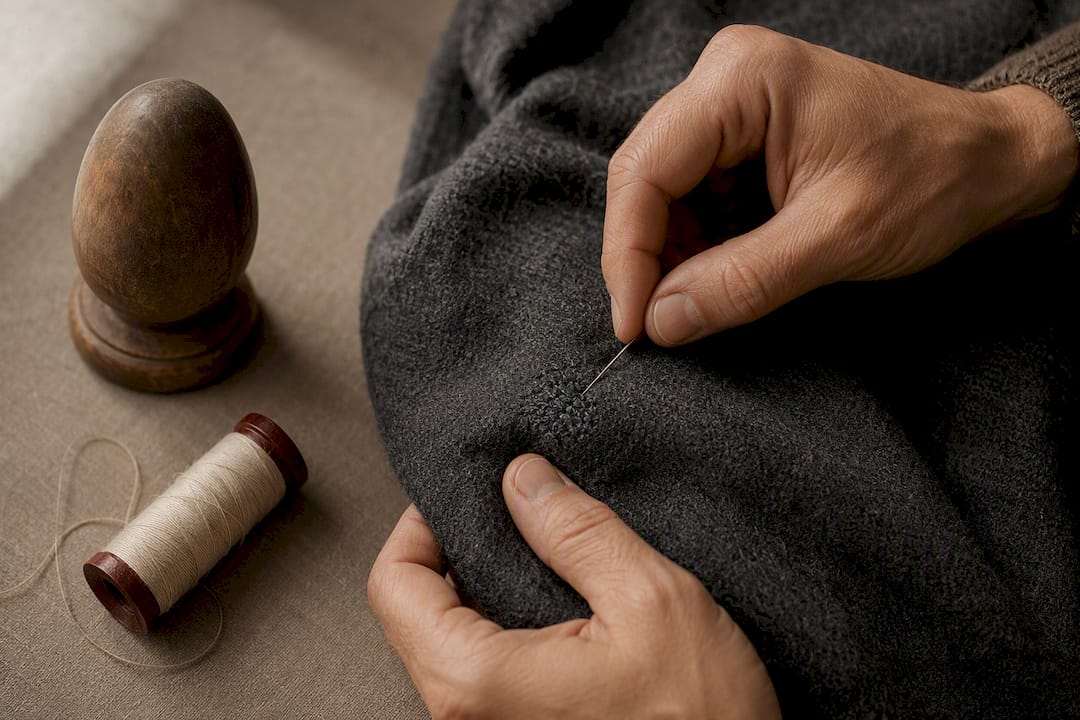
- A reline or elbow patch often extends a tweed jacket’s life far longer than replacing the garment outright.
Pro Tip: Store flannel garments folded rather than hung for long stretches to prevent nap crushing along the shoulder line.
A buyer’s checklist for choosing between the two
Before buying, ask a few direct questions: how does the cloth feel against skin, what does it weigh, and how will the garment actually be worn. Weight is often the single most useful number to request, since name alone does not tell you how a cloth will behave, according to Search For Suits.
- Feel the swatch and note whether it softens or resists under pressure.
- Fold it to see how sharply it creases versus how quickly it springs back.
- Press a corner with an iron to check how well it holds a line.
- Check the nap direction on flannel by running a hand both ways across the surface.
- Ask for weight in ounces or grams per square meter, since heavier tweed and midweight flannel serve very different climates.
Weight guidance to request: suiting cloth for year-round wear typically runs 9 to 11 ounces, with winter-grade flannel at 11 ounces and above, while tweed outerwear commonly sits in a heavier range built for structure, per Search For Suits. Premium woolen flannel and heritage tweeds cost more up front but tend to outlast cheaper alternatives by several seasons of wear.
How Fora Leonara applies fabric selection to tailoring
We source every cloth through our own EU factory, which lets us hold flannel and tweed to the same discipline we apply across the rest of the collection: no shortcuts on fiber quality, no compromise on finishing. That control shapes how we choose between the two.
- We reach for flannel on refined, next-to-skin jackets and trousers where softness and drape matter more than ruggedness, an approach visible in pieces like the gray wool flannel jacket with suede elbow patches.
- We reserve tweed for structured outerwear programs where durability and shape retention outweigh softness.
- Our wool suit guide covers how these fabric choices carry through into finished garments.
Readers weighing the same decision for their own wardrobe can see both approaches in The Wall Street Reserve collection.
Environmental considerations in flannel and tweed production
Both fabrics start as wool, a renewable fiber, but their environmental footprint depends heavily on processing and sourcing rather than the raw material alone. Flannel’s brushing process adds an extra finishing step beyond ordinary weaving, which means additional energy use and, depending on the mill, additional water for washing and setting the nap. Tweed’s yarn dyeing, often done before weaving rather than after, can reduce some water use compared to piece dyeing, though slub and heather yarns require more careful, often slower spinning that limits how much a mill can produce per hour.
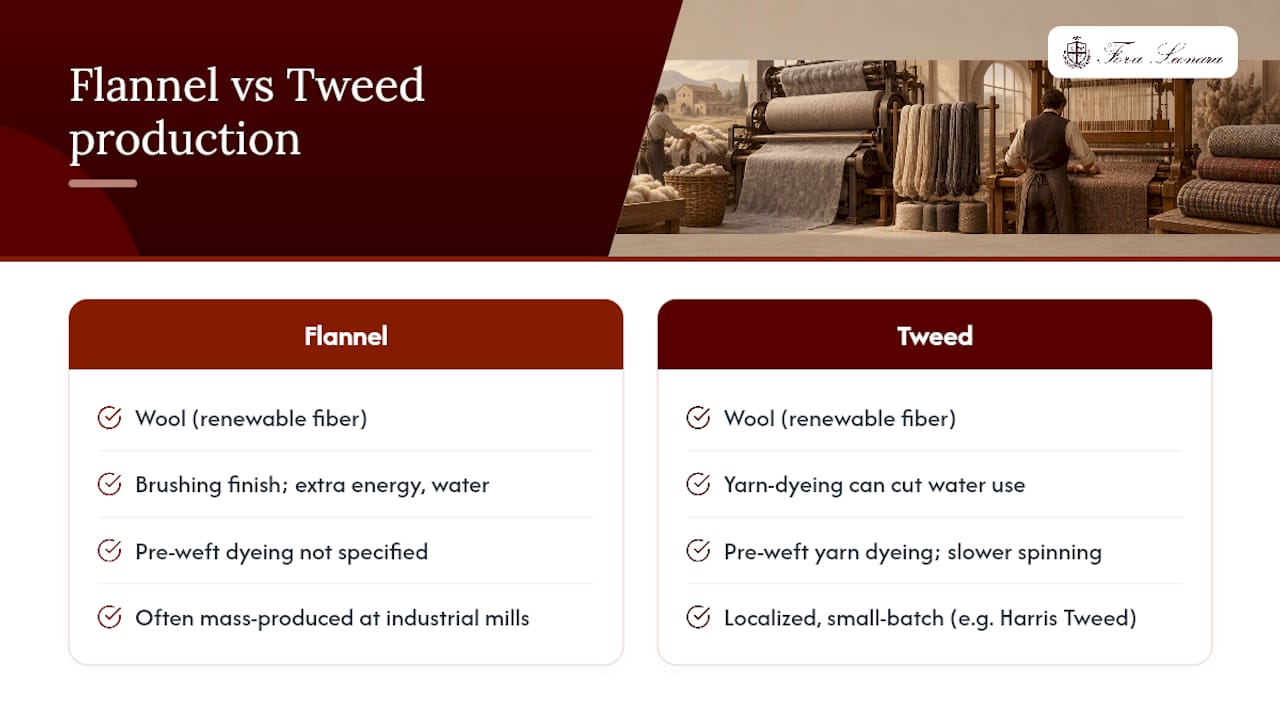
Regional traditions add another layer. Harris Tweed, for instance, is legally required to be handwoven and finished in the Outer Hebrides, a geographic restriction that keeps production small and tied to local looms rather than industrial mills, according to the Harris Tweed Authority. That kind of localized, small-batch production tends to carry a different footprint than mass-produced flannel woven and finished at industrial scale.
The clearest lever for either fabric is longevity. A well-made wool garment, properly cared for, can be worn for years, which spreads its environmental cost across a much longer life than a fast-fashion equivalent replaced within a season. Choosing durable construction and repairing rather than replacing does more for a garment’s footprint than the fiber choice itself. For more on how the wider textile industry got here, our partner’s history of fashion and the rise of fast fashion traces that shift in detail.
Choosing your next flannel or tweed piece
Once you know which fabric suits your garment, the next step is finding it cut well. Our fabrics come from a dedicated European source, reflecting a consistent discipline: no visible branding, just materials chosen to last.

- Browse our full product range to see current flannel and tweed pieces across suits, jackets, and coats.
- Book a session with The Atelier to request swatches or talk through fabric choice before committing to a garment.
- Explore The Wall Street Reserve collection for pieces built around exactly this kind of fabric discipline.
Swatches are available on request, so you can feel the difference between flannel and tweed before you buy.
Sources
- Flannel | Britannica
- Tweed — Wikipedia
- What is flannel? | Newtown Textile Museum
- Harris Tweed Authority — Our role
- Winter tailoring: a guide to flannel and tweed | Search For Suits
FAQ
When should you stop wearing tweed?
Tweed has no strict seasonal cutoff, but its weight and texture make it best suited to fall and winter rather than warm months. Many wearers set it aside once temperatures rise consistently, favoring lighter cloths like flannel shirting or cotton for the remainder of the year.
What do Americans call flannel shirts?
In American English, “flannel” is often used colloquially to describe any plaid or tartan shirt, regardless of whether the fabric is actually brushed, according to Wikipedia’s flannel entry. Technically, true flannel refers to the brushed, napped finish itself rather than the pattern.
What fabric feels closest to flannel?
Brushed cotton and lightweight wool flannel feel closest to traditional flannel, since both rely on a napped surface for softness. Worsted flannel sits close in weight but feels smoother and less lofty than the woolen version most people picture.
Why is tweed considered special?
Tweed earns its reputation from durability and texture that hold up to rough wear far better than smoother cloths, according to Wikipedia’s tweed overview. Certain varieties, like Harris Tweed, carry legal protection requiring handweaving in a specific region, which adds heritage value that mass-produced cloth cannot claim, per the Harris Tweed Authority.
