

Italian fabric mills combine centuries of craft, advanced finishing and vertical control to deliver fabrics prized for hand, drape and finish. Designers, tailors and quality-conscious buyers turn to them for cloth that performs as well as it photographs. The next step is knowing which mills specialize in what, and how to actually get swatches on your table.
TL;DR:
- Italian mills like Vitale Barberis Canonico, Zignone, and Albini control finishing in-house, resulting in more consistent quality and specific fabric properties.
- Biella and surrounding districts concentrate wool expertise, allowing quick sample exchanges and easier sourcing within the region.
- Sourcing fabric typically involves requesting swatch books, confirming technical specs, and placing trial orders with lead times ranging from weeks to months.
- Vertical integration and territorial sourcing projects enable mills to produce faster and provide provenance stories that appeal to sustainability-conscious buyers.
- Working with a US distributor or directly with mills depends on order volume, with larger orders benefiting from direct relationships and faster lead times.
Table of Contents
- Which Italian Fabric Mills Should Designers Know?
- Why Italian Fabrics Feel Different in the Hand
- Why Biella and Other Districts Still Define Quality
- How to Source Fabric From Italian Mills as a US Designer or Tailor
- Sustainability and Vertical Integration Are Reshaping the Supply Chain
- Fora Leonara: A Curated Route to Premium European Fabric
- Sources
- FAQ
Which Italian Fabric Mills Should Designers Know?
Italy’s textile industry runs on a handful of mills whose names show up on the selvage of nearly every serious tailoring house. Knowing who makes what saves you weeks of guessing when you’re building a collection.
- Vitale Barberis Canonico weaves suiting wool in Biella and supplies mills-to-market volume without sacrificing the fine worsted quality that built its name.
- Lanificio Zignone, also based in Biella, runs its own spinning, weaving and finishing lines in-house and holds patents for functional finishes, including a machine-washable wool family that solves a real problem for travel-heavy wardrobes.
- Albini Group, the shirting specialist behind countless premium cotton poplins and twills, marked 150 years in business by expanding vertical integration into yarn sourcing and finishing.
- Reda produces high-twist worsted wool known for a crisp, resilient hand favored in tailoring.
- Loro Piana anchors the ultra-luxury end with cashmere and rare fibers sourced globally but finished with Italian precision.
- Guabello specializes in fine worsted suiting cloth with a long export history to menswear houses.
- Lanificio Carlo Barbera focuses on flannel and heritage suiting weights with a distinctly soft, aged hand.
- Pratrivero blends Italian production with finishing and testing operations in Orangeburg, South Carolina, giving North American buyers a faster feedback loop.
- Milior, founded in 1895, built its reputation on generational expertise in fine wool suiting.
- Lanificio Luigi Ricceri produces smaller-batch woolens with a craft-driven approach that appeals to tailors wanting distinctive cloth.
- Tessitura Scotti works in wool, wool-silk and cashmere blends with jacquard and dobby capability for custom development, a favorite among high-fashion houses needing bespoke weaves.
Most of these mills sell through merchants and agents rather than directly to small studios, though several accept direct inquiries for larger production runs.
Why Italian Fabrics Feel Different in the Hand
The gap between a good fabric and a great one usually comes down to three things: hand, drape and finishing. Hand is how the cloth feels against skin, whether it’s the crisp snap of a Barberis Canonico worsted or the buttery softness of a Barbera flannel. Drape describes how the fabric falls and moves on the body. Finishing, the mechanical and chemical treatments applied after weaving, determines whether a wool suit resists wrinkling or a shirting cotton holds its sheen wash after wash.
Mills that control finishing in-house tend to deliver more consistent results, because they aren’t relying on a third party to execute the final steps.
- Zignone’s ECO-WASH treatment lets wool suiting go through a washing machine, a technical finish most mills can’t replicate.
- Albini’s vertical integration into raw cotton sourcing gives it tighter control over fiber quality before a single yarn gets spun.
Fast fact: Italian textile exports for the January to March period totaled €772 million, down 16.9% from the prior period, yet the sector held a positive trade surplus. That resilience says something about the durability of demand for Italian cloth even in a soft quarter.
If you want a deeper technical breakdown of what separates fine suiting wool from mohair blends, our guide to luxury suit fabrics walks through fiber-level differences.
Why Biella and Other Districts Still Define Quality
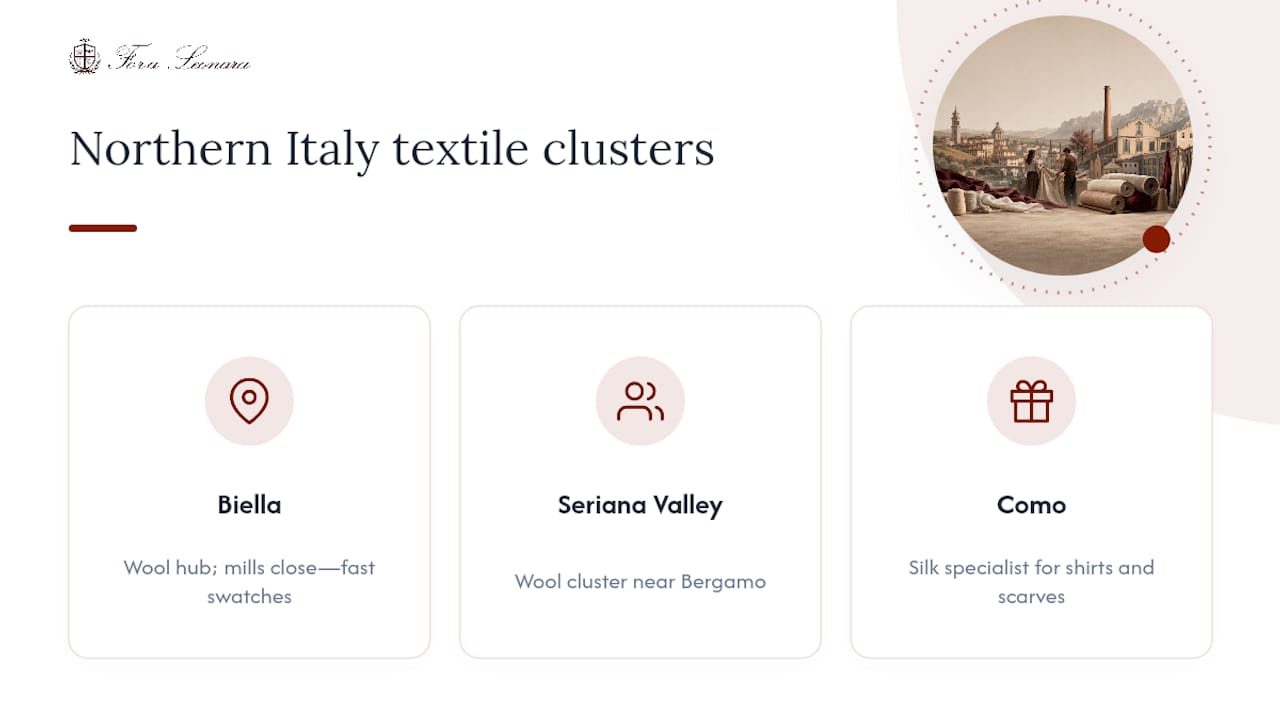
Biella, in Italy’s Piedmont region, concentrates more wool expertise per square mile than almost anywhere else in the world. Soft local water suits wool washing and dyeing, and generations of finishing know-how stayed concentrated in one valley instead of scattering across the country. Zignone, Barberis Canonico and Guabello all operate within a short drive of each other, which means samples move fast between mills and buyers.
Como specializes in silk, largely for shirting and scarves. The Seriana Valley near Bergamo holds its own wool cluster, and Pratrivero’s roots sit in this same northern Italian textile belt. For a buyer, regional clustering means you can often request swatches from three or four mills in a single trip, or through a single agent who covers the district.
How to Source Fabric From Italian Mills as a US Designer or Tailor
Sourcing from Italy isn’t complicated, but it does reward patience and precision. Here’s the sequence that actually works.
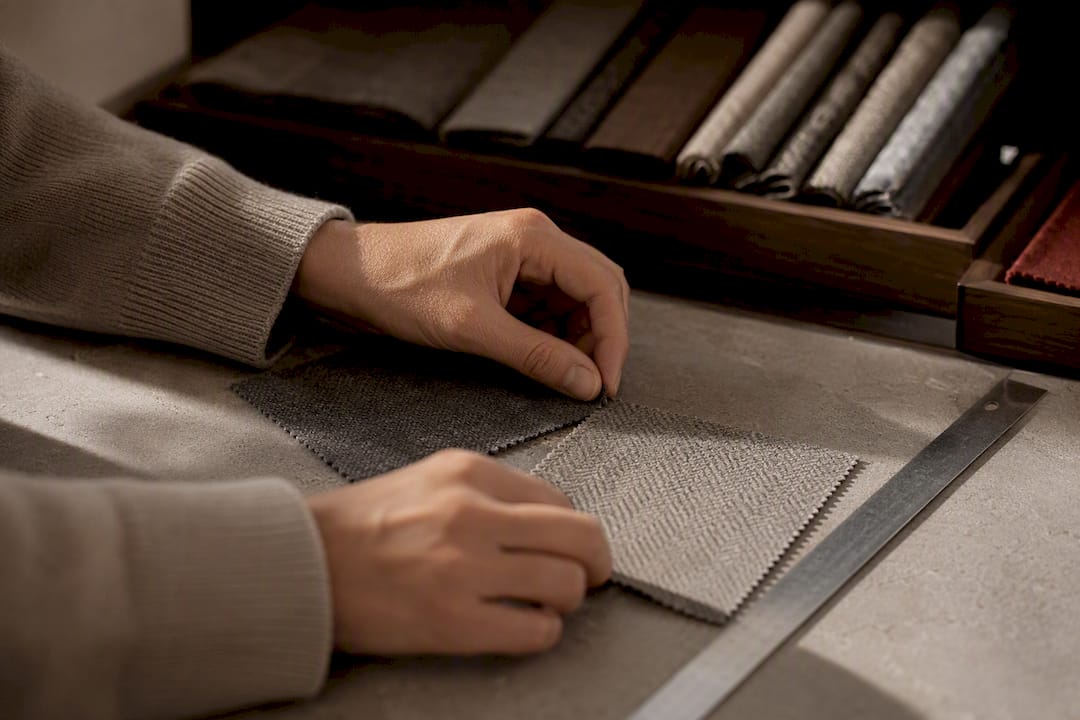
- Request cloth books. Most mills or their agents send seasonal collections as physical swatch books, organized by weight and composition.
- Pull swatches for your shortlist. Note the article number, not just the color, since colorways repeat across different base cloths.
- Confirm technical specs. Fiber content, yarn count, weight in grams per square meter, and finishing details all affect how the fabric behaves once cut.
- Place a trial order. Minimum order quantities vary widely, from a single bolt (roughly 25 to 50 meters) to several hundred meters for mills geared toward larger houses.
- Scale once you’ve tested the cloth in an actual garment, not just on the bolt.
Lead times run anywhere from a few weeks for in-stock cloth to several months for custom colors or weights made to order. You can buy through a US-based textile distributor that stocks Italian mill fabric, through an Italian merchant who represents multiple mills, or directly through a mill’s export sales office if your order size justifies it. Distributors are fastest for small runs; direct mill relationships pay off once you’re ordering in volume.
Pro Tip: Always request the fabric’s shrinkage rate and dye lot number in writing before committing to yardage. A half-percent shrinkage difference between dye lots can throw off a pattern you’ve already graded.
Our checklist for spotting high-quality fabric covers what to look for once swatches arrive.
Sustainability and Vertical Integration Are Reshaping the Supply Chain
A growing number of mills run territorial sourcing projects that partner with local cooperatives to revive native sheep breeds, shortening the distance between raw fiber and finished bolt. That shift gives designers a real provenance story, not just a marketing line, and it typically cuts transport-related emissions along the way.
Vertical integration solves a different problem: speed. A mill that spins, weaves and finishes under one roof, the way Zignone does, can react to a custom order in weeks instead of months. That matters more than ever given the trade headwinds noted above. Tighter margins and softer export numbers push mills to lean harder on efficiency and traceability to stay competitive.
Fora Leonara: A Curated Route to Premium European Fabric
Sourcing directly from a mill makes sense if you’re running production at scale. If you’d rather skip the swatch books, minimum order quantities and lead-time negotiations, A luxury brand offers a different way to reach the same goal: garments already cut from premium European fabric, finished in a proprietary EU factory, with no logo and no compromise on hand or drape.

Every piece in The Wall Street Reserve and across the broader collection reflects the same discipline the mills above built their reputations on: fine materials, precise construction, and cloth chosen for how it wears over years, not seasons. If you’d rather work one-on-one on fit and fabric selection, The Atelier offers personal styling appointments built around exactly that. Browse the current collection or book an Atelier session to see what quiet luxury looks like when the sourcing work is already done.
Sources
- Summary of the Economic Analysis - 39th edition of Milano Unica
- A tradition of top performance, Lanificio Zignone
- Lanificio Paoletti – Environmental sustainability
- TNT da una tradizione tessile d’eccellenza - Pratrivero non wovens
- Albini expects revenue to grow in 2026, marks 150th anniversary with capsule collection and new campus - FashionNetwork
FAQ
Which Italian fabric mills are considered the best?
Vitale Barberis Canonico, Reda, and Loro Piana rank among the most recognized names for wool suiting, while Albini Group leads in premium shirting cotton. Smaller mills like Zignone and Tessitura Scotti earn strong reputations for technical finishes and custom weaves respectively.
What fabric is Italy famous for?
Italy is best known for fine worsted wool suiting from Biella, silk from Como, and premium cotton shirting from mills like Albini. Cashmere and wool-silk blends from mills such as Loro Piana and Tessitura Scotti also carry global recognition.
Who are some major Italian garment manufacturers?
Italy is home to major fabric mills rather than garment manufacturers in the traditional sense, since most Italian cloth gets exported to be cut and sewn elsewhere. Brands like Fora Leonara source premium European fabric and handle the cutting, tailoring and finishing themselves rather than relying on mass garment factories.
Where is the biggest fabric market in the world?
China holds the largest overall fabric production volume, but Italy remains the benchmark for luxury and fashion-grade textiles, particularly wool suiting and premium shirting. Italian mills compete on quality and finishing rather than sheer output.
How long does it take to get fabric from an Italian mill?
In-stock cloth from a distributor can ship within days, while custom colors or weights ordered directly from a mill typically take several weeks to a few months. Working through a merchant who holds mill inventory usually shortens that timeline considerably.
