

Minimalist women’s style is a curated neutral wardrobe built on quality fabric, precise fit, and a disciplined color palette, not the absence of personality. Start by picking one undertone family, narrowing your palette to five to seven core colors, and committing to six to ten heavy-hitter garments that get tailored properly. Everything else, including where to shop, is refinement on that foundation. Fora Leonara’s Journal is a useful reference point for readers building this out piece by piece.
TL;DR:
- Building a minimalist wardrobe relies on a core palette of 5 to 7 neutral colors aligned with your undertone to maximize versatility and coherence.
- Key staples include an exceptional wool coat, a tailored blazer, wide-leg trousers, a white cotton shirt, and a cashmere sweater, prioritized by quality and fit.
- Proper tailoring of fit is essential, with focus on shoulder seams and trouser hems first, as construction outshines color or pattern in minimal styles.
- A 28-piece capsule, assembled gradually, can create over 100 outfit combinations, emphasizing quality over quantity and avoiding impulse purchases.
- Accessories should be deliberate and few, with one signature jewelry piece and five high-quality shoes covering most needs, extending wardrobe longevity.
Table of Contents
- What Is Minimalist Women’s Style, Really?
- Core Staples That Anchor Everything Else
- Building a Palette Around Your Undertone
- Fit and Tailoring: The Real Differentiator
- Step-by-Step: A 28-Piece Neutral Capsule
- Twelve Outfit Formulas for Work, Weekends, and Evenings
- Choosing Brands: Quiet Luxury Buying Criteria
- Accessories and Footwear That Complete the Look
- Caring for Your Wardrobe So It Lasts
- Mistakes That Undermine a Minimalist Wardrobe
- Adapting Your Palette Across the Seasons
- Fora Leonara: Quiet Luxury for a Minimalist Wardrobe
- Sources
- FAQ
What Is Minimalist Women’s Style, Really?
Minimalism gets misread as “wearing beige.” It’s actually a design discipline: fewer garments, chosen for construction and fit rather than trend, worn on repeat without looking repetitive. Vogue frames it as both philosophy and aesthetic, built on staples like the perfect white T-shirt, a crisp blazer, and well-fitting trousers. That framing matters because it separates minimalism from “basic.” A basic wardrobe is cheap and forgettable. A minimalist wardrobe is edited and durable, and every piece earns its place through fabric, cut, or versatility.
The related shorthand you’ll see thrown around, “capsule wardrobe,” describes the practical mechanism minimalism runs on: a small, coordinated set of pieces that combine into dozens of outfits. This guide uses both terms, since they describe the same system from different angles.
Core Staples That Anchor Everything Else
Stylists consistently point to a short list of “heavy hitters” as the backbone of any minimalist rotation: a statement coat, a tailored blazer, wide-leg trousers, and a cashmere sweater. Build outward from these, not from trend pieces.
- Long wool coat: the single most photographed item in your wardrobe; buy one exceptional coat over three mediocre ones.
- Structured blazer: works as outerwear, layering piece, or standalone top over a slip dress.
- Wide-leg trousers: two pairs, one in wool for cooler months, one in a lighter blend for warmer ones.
- Crisp white button-up: cotton poplin for structure, one back-up in case of ink or wine.
- Cashmere sweater: crew or turtleneck, in your darkest core neutral.
- Tailored dress: sheath or column cut, works for both office and evening with an accessory swap.
- Loafers and ankle boots: one flat, one with a low heel, both in leather that patinas well.
If budget is the constraint, upgrade the coat first. It touches every outfit and hides the most flaws when it fits poorly.
Building a Palette Around Your Undertone
Color chaos is the fastest way to sabotage an otherwise disciplined wardrobe. Warm undertones (gold jewelry looks better than silver on your skin, veins read greenish) pair best with camel, cream, and warm charcoal. Cool undertones (silver flatters more, veins read blue) lean toward navy, soft black, and stone gray. Test it by holding a warm-toned and cool-toned fabric swatch under your jaw in daylight; one will visibly flatten your skin.
A five-color core built from cream, camel, charcoal, navy, and soft black gives near-total cross-compatibility, according to capsule wardrobe research. Add one accent, a burgundy, forest green, or deep rust, used only in small doses (a scarf, a bag) so it never fights the base palette.
- Pick your undertone family first, before buying anything.
- Limit the palette to 5 to 7 colors total, accent included.
- Let texture (wool crêpe against smooth leather, ribbed knit against flat cotton) do the visual work color usually does.
Pro Tip: Photograph your undertone test in natural window light around midday. Overhead indoor lighting distorts warm and cool tones badly enough to make the wrong choice look right.
Fit and Tailoring: The Real Differentiator
Remove color, pattern, and logos from a garment, and construction is the only thing left to look at. That’s why fit matters more in a minimalist wardrobe than almost anywhere else. Shoulder seams, sleeve length, and trouser break become impossible to hide when there’s nothing else competing for attention.
Prioritize alterations in this order: trouser hem first, since a broken hemline reads sloppy faster than anything else; blazer shoulders and sleeves second, since a shoulder seam that sits even a half inch off the natural line changes the entire silhouette; waist nips last, since they’re the easiest and cheapest fix. A reliable tailor typically charges $15 to $40 for a hem and $40 to $80 for shoulder work, depending on your city and the garment’s construction.
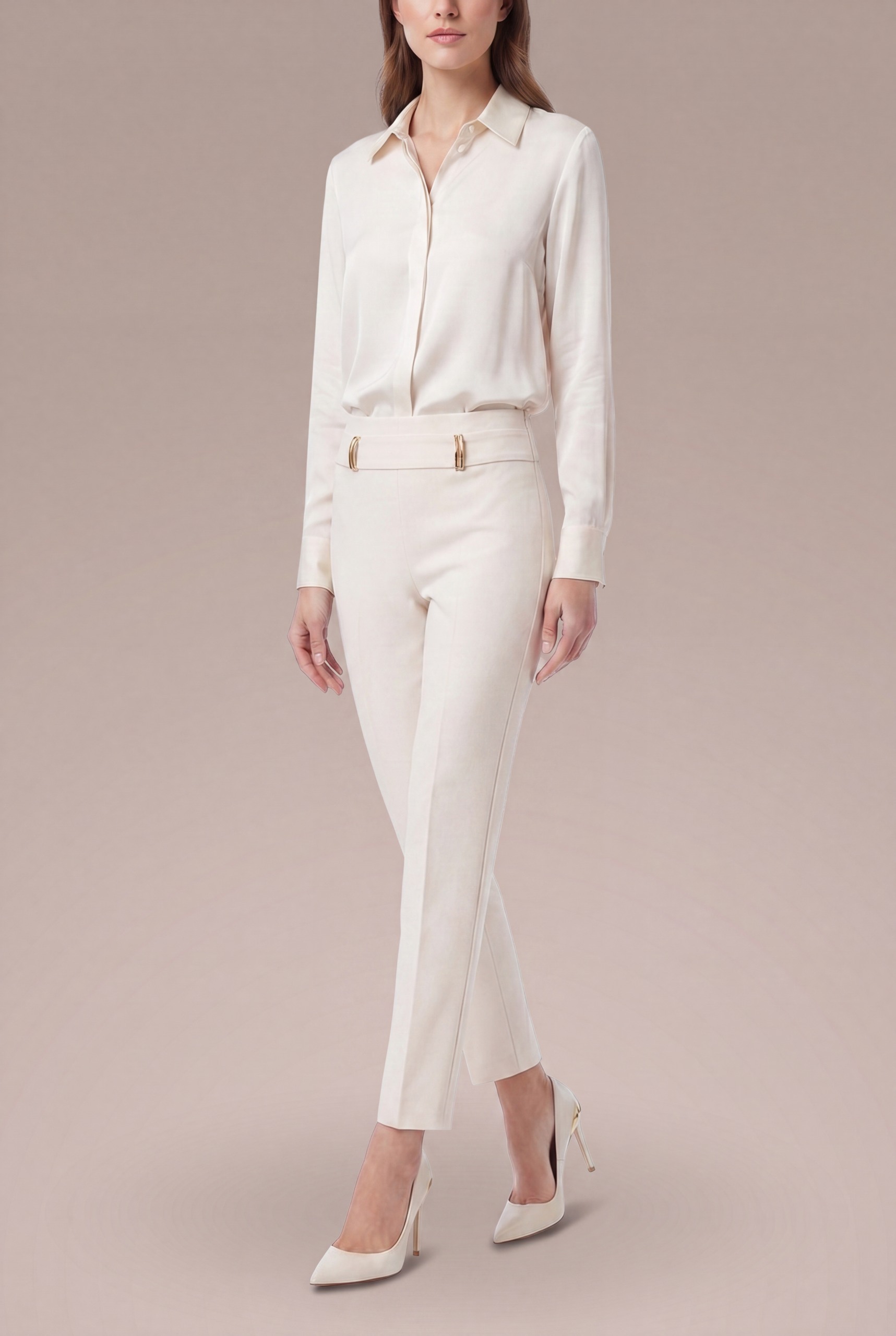
Buy ready-to-wear when a brand’s standard sizing already fits your shoulders and torso length reasonably well. Go bespoke, or budget for heavier alteration, when your proportions fall outside standard grading, since no amount of tailoring fixes a jacket cut for the wrong frame.
Pro Tip: Bring a photo of how you want a blazer to sit when you visit a tailor. “Take it in” means different things to different hands, and a reference photo removes the guesswork.
Step-by-Step: A 28-Piece Neutral Capsule
Building a capsule wardrobe works better as a sequence than a shopping spree. Rushing it usually means ending up with 28 pieces that don’t actually combine.
- Audit your closet first. Pull everything out, separate what fits your undertone from what doesn’t, and be honest about what you’ve worn in the last six months.
- Commit to your palette before buying anything new. Write your five to seven colors down; it keeps you from impulse-buying an off-tone piece six weeks in.
- Buy the heavy hitters first: coat, blazer, trousers, white shirt, cashmere sweater. These get worn the most and cost the most, so they deserve the first budget allocation.
- Fill in the breakdown: around a dozen tops, several bottoms, a few outerwear pieces, multiple pairs of footwear, and some accessories. That distribution, drawn from capsule wardrobe frameworks like this 28-piece system, mathematically produces well over 100 wearable combinations.
- Rotate and replace slowly. Retire one piece only when its replacement has already arrived tailored and ready, so you’re never short a category.
The math works because every piece is chosen to pair with nearly everything else in the same palette. A seasonal capsule framework applies the same logic at a smaller scale if 28 pieces feels like too much to start.
Twelve Outfit Formulas for Work, Weekends, and Evenings
Decision fatigue disappears once you have go-to formulas instead of a blank closet every morning.
- Work: blazer + white shirt + wide-leg trousers + loafers.
- Work: tailored dress + blazer + ankle boots + structured tote.
- Work: cashmere sweater + trousers + coat + minimal flats.
- Work: white shirt tucked into trousers + belt + heeled loafers.
- Casual: white shirt (untucked) + jeans in a dark wash + boots.
- Casual: cashmere sweater + straight trousers + sneakers.
- Casual: coat over a slip dress + ankle boots.
- Casual: blazer over a T-shirt + wide-leg trousers + loafers.
- Evening: tailored dress + heeled sandals + one statement earring.
- Evening: silk shell + wide-leg trousers + heels + clutch.
- Evening: sweater tucked into a skirt + boots + structured bag.
- Evening: dress + coat draped over shoulders + minimal jewelry.
The only variable that shifts mood is proportion: swap a fitted trouser for a wide leg, or a flat shoe for a heel, and the same three pieces read completely differently.
Choosing Brands: Quiet Luxury Buying Criteria
Not every “minimalist” label deserves your money. Judge a brand on fabric transparency (do they name the mill or fiber content, or just say “premium”?), construction (French seams, real buttonholes, lined interiors), return policy, and how the garment looks after ten washes, not one.
- Spend the most on coats, blazers, and trousers, the pieces you’ll wear hundreds of times.
- Save budget on trend-adjacent basics like a plain T-shirt, where a mid-range brand performs nearly as well.
- Avoid brands that won’t disclose fabric composition or country of manufacture.
- Favor logo-free construction, since visible branding dates a piece faster than the fabric does.
Fora Leonara fits this brief directly, tailoring both menswear and womenswear in its own European atelier with no visible branding. For readers building out the “heavy hitter” list above, the Woman category is worth a slower look before buying elsewhere.
Accessories and Footwear That Complete the Look
A tonal wardrobe without any accent risks reading flat, which is where accessories do quiet, deliberate work. The rule isn’t “no accessories,” it’s “fewer, better, more intentional” ones. One textured leather bag, one signature ring, or a silk scarf in your accent color does more for a minimalist outfit than five small pieces of jewelry stacked together.
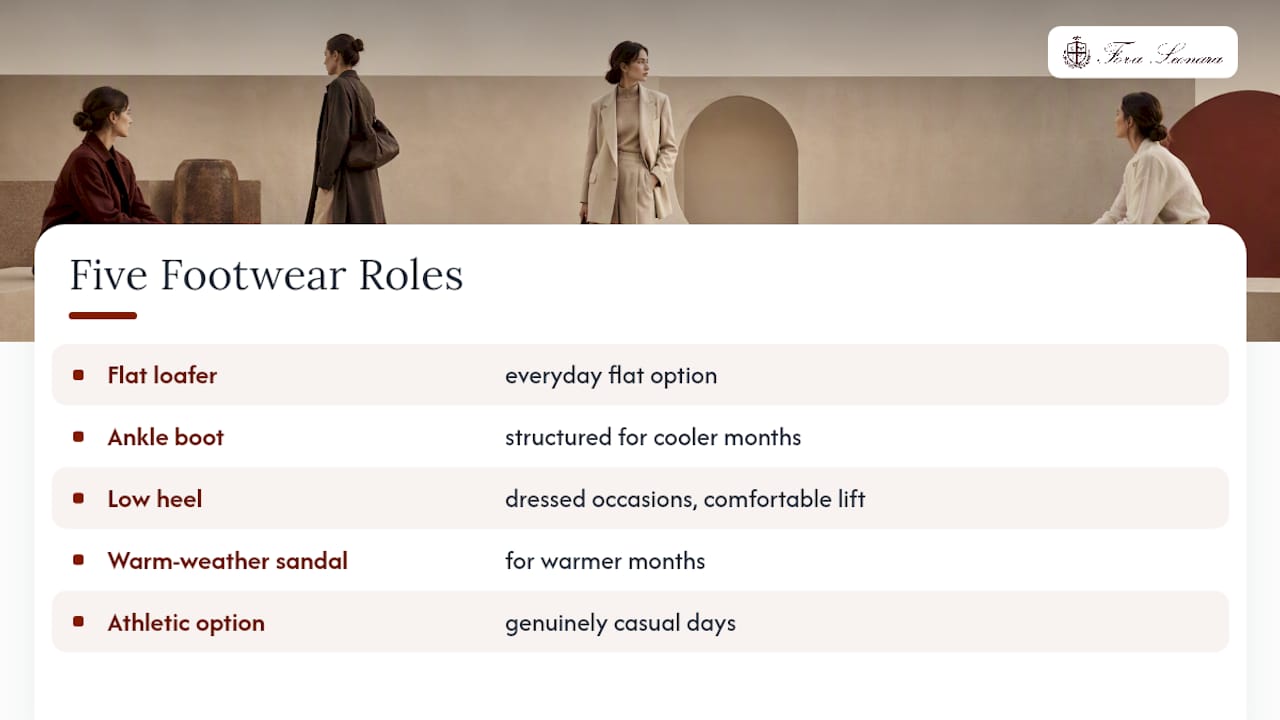
Footwear follows the same logic as your core garments: buy for construction over quantity. A capsule realistically needs five pairs, covering a flat loafer, an ankle boot, a low heel, a sandal for warmer months, and one athletic option for genuinely casual days. Leather that’s finished well will develop a patina instead of just wearing out, which is part of why quality leather goods cost more upfront and less overtime.
Bags deserve the same restraint as clothing. One structured tote for work, one crossbody or clutch for evening, and one soft-shoulder bag for weekends covers nearly every situation without cluttering your closet with near-duplicates. Skip anything with visible logo hardware; it works against the entire point of a quiet, tailored wardrobe.
Jewelry is where most minimalist wardrobes go wrong in the opposite direction, by disappearing entirely. A single statement piece, worn consistently, becomes part of your visual signature rather than a costume choice. Think one ring you never take off, or the same pair of gold or silver hoops in every photo. That consistency is what makes an accessory read as personal style instead of an afterthought.
Caring for Your Wardrobe So It Lasts
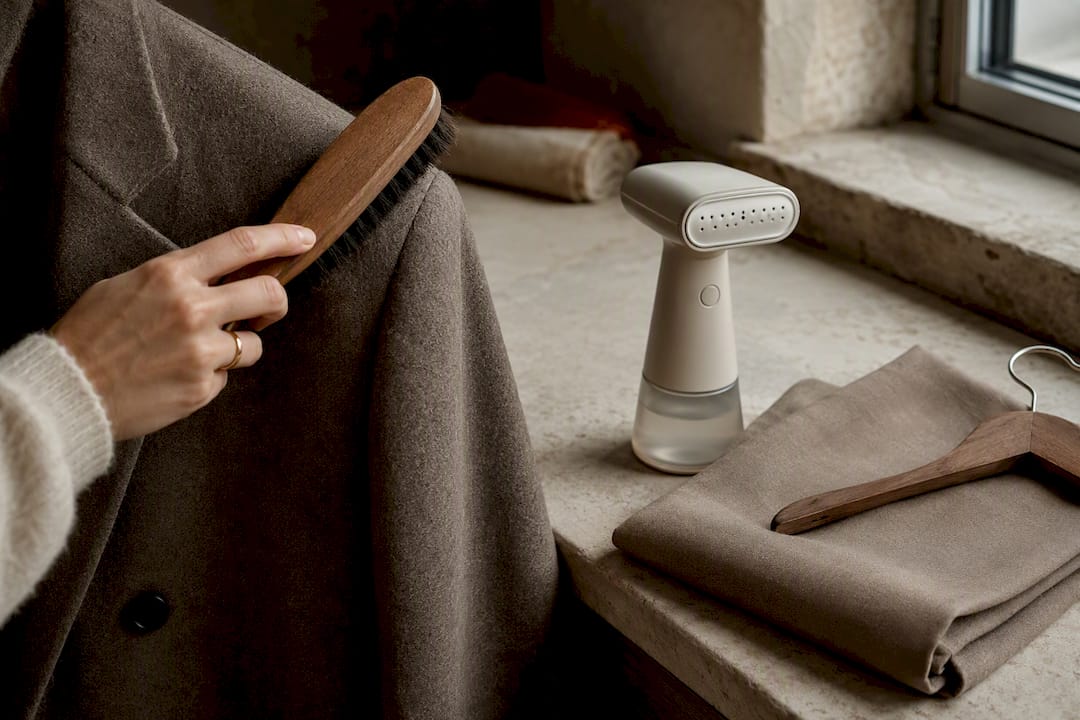
Quality garments earn their price tag over years, not seasons, but only with the right care. Wool coats and blazers should be dry cleaned sparingly, once or twice a season at most, and steamed or brushed between wears to avoid breaking down the fibers with chemical solvents.
Cashmere needs the gentlest handling of anything in your closet: hand wash in cold water with a wool-specific detergent, lay flat to dry, and store folded rather than hung to prevent shoulder stretching. Cedar blocks in your drawers keep moths away without the chemical smell of mothballs.
Leather goods, whether shoes or bags, benefit from a conditioner applied every few months and a shoe tree kept inside boots and loafers when they’re not on your feet. Rotating between at least two pairs of daily shoes extends the life of both significantly, since leather needs recovery time between wears to reshape properly.
Trousers and blazers hold their line longer on wooden hangers with a full shoulder, not wire ones that leave dents. Steam instead of iron where possible; a hot iron flattens the texture in wool crepe and cashmere blends that gives them visual depth in the first place.
Mistakes That Undermine a Minimalist Wardrobe
The most common mistake is mixing undertones without realizing it. A cool-toned navy blazer next to a warm camel coat creates a subtle clash most people can’t name but can definitely see. Stick to one undertone family throughout your core palette to avoid it.
The second mistake is buying based on trend cycles rather than fit. A wide-leg trouser that photographs well on someone else may not suit your proportions, and no amount of “everyone’s wearing this” justifies keeping a piece that doesn’t sit right on your frame.
Skipping tailoring entirely is the third, and probably most expensive, mistake. A $40 alteration on a $300 blazer can be the difference between it looking cheap and looking custom. Minimalist dressing has zero pattern or embellishment to distract from a bad fit, so the fit has to be right.
The fourth mistake is confusing “minimal” with “boring,” which usually happens when someone strips out color and texture at the same time. Muted colors need texture contrast, ribbed knits, brushed wool, smooth leather, to stay visually interesting. Drop both variables at once and the outfit goes flat.
Finally, buying too fast is its own trap. A capsule wardrobe built in one weekend of panic shopping rarely coheres the way one built over several months does, since you haven’t had time to notice real gaps versus impulse wants.
Adapting Your Palette Across the Seasons
A well-built neutral capsule doesn’t need a seasonal overhaul, just a fabric-weight swap within the same color story. Swap cashmere and wool for lighter knits in cotton or linen blends as temperatures rise, while keeping the same camel, navy, and charcoal palette intact.
Layering is where seasonal transitions actually happen. A tailored blazer worn over a T-shirt in spring becomes the same blazer worn over a cashmere sweater under a coat in winter. The garment doesn’t change, only what surrounds it does, which is the entire point of building a capsule instead of a seasonal wardrobe from scratch.
Footwear is the easiest seasonal signal to miss. Swap ankle boots for a lighter loafer or a leather sandal once temperatures climb, but keep the same neutral tones so the shift feels intentional rather than like an entirely different wardrobe took over.
Interest in this pared-back approach has stayed strong into 2026, partly fueled by a renewed fascination with 90s-era minimalism after Carolyn Bessette Kennedy’s style resurfaced through a TV series and widespread social media recreation. That resurgence is a reminder that this style doesn’t chase seasons or trend cycles the way fast fashion does; the same coat and trouser combination that worked five years ago still works now, because the whole system was built to outlast trend cycles in the first place.
Fora Leonara: Quiet Luxury for a Minimalist Wardrobe
Everything above points toward the same conclusion: a minimalist wardrobe lives or dies on fabric quality and construction, not on how many pieces you own. Fora Leonara builds every garment in its own European atelier, with no visible branding and a focus on the fit details that matter most once color and pattern are stripped away.

The ready-to-wear collection covers the heavy hitters this guide keeps coming back to: wool coats, structured blazers, premium knitwear, and tailored dresses, all cut for the kind of longevity that makes cost-per-wear actually work in your favor. The signature line was designed for professionals needing pieces versatile enough for various settings.
Browse the Woman category to see the current range, or go straight to Ready to Wear if you already know which staple you’re missing. For anyone building out fit-critical pieces like a blazer or tailored trouser, Fora Leonara also offers virtual private atelier appointments, a practical way to get real tailoring guidance before you commit to a purchase.
Sources
Vogue’s guide to minimalist fashion and InStyle’s breakdown of heavy-hitter staples shaped the staples list above. The neutral capsule wardrobe framework informed the palette math, while The Guardian’s reporting on the 90s revival explains the current cultural moment. Fora Leonara’s Journal offers additional guidance for readers building a professional capsule.
- How To Master the Art of Minimalist Fashion
- How to wear minimalist style (InStyle)
- Neutral Capsule Wardrobe: 28 Pieces, 5 Colours
- Carolyn Bessette Kennedy’s style, decoded (The Guardian)
FAQ
What Is the 3-3-3 Rule for Clothes?
The 3-3-3 rule is a capsule challenge where you wear only 3 tops, 3 bottoms, and 3 pairs of shoes (sometimes plus 3 accessories) for a set period, usually three months, to test how versatile your core pieces really are.
Is Minimalism Still Popular in 2026?
Yes. Renewed interest in pared-back 90s dressing and steady demand for quiet luxury basics have kept minimalist style firmly in the mainstream through 2026.
What Makes a Woman Look Wealthy?
Fit and fabric quality read as wealth far more than logos or trend pieces do. A well-tailored coat, a clean palette, and leather that’s cared for signal more than any visible branding, which is the core idea behind Fora Leonara’s logo-free approach.
What Are the 33 Items in a Minimalist Wardrobe?
Definitions vary by source, but the concept, popularized as a challenge covering clothing, shoes, and accessories combined excluding sleepwear and workout gear, generally involves a small number of items. This guide uses a 28-piece structure built around about a dozen tops, several bottoms, a few outerwear pieces, multiple pairs of footwear, and some accessories.
