

Moth proofing wool means combining four steps in order: clean every garment thoroughly, isolate it in airtight storage, treat any active infestation with freezing or heat rather than chemicals, and monitor with pheromone traps year round. Cedar and lavender help as a supplement, but they deter adult moths without killing eggs or larvae, so they can never replace the first three steps. Freeze suspect items at 0°F for at least 72 hours, or launder or steam at 120°F when the fabric allows. The rest of this guide walks through exactly how to do each part safely on real wool.
TL;DR:
- Regularly inspect all wool items for signs of damage or larvae, and immediately bag and isolate any suspect pieces.
- Professional dry cleaning with a moth-proofing finish is essential for tailored wool garments before storage.
- Use airtight containers with silica gel for long-term storage of dry, clean wool, and opt for breathable bags for frequently worn pieces.
- Freeze or heat-treat infested items at 0°F for at least 72 hours or at 120°F for 20-30 minutes to kill existing eggs and larvae.
- Rely on pheromone traps for early detection, not as a control method, and combine them with regular cleaning and vacuuming routines.
Table of Contents
- Quick Moth Proofing Wool Checklist: What To Do Today
- Why Cleaning Wool Before Storage Matters More Than Anything Else
- Airtight vs. Breathable Storage: Which Protects Wool Better?
- How Do You Kill Moths Already in Your Wool?
- How Do Pheromone Traps Fit Into a Prevention Routine?
- Do Cedar, Lavender, and Mothballs Actually Stop Moths?
- Protecting Investment Wool: What Changes for Tailored Pieces
- The Six-Step Routine That Keeps Wool Moth-Free All Year
- Sources
- FAQ
Quick Moth Proofing Wool Checklist: What To Do Today
You do not need to overhaul your closet in one afternoon. You need to work through a short sequence, in order, and not skip the boring parts.
- Inspect every wool item you own, checking seams, cuffs, collars, and folded edges for small holes, webbing, or grit-like droppings.
- Bag anything suspicious immediately in a sealed plastic bag to stop larvae from spreading to clean garments nearby.
- Clean everything per the care label. Dry clean tailored pieces; hand wash or machine wash washable knits, then dry completely before storing.
- Freeze or heat-treat any item you cannot clean right away, or anything you suspect is already carrying eggs.
- Seal cleaned, bone-dry items in airtight containers or bags with a silica gel packet to manage humidity.
- Set pheromone traps in the closet and check them every few weeks, alongside a regular vacuuming routine.
That sequence covers the entire strategy in miniature. Everything below explains why each step matters and how to execute it without damaging good wool.
Why Cleaning Wool Before Storage Matters More Than Anything Else
Moth larvae do not eat clean wool fiber for fun. They go after the residue on it: skin oils, sweat salts, and food or drink stains left behind after wear. Professional cleaning is the single most important step because it removes exactly the organic residue that attracts larvae in the first place, which means a genuinely clean wool garment is far less appealing to them even without a repellent nearby.
For tailored jackets, suits, and coats, that means professional dry cleaning before every storage cycle, not just an annual once-over. Ask your cleaner whether they offer a moth-proofing rinse or finish. Many do, and it costs little compared to repairing a bored hole in a lapel.
For washable wool sweaters and knits, the guidance is more specific:
- Wash in water at or above 120°F (49°C) if the care label permits it. That temperature is high enough to kill eggs, larvae, and pupae outright.
- Use a wool-safe detergent (no enzymes, no bleach) and handle gently. Hot water plus rough agitation is what causes felting, not the heat alone.
- Reshape the garment while damp and dry it flat, away from direct heat, to avoid shrinkage.
- Spot-test an inside seam first if you are unsure whether a fiber blend will tolerate that water temperature.
Pro Tip: If a knit is hand-me-down, vintage, or otherwise irreplaceable, skip the hot wash and take it to a textile conservator instead. A ruined heirloom sweater costs more than the consultation.
Airtight vs. Breathable Storage: Which Protects Wool Better?
Airtight storage wins on pest exclusion. Breathable storage wins on convenience. The right answer depends on how often you wear the piece and how long it will sit.
Vacuum-sealed bags and hard-sided airtight bins create a physical barrier moths cannot cross, which makes them the safer default for anything going into storage for a full season or longer. The catch is moisture: sealing a garment that is even slightly damp invites mold, and mold damages wool as thoroughly as any larva does. Every item needs to be fully dry before it goes in, and a silica gel packet inside the container gives you a margin of safety against trapped humidity.
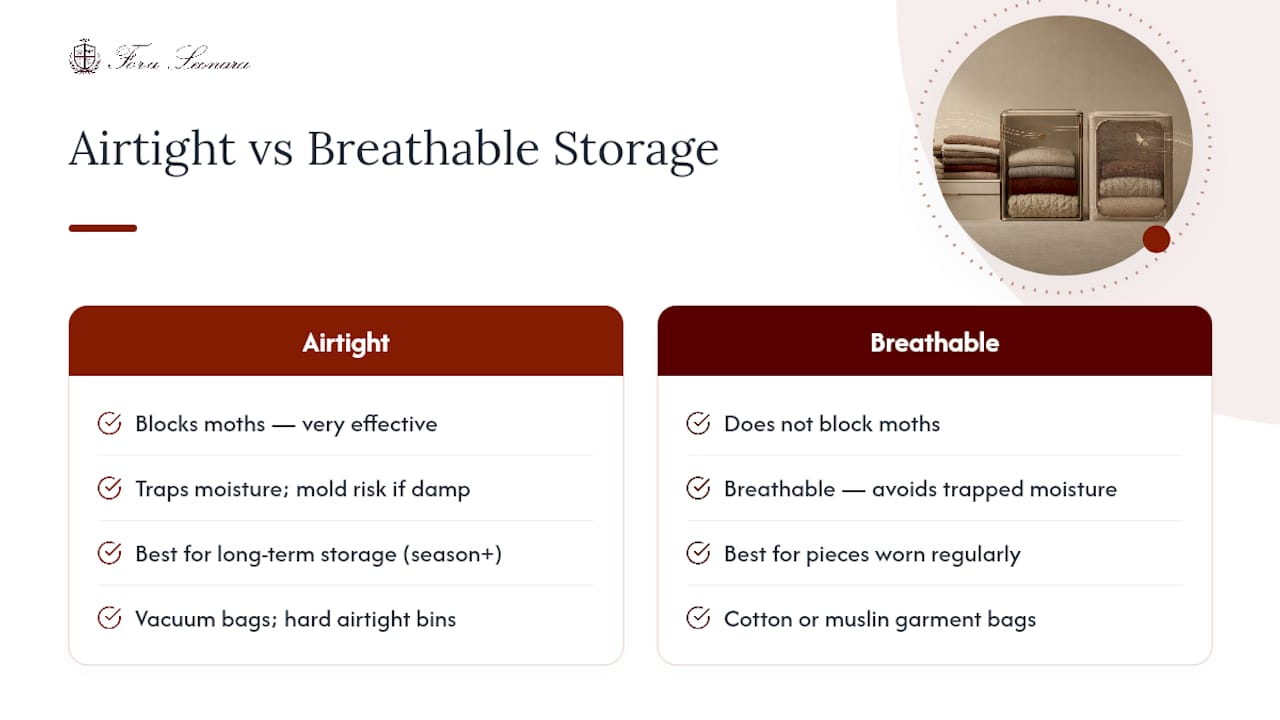
Breathable garment bags make more sense for pieces you wear regularly through the season, since you need to get in and out of them without breaking a seal each time. Cotton or muslin bags work; the sealed plastic sleeves from the dry cleaner do not, and should come off the moment you get home.
For genuinely valuable pieces, museum conservators use a layered approach worth borrowing: acid-free tissue paper folded into the garment to reduce creasing, a breathable outer layer, and a scheduled check every month or two rather than shoving the box in the back of a closet and forgetting it. Avoid overpacking any container, and vacuum the closet floor and corners before you put anything back in. That five minutes with a vacuum removes lint and hair that would otherwise feed larvae you never see.
How Do You Kill Moths Already in Your Wool?
Finding an active infestation changes the plan. Deterrents will not save a garment that already has eggs or larvae in it. Only heat, cold, or professional intervention will.
- Isolate the item in a sealed plastic bag the moment you spot damage, webbing, or droppings, so nothing spreads to nearby garments.
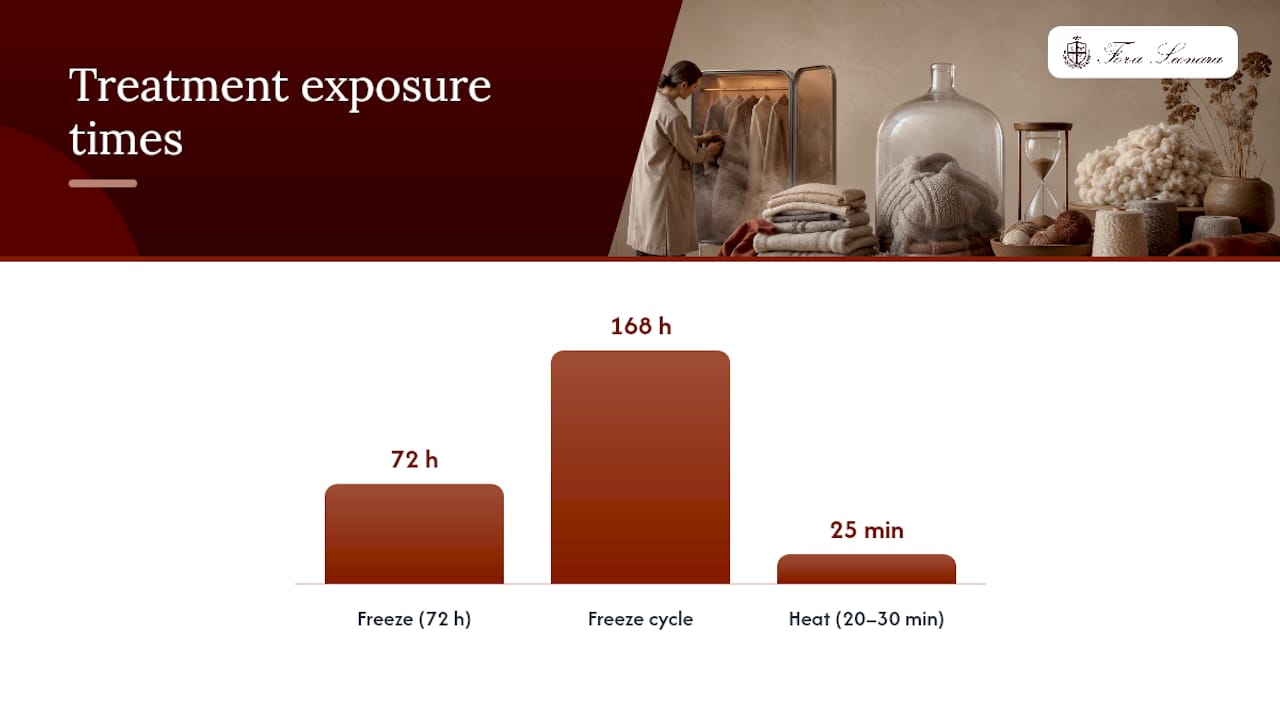
- Freeze it. Squeeze excess air out of the bag and place the item in a deep freezer at 0°F (about negative 18°C) for at least 72 hours straight. Thicker coats and heavily lined pieces may need longer, and some conservators recommend a freeze, 24-hour thaw, and second 72-hour freeze cycle for extra confidence on dense wool.
- Or heat-treat it, if the fabric and construction allow. Heat at or above 120°F (49°C) for roughly 20 to 30 minutes kills eggs, larvae, and pupae, whether that heat comes from a dryer cycle or a controlled warm environment. Skip this route on structured suits or anything with fusible interfacing, which can warp under sustained heat.
- Thaw sealed, not open. Let a frozen item come back to room temperature inside its sealed bag before opening it, so condensation lands on the plastic instead of soaking into the fiber.
- Vacuum thoroughly afterward, using a crevice tool on seams and closet corners, then seal and dispose of the vacuum bag or canister contents outside the house.
Pro Tip: Boric acid dust worked into cracks and baseboards around a closet can help with a broader infestation, but treat it as a last resort for the room, never for the garment itself, and always follow the label.
If the infestation covers multiple garments, involves antique or heirloom pieces, or you simply cannot get ahead of it, call a licensed pest control professional or a textile conservator rather than continuing to experiment on your own.
How Do Pheromone Traps Fit Into a Prevention Routine?
Pheromone traps solve one specific problem: they tell you moths are present before you find a hole in a sweater. The sticky traps release a scent that attracts adult male moths, and a rising trap count is your early warning sign that something needs a closer look. What traps do not do is kill larvae already feeding inside a garment, so treat them as a smoke detector, not a fire extinguisher.
Place traps near vulnerable storage, replace them roughly every 8 to 12 weeks, and pair them with a physical inspection routine:
- Check seams, collars, underarms, and folded hems on stored garments every couple of months.
- Vacuum closet floors, shelves, and baseboards on the same schedule, using a crevice attachment to reach corners.
- Dispose of vacuum contents in a sealed bag if you suspect any activity, rather than emptying the canister back near your closet.
- If trap counts jump or you spot fresh damage, move straight to a full inspection and treatment cycle instead of waiting for the next scheduled check.
Do Cedar, Lavender, and Mothballs Actually Stop Moths?
No, not on their own, and the evidence on this is fairly clear. Cedar and lavender release volatile aromatic compounds, cedrol and linalool among them, that repel adult moths looking for a place to lay eggs. What they do not do is kill eggs or larvae that are already in the fabric, and their effect fades within months as the wood dries out or the sachet loses potency.
Traditional mothballs work differently. They rely on naphthalene or paradichlorobenzene vapor, and many formulations carry health and odor concerns strong enough that manufacturers recommend using them only in fully sealed containers, never in an open closet. Permethrin-based insecticidal finishes applied professionally to textiles are more effective as a preventive treatment, but home spraying of these products on clothing carries its own hazards and should follow label instructions exactly, if you use it at all.
Integrated pest management principles treat every one of these products as supplementary, never primary. Cleaning, physical exclusion through airtight storage, and monitoring do the real work; cedar blocks and lavender sachets just make the environment a little less inviting on top of that.
Protecting Investment Wool: What Changes for Tailored Pieces
A hand-tailored wool suit or a heavyweight coat deserves more caution than a weekend sweater. Before sealing any high-value piece, confirm it is completely dry, since trapped moisture is often more destructive to fine wool than any moth. A silica gel packet inside the storage box or bag is cheap insurance against that risk.
Skip home chemical treatments entirely on lined, structured garments. Fusible interfacing and canvas construction do not respond well to sprays or high heat, so professional dry cleaning or a conservator’s assessment is the safer route every time. Our own checklist for caring for a wool suit walks through the cleaning cadence in more detail, and our guide to storing an investment wardrobe covers the wrapping technique below step by step.
For genuinely irreplaceable pieces, borrow the museum playbook: acid-free tissue folded into sleeves and shoulders, a breathable outer layer rather than plastic, and a scheduled check every few weeks instead of forgetting the piece until next season.
If you own a piece from our Wall Street Reserve line or another Fora Leonara tailored garment and want tailored preservation guidance, our atelier can walk through storage and care options during a personal styling appointment.
The Six-Step Routine That Keeps Wool Moth-Free All Year
Moth proofing wool is not a one-time project. It is a short routine repeated every season.
- Clean every wool garment before it goes into storage, no exceptions.
- Confirm it is 100% dry before sealing anything airtight.
- Freeze (0°F, 72 hours) or heat-treat (120°F, 20 to 30 minutes) anything suspect.
- Store long-term pieces airtight with silica gel; keep frequently worn pieces in breathable bags.
- Place pheromone traps and replace them every 8 to 12 weeks.
- Inspect seams and vacuum closets on a recurring schedule, and treat cedar or lavender as backup, never as the plan.
Sources
- How do you store wool textiles to prevent moth damage?
- UC IPM guidance (pheromone traps and pest control)
- Using pheromone traps to monitor moth activity
FAQ
What Is the Best Way to Protect Wool From Moths?
Clean every garment thoroughly first, since larvae feed on body oils and residue rather than clean fiber, then store it airtight and dry. Add pheromone traps for early detection and treat any active infestation with freezing or heat rather than relying on cedar or mothballs alone.
How Long Do You Need To Freeze Wool To Kill Moths?
Seal the item in an airtight bag with the air pressed out, then freeze it at 0°F for at least 72 hours straight. Thicker coats or heavily lined pieces may need longer, and some conservators recommend a second 72-hour freeze after a 24-hour thaw for extra confidence.
Why Shouldn’t You Just Kill the Moths You See?
Killing the handful of adult moths you spot does nothing about the eggs and larvae already hidden in seams and folds, which are what actually eat the fabric. Pheromone traps exist to detect that hidden activity so you can move straight to cleaning and thermal treatment instead of chasing visible moths one at a time.
Does Airing Out Wool Get Rid of Moths?
Airing a garment outdoors can help dislodge loose eggs or larvae, but it will not reliably kill them and offers no protection once the item goes back into a closet. Cleaning and a genuine thermal treatment, either freezing or sustained heat above 120°F, are what actually eliminate an infestation.
