

Quiet luxury style means dressing in high-quality natural materials, precise fit, and almost no visible branding, so the clothing itself does the talking. The fastest way in is three pieces: a real cashmere or merino sweater, a structured leather bag with no hardware logos, and a pair of leather loafers. Everything else, from tailoring rules to seasonal swaps, builds outward from those three.
TL;DR:
- A quiet luxury wardrobe can be built with under $400 by focusing on three high-wear items: a cashmere or merino sweater, a structured leather bag, and leather loafers.
- Natural fibers with higher gsm and “2-ply” labels indicate better fabric quality for sweaters and suiting, which are key to authentic quiet luxury.
- Proper fit, especially around the shoulders, and simple tailoring adjustments can make mid-range garments look significantly more expensive.
- Starting with an audit of existing neutral pieces helps identify real wardrobe gaps versus impulse wants, guiding more effective purchases.
- Avoid logoed items, textured combinations of flat tones, and synthetic fabrics, as these break the restraint required for authentic quiet luxury style.
Table of Contents
- What Does Quiet Luxury Style Actually Mean?
- The High-Impact Starter Kit: What to Buy First
- How Do You Verify Fabric Quality Before You Buy?
- How Do You Build a Quiet-Luxury Capsule on a Budget?
- Styling Formulas You Can Copy Season to Season
- Common Mistakes That Turn Quiet Luxury Into a Costume
- How Fora Leonara Approaches Quiet Luxury Craftsmanship
- Ready to Build Your Own Quiet Luxury Capsule?
- Sources
- FAQ
What Does Quiet Luxury Style Actually Mean?
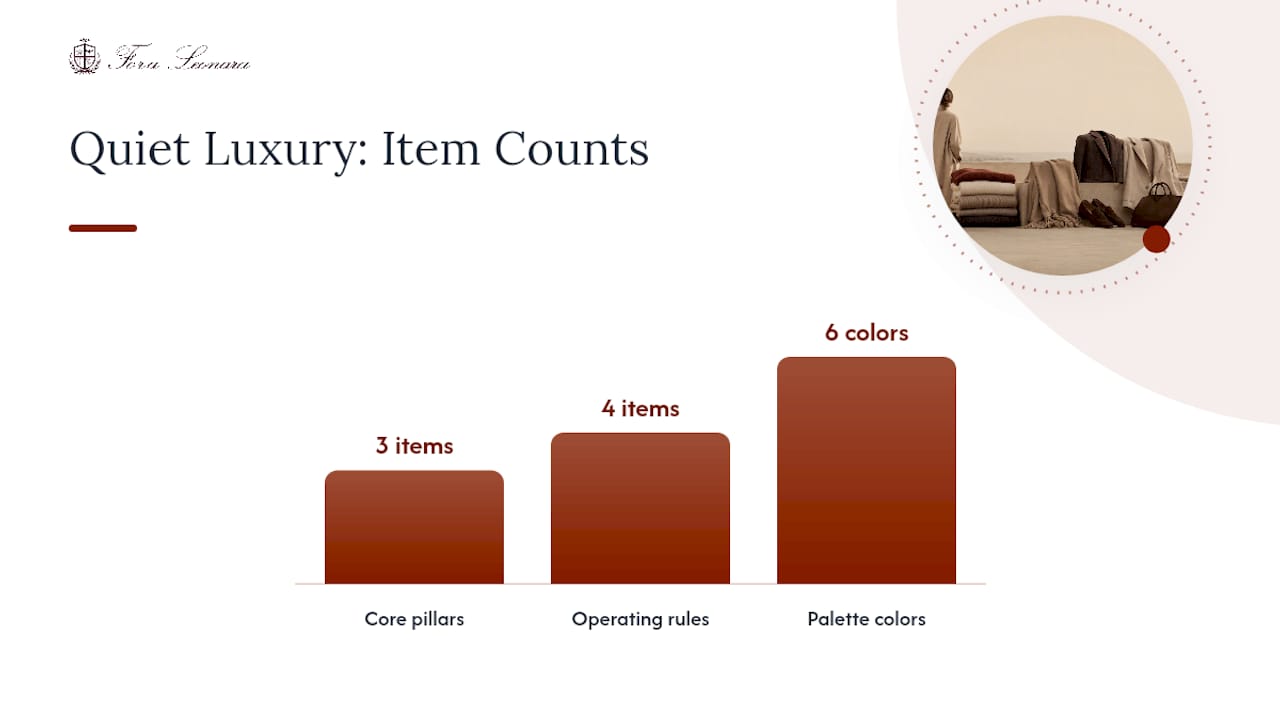
Quiet luxury rests on three pillars: fit, fabric, and restraint. Fit means the shoulders sit flat and the hem breaks in the right place. Fabric means natural fibers that age well instead of pilling after six washes. Restraint means no logos loud enough to read from across the room. Wikipedia’s entry on quiet luxury traces the concept back to related ideas like stealth wealth and the old money aesthetic, but the distinctions matter in practice, not just etymology.
Old money style leans on heritage pieces and family tailors, often literally inherited. Minimalism strips a wardrobe down to as few items as possible, sometimes at the expense of fabric quality. Logomania, the opposite pole entirely, treats a brand’s initials as the entire point of the garment. Quiet luxury borrows the fit discipline of old money, the edited closet of minimalism, and rejects logomania outright.
A practical playbook from Capsule Wardrobe Style boils the whole aesthetic down to four operating rules:
- Dress in tonal palettes rather than high-contrast combinations
- Choose natural fibers over synthetic blends whenever the budget allows
- Prioritize tailored proportions over trend silhouettes
- Keep logos off entirely, including on shoes, bags, and belts
The palette that supports all four rules stays narrow on purpose: camel, cream, navy, charcoal, chocolate brown, and black. Within that range, dressing tonally, say a camel coat over a cream sweater, reads far more expensive than mixing five unrelated colors ever will.
The High-Impact Starter Kit: What to Buy First
Three purchases move the needle faster than anything else in a quiet luxury wardrobe, and the Forbes analysis of the trend points to why: beginners can assemble a convincing version of this look for under $400 by focusing spend on a small number of high-wear items rather than spreading it thin.
- A cashmere or merino sweater. This is the single most cost-effective upgrade in most closets. A low-quality acrylic sweater pills quickly and gets tossed sooner. A higher-quality merino sweater, worn frequently over several years, works out to a lower cost per wear. That is the cost-per-wear logic that separates quiet luxury shopping from bargain shopping.
- A structured leather bag. Look for clean lines, no visible branding, and full-grain leather rather than a coated composite. It anchors both a blazer and a weekend outfit.
- Leather loafers. They dress up jeans and dress down a suit, which makes them the most versatile shoe in the category.
Beyond those three, a navy blazer, a camel overcoat, a white dress shirt, and a pair of tailored wool trousers round out the core rotation. The sweater pairs with the trousers for a client meeting, or with dark denim and the loafers for a weekend errand. The blazer goes over the white shirt for the office, or over a plain tee for dinner. Each piece earns its place by working at least two ways.
How Do You Verify Fabric Quality Before You Buy?
Composition tags tell you almost everything you need to know before a garment ever touches your skin. Cashmere and merino wool drape and insulate; acrylic and polyester blends look similar on a hanger but stiffen and pill fast. Fora Leonara’s guide to sourcing logo-free clothing walks through exactly this kind of label reading, and for suiting specifically, a deeper breakdown of European fabric weights explains how gsm numbers translate to how a jacket actually hangs.
A few checks matter more than others:
- Look for “2-ply” or higher on cashmere labels; single-ply cashmere pills faster and feels thinner.
- Check gsm (grams per square meter) on suiting; higher gsm generally means a heavier, more structured drape.
- Rub the fabric between your fingers. Genuine wool and cashmere have a slight nap; synthetics feel slick or plasticky.
- Hold the garment up to light. Tight, even weaves let almost no light through; loose or uneven weaves do.
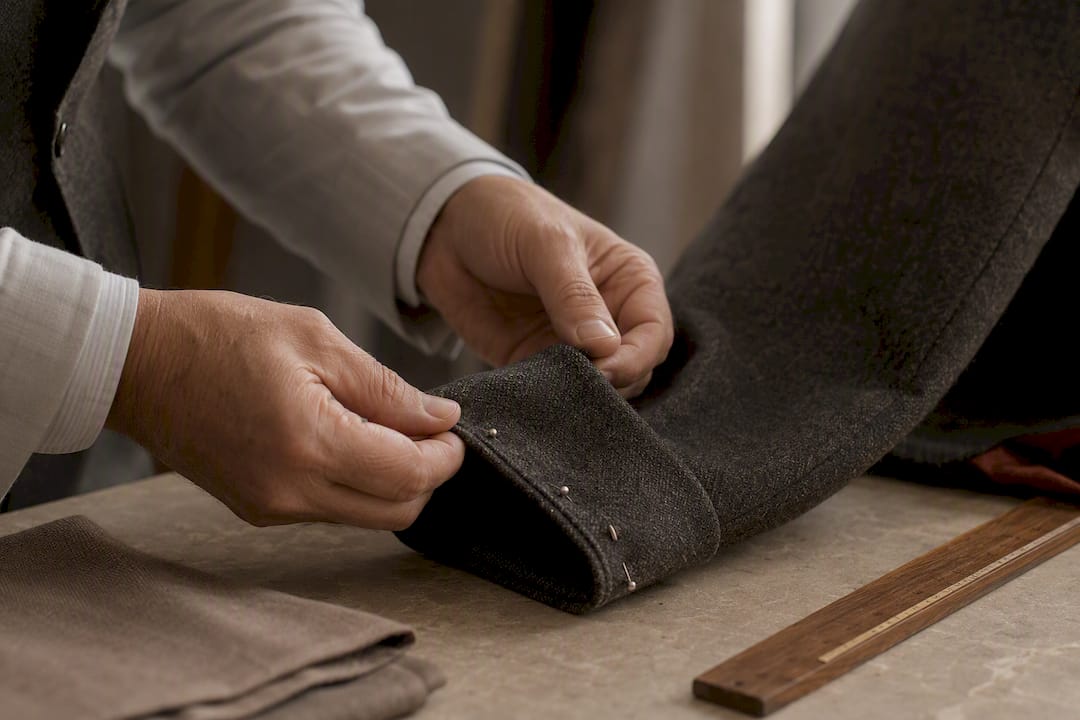
Fit matters as much as fabric, and Real Men Real Style’s guidance on quiet luxury is blunt about the order of operations: shoulders first. A jacket’s shoulder seam has to sit at the natural shoulder point with no pulling or bunching, because no tailor can rebuild shoulder structure without remaking the entire jacket. Once shoulders check out, move to sleeve length (a half inch of shirt cuff should show) and trouser break (a slight break at the shoe, never a full stack of fabric).
Pro Tip: A $30 hem or sleeve adjustment can make a $200 jacket read like a $1,200 one. Spend your tailoring budget there before you spend another dollar on a new garment.
How Do You Build a Quiet-Luxury Capsule on a Budget?
Start with an audit, not a shopping cart. Pull every neutral piece already hanging in your closet, cream, navy, charcoal, camel, black, and set aside anything with a visible logo for three weeks. That blackout period does two things: it forces you to restyle what you already own, and it reveals exactly which gaps in your wardrobe are real versus which are impulse wants.
Once the audit is done, follow a purchase ladder:
- Start with the three-piece starter kit: sweater, bag, loafers, which can be assembled affordably.
- Add the navy blazer and white shirt next, since they multiply the outfits your starter kit can build.
- Invest in the camel coat and tailored trousers once the first two tiers are covered.
- Save the biggest single purchase, a proper wool suit, for last, once you know your body’s fit quirks.
The math behind that order comes down to cost-per-wear, a concept Capsule Wardrobe Style breaks down in detail: divide a garment’s price by how many times you realistically expect to wear it over its usable life.
The gap narrows once you factor in replacement cycles, but the leather loafers and merino sweater still hold their shape and color years past when the cheaper versions would have been thrown out. Fora Leonara’s guide to building a timeless wardrobe walks through this same prioritization for readers building a capsule from scratch.
Styling Formulas You Can Copy Season to Season
Three outfit formulas cover most of a professional’s week. For casual wear, pair the merino sweater with tailored trousers and loafers, no belt buckle logo, no visible brand stitching. For business casual, layer the navy blazer over the white shirt with dark denim or wool trousers. For formal occasions, a single-breasted wool suit in charcoal or navy, worn with the same loafers, carries you from a client dinner to a wedding.
InStyle’s roundup of quiet luxury outfits notes that the same pieces adapt across seasons with small fabric swaps rather than a wardrobe overhaul:
- Swap the wool trousers for lightweight cotton or linen blends in summer, keeping the same silhouette.
- Trade the camel wool coat for a lighter camel trench when temperatures rise.
- Move from leather loafers to suede in warmer months, then back to leather once it cools.
Personality still belongs in this wardrobe. Texture, a ribbed knit instead of a smooth one, does more work than color ever will, and a single muted accent, burgundy or forest green, keeps tonal dressing from tipping into monotony.
Common Mistakes That Turn Quiet Luxury Into a Costume
The biggest trap is what stylists call the “beige uniform”: an entire outfit in one flat tone with zero texture variation, which reads cheap rather than considered. Mixing a ribbed knit with a smooth wool trouser and a grained leather shoe fixes this instantly, since texture guidance from InStyle makes clear that texture carries as much weight as color in this aesthetic.
Watch for these red flags when shopping, especially online:
- Vague composition tags like “wool blend” with no percentage listed.
- Stock photos showing visible pilling or uneven seams zoomed in.
- Hardware that is oversized, shiny, or embossed with a logo in disguise.
- Reviews mentioning the item “shrunk” or “lost shape” after one wash.
If a piece already fits poorly, a tailor can usually fix sleeve length and hem in under a week for less than $40. If a bag or belt has a subtle logo you no longer want in rotation, simply retire it rather than replacing hardware, which rarely looks clean.
How Fora Leonara Approaches Quiet Luxury Craftsmanship
Some brands source materials through their own European Union ateliers, which allows quality control to happen at the fabric stage, not after a garment ships. That sourcing model is why the brand’s pieces lean toward natural fibers and away from synthetic shortcuts.
Certain clothing lines apply this directly, featuring structured shoulders, restrained cuts, and zero visible branding, built for professionals who want a suit that reads as deliberate rather than dressed up.
- Store cashmere folded, never on a hanger, to avoid shoulder stretch.
- Rotate wool suits across at least two days between wears to let fibers recover.
- Use a garment steamer instead of an iron on wool to avoid shine marks.
Ready to Build Your Own Quiet Luxury Capsule?
Some ready-to-wear collections are built around the three-pillar approach this article has walked through: natural materials sourced from European ateliers, tailoring cut for a clean shoulder line, and not a single visible logo across the range.

If you would rather skip the trial-and-error of building a capsule piece by piece, The Wall Street Reserve offers pre-edited combinations already matched for tonal dressing and fabric quality, so the guesswork of pairing a sweater to the right trouser weight is already done. For a single, high-quality starting point rather than a full capsule, the Timeless Elegance – Set in Stone is built as a direct, ready-to-wear entry into the aesthetic. Browse the full ready-to-wear category or book a virtual atelier appointment to talk through fit before you commit to a first purchase.
Sources
For deeper detail on the fabric science, tailoring priorities, and cost-per-wear math referenced above, see Real Men Real Style on tailoring priorities, Capsule Wardrobe Style’s full playbook, and InStyle’s seasonal outfit guide. For subtle finishing touches beyond clothing, Aromatick’s guide to buying fragrance smarter applies the same restraint principle to scent.
- Forbes: 2 things your brand can learn from the quiet luxury trend
- Capsule Wardrobe Style: Quiet luxury style playbook
- Real Men Real Style: Quiet luxury for men
- Wikipedia: Quiet luxury
FAQ
What Style Is Quiet Luxury?
Quiet luxury is a wardrobe philosophy built on high-quality natural materials, precise tailoring, and the deliberate absence of visible logos or branding.
What Is Considered Quiet Luxury?
Any garment that prioritizes fabric quality and fit over branding counts, from a well-cut wool suit to a plain cashmere sweater with no visible label on the outside.
Which Brands Are Considered Quiet Luxury?
Brands that source high-quality materials and skip visible branding fall into this category. This includes some luxury fashion houses that build their lines around exactly that standard.
What Is the 3-3-3 Rule for Clothes?
The 3-3-3 rule is a capsule wardrobe method where you choose 3 tops, 3 bottoms, and 3 shoes to wear on rotation for three months, which works well alongside quiet luxury’s emphasis on fewer, higher-quality pieces.
