

Super 120s means a wool fiber with a maximum mean diameter of 17.75 micrometers, measured under International Wool Textile Organisation standards. It sits squarely in the range most tailoring authorities recommend for suits worn several days a week, offering a softer hand than coarser wools without the fragility that comes with the very finest counts. For a working wardrobe, it is the grade most people should actually buy.
TL;DR:
- Super 120s wool has a maximum fiber diameter of 17.75 micrometers, making it ideal for regular wear due to its softness and durability trade-offs.
- The “Super 120s” label must specify pure new wool, as lower percentages of wool or blends are allowed under different labels, affecting quality and perception.
- Fabrics with a higher Super number are more delicate and suited for occasion wear, while Super 100s suits are better for daily use and longevity.
- The construction quality, such as canvassing and stitch density, significantly influences how well a Super 120s suit maintains its shape and withstands wear.
- Proper care involves rotating suits, brushing, limited dry cleaning, and careful packing to preserve the fabric’s condition over years of regular use.
Table of Contents
- What “Super 120s” Actually Measures
- How Super 120s Wears in Real Life
- Super 100s vs 120s vs 130s vs 150s: Which One Fits Your Closet?
- What to Check Before Buying Super 120s
- Caring for a Super 120s Suit So It Lasts
- Where to Find Genuine Super 120s Tailoring
- Sources
- FAQ
What “Super 120s” Actually Measures
The number on a wool label is not a marketing flourish. It is a fineness rating tied directly to fiber diameter, and it follows a fixed scale set by the IWTO. Every 10-point jump in the “S” number corresponds to a 0.5 micrometer drop in maximum mean fiber diameter. Super 100s tops out at 18.75 microns, Super 110s at 18.25, and Super 120s lands at exactly 17.75 micrometers.
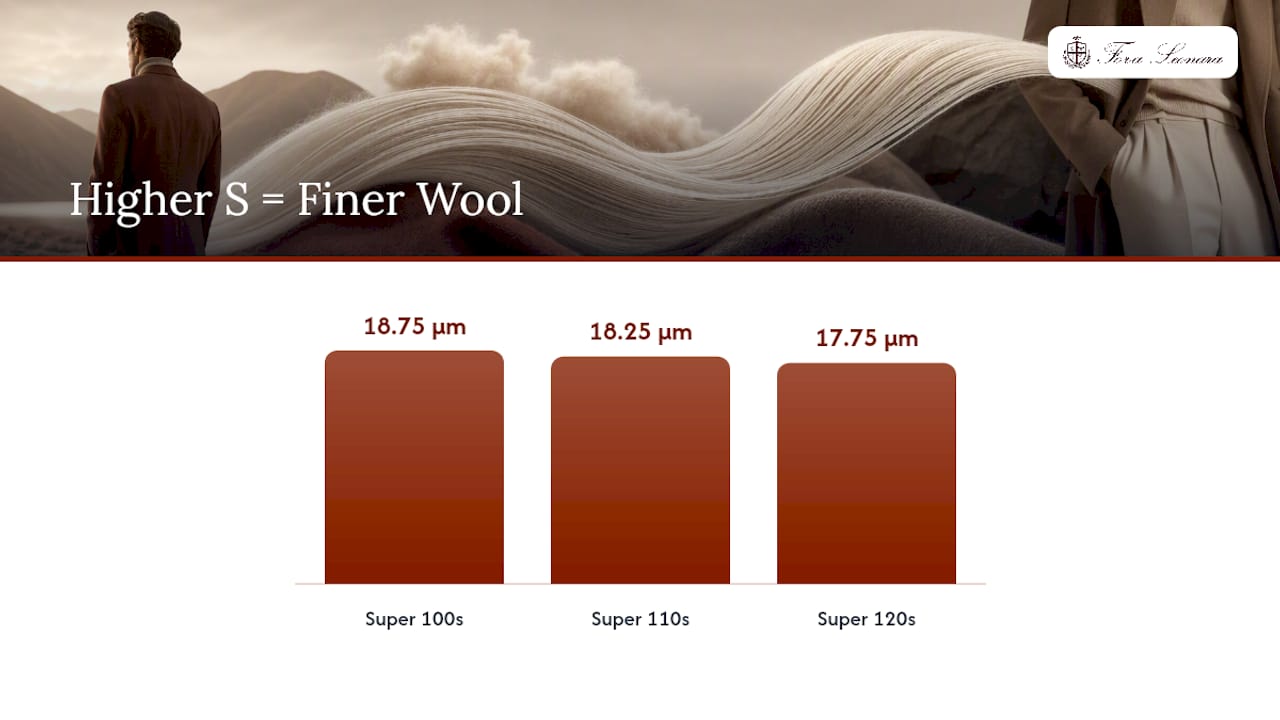
That measurement is not taken on raw fleece fresh off a sheep’s back. The IWTO-08 projection microscope method measures diameter on the finished cloth, which is why mill quality and finishing technique can shift how a “Super 120s” fabric from one producer feels compared to another carrying the identical number.
There is also a labeling distinction worth knowing before you shop:
- “Super 120s” specifically requires pure new wool, per the IWTO Fabric Labelling Code of Practice.
- A bare “120s” label, without the word “Super,” can legally describe a blend containing as little as 45% wool.
- In the United States, the Wool Products Labeling Act) governs how fabrics are marketed, and its provisions were updated to align with IWTO’s Super S definitions for fabrics manufactured from 2007 forward.
- Small allowances for elastane or decorative trim yarns are permitted without disqualifying the “Super” designation.
Skipping that one word on a label is not a technicality. It is the difference between pure new wool and a fabric that might be a quarter polyester.
How Super 120s Wears in Real Life
Fiber diameter determines softness more than almost any other variable in a wool fabric. Finer fibers bend more easily against skin, which is why Super 120s drapes with a cleaner line and feels noticeably softer against a dress shirt than a coarser Super 80s or 90s wool. That fineness also lets the fabric take a crisper crease and hold a silhouette without the stiffness of heavier, rougher cloth.
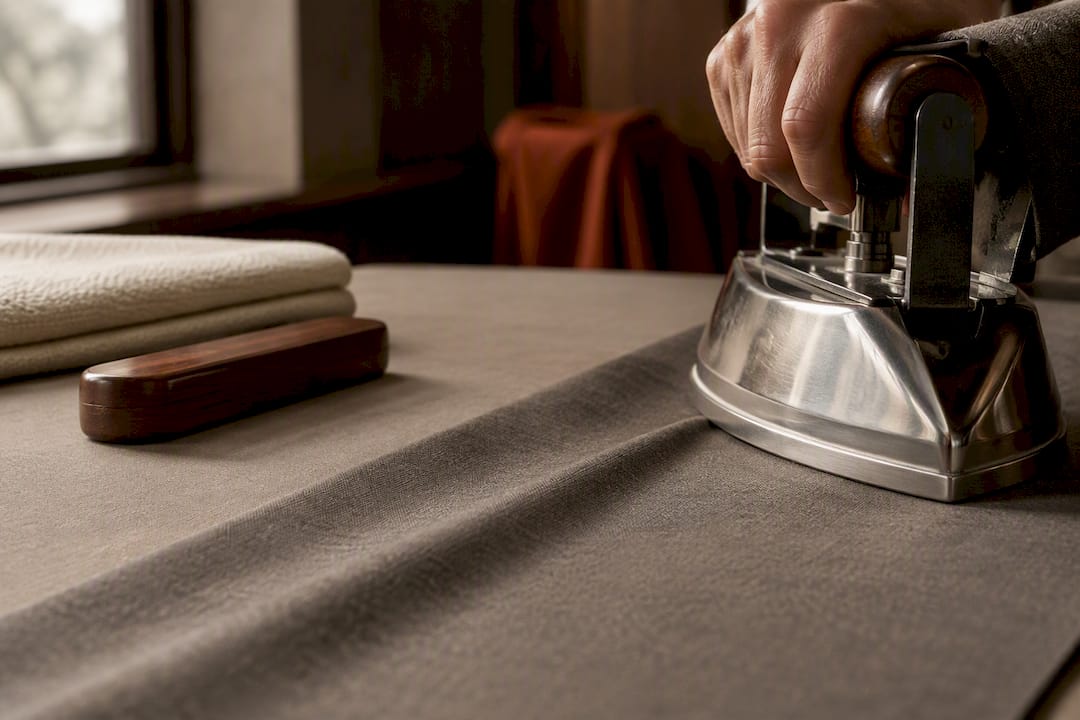
Durability tells a different story. As fiber diameter decreases, individual strands become more delicate, which raises the risk of pilling and abrasion over thousands of wears. Super 120s sits in the range where that trade-off is manageable for regular use. Push much higher and the fabric starts to demand a gentler wear schedule.
Weight and weave matter just as much as the Super number itself, since fabric weight and construction, not fineness alone, determine warmth and structure:
- Lightweight worsted plains suit warm climates and year round office wear.
- Heavier hopsack weaves in a similar Super grade add texture and breathability, often chosen for transitional seasons.
- Worsted twills of higher weight tend to hold their shape better under a briefcase strap or daily commute, extending the garment’s working life.
Pro Tip: If you travel often for work, ask for a fabric weight closer to 9 or 10 ounces in your Super 120s. The extra body resists wrinkling far better than an ultralight version of the same fineness.
Super 100s vs 120s vs 130s vs 150s: Which One Fits Your Closet?
Higher Super numbers do not automatically mean a better suit. They mean a finer fiber, and fineness trades against resilience in a fairly predictable pattern once you get past the 120s mark.
- Super 100s costs less and shrugs off daily wear, abrasion, and travel better than any finer grade. It suits a suit you plan to wear hard, week after week, for years.
- Super 120s balances softness with enough resilience for regular rotation. It handles the five-day office week without demanding the delicate treatment finer wools require.
- Super 130s feels noticeably softer and drapes with more fluidity, but tailoring authorities generally recommend saving it for suits worn less often, since the finer fiber is more prone to wear.
- Super 150s and beyond belong to occasion wear: black-tie events, formal ceremonies, or pieces you expect to wear a handful of times a year rather than fifty.
The “higher number equals better suit” assumption trips up a lot of first-time buyers. A well-constructed Super 100s from a good mill will outlast and outperform a poorly finished Super 130s for someone who wears a suit five days a week. Fit, mill origin, and construction quality decide how a suit performs far more than the number on the tag.
What to Check Before Buying Super 120s
Reading the label correctly is the first line of defense against paying a premium for a blend. Look for the word “Super” printed alongside the number, since “120s” alone permits wool content as low as 45%. Genuine Super 120s should read as pure new wool, with only minor allowances for elastane or trim.
Construction determines whether that fine wool actually holds its shape over years of wear:
- Canvassing: full or half-canvas construction lets the jacket mold to your body over time; fused construction does not.
- Stitch density: tighter, more consistent stitching around lapels and pockets signals careful workmanship.
- Shoulder construction: a structured shoulder holds its line longer than a soft, unpadded shoulder under daily wear.
- Lining: breathable lining materials reduce heat buildup and extend comfort through a full workday.
Statistic Callout: Every 10-point step on the Super scale shifts maximum mean fiber diameter by exactly 0.5 micrometers, which is why the gap between a Super 100s and Super 120s suit in hand-feel is real but subtle, not dramatic.
Price ranges vary widely by production method. Off-the-rack Super 120s suits from established makers often start in the mid hundreds of dollars, made-to-measure options climb from there depending on fabric mill and finishing, and full bespoke construction commands the highest prices due to hand tailoring time. Reading about suit construction fundamentals before you shop helps you judge whether a price reflects genuine craftsmanship or just a fabric label.
Caring for a Super 120s Suit So It Lasts
A finer wool rewards a gentler routine, and the payoff is a suit that still looks sharp after years of regular wear.
- Rotate garments. Never wear the same suit two days running. Wool fibers need at least a day to release moisture and recover their shape.
- Air and brush after each wear. Hang the jacket and trousers separately overnight before returning them to the closet, and brush away surface dust with a natural-bristle clothes brush.
- Limit dry cleaning. Frequent solvent cleaning breaks down wool fibers faster than the wear itself. Steam and spot-treat instead, and reserve dry cleaning for a few times a year.
- Store on shaped hangers. A curved wooden hanger preserves shoulder shape far better than a wire one, and a breathable garment bag protects against dust without trapping moisture.
Pro Tip: When packing for travel, roll trousers loosely inside a garment bag rather than folding them flat. Folding creates sharp creases that set permanently in finer wool over a long flight.
Where to Find Genuine Super 120s Tailoring
Some manufacturers source fine wool and control production in European factories, which can help ensure the fabric grade on a garment tag corresponds closely to the material quality. That kind of vertical control matters more with Super 120s than with coarser wools, since finish quality has an outsized effect on how a fine fiber performs over years of wear.

Suits built from Super 120s wool appear throughout Fora Leonara’s ready-to-wear collection, including pieces from The Wall Street Reserve, the house’s signature line built for professionals who want investment-grade tailoring without a visible logo anywhere on the garment. If you are unsure which fabric weight or construction suits your climate and schedule, The Atelier offers personal styling appointments where fit and fabric get discussed together, not treated as separate decisions. A Super 120s suit only performs as well as its construction allows, and that is exactly what a fitting conversation is for. Browse the current suit collection or book time with The Atelier to start there.
Sources
- IWTO
- Wool Suit Fabric “Super” Numbers Explained
- Super 120s Wool Explained: What the Number on the Label Actually Means | Search For Suits
FAQ
Is Super 120s Wool Good for a Work Suit?
Yes. Super 120s is widely considered a sweet spot for daily professional wear, balancing a soft hand with enough durability to survive a regular office rotation without excessive pilling or wear.
What Is the Highest Super Number for Wool?
Commercially, Super numbers extend well beyond 150s, though grades above 150s are rare and extremely delicate. Fabrics at that fineness are reserved almost exclusively for occasion wear rather than everyday garments.
What Are the Key Differences Between Super 100s and Super 120s Wool?
Super 100s has a maximum mean fiber diameter of 18.75 microns, while Super 120s measures 17.75 microns, making it noticeably softer to the touch. Super 100s tends to hold up better under frequent wear, while Super 120s offers a finer drape at a slightly lower durability margin.
What Is the Price of a Super 120s Wool Suit?
Prices vary by construction method and mill origin rather than the Super number alone, with off-the-rack options typically costing less than made-to-measure or bespoke versions. Current pricing for Fora Leonara’s Super 120s pieces is available on its product pages.
