

For warm, wearable winter dresses, choose wool and worsted blends, cashmere blends, heavy knits or ponte, velvet, flannel, or lined silk blends. Each trades warmth against drape differently, and wearing them without the right lining usually reduces their comfort. A well-chosen lining and a competent tailor often do more for comfort than the fiber printed on the tag.
TL;DR:
- Choosing the right lining, such as silk or cupro, can significantly improve a wool or velvet dress’s warmth and comfort without additional bulk.
- Worsted wool and fabric blends like cashmere or alpaca provide superior warmth and structure, especially for tailored or fitted winter dresses.
- Fabrics with stretch, like ponte or wool-spandex blends, better suit slim or body-con dresses compared to rigid woven wool.
- Heavy, piled, or textured fabrics require specialized sewing techniques, such as using a heavier needle and careful cutting, to avoid puckering and shifting.
- Proper care, including dry cleaning or gentle washing based on fiber type, extends a winter dress’s lifespan and maintains its insulating properties.
Table of Contents
- Winter Dress Fabrics: Pros, Cons, and Best Uses
- How to Choose the Right Fabric for Your Dress
- Why Lining Determines How Warm a Dress Actually Feels
- Sewing Thick, Piled, and Slippery Winter Fabrics
- Fora Leonara’s Approach to Winter Fabric Selection
- Caring for Winter Dress Fabrics Season After Season
- Do Winter Dress Fabrics Actually Wick Moisture or Resist Water?
- Find Your Winter Dress at Fora Leonara
- Sources
- FAQ
Winter Dress Fabrics: Pros, Cons, and Best Uses
Wool sits at the top of most fabric-performance rankings for a reason. Thermal-conductivity comparisons consistently rank wool and wool-blend constructions among the warmest garment materials available for clothing, and worsted wool in particular gives a sheath or A-line dress a crisp, tailored line instead of a bulky one. Woolen spun cloth, by contrast, has more loft and traps more air, which makes it warmer per ounce but harder to fit close to the body.
Cashmere earns its price tag through weight-to-warmth ratio rather than raw insulation. It’s lightweight yet delivers excellent insulation, which is why it shows up in knitwear and draped dress silhouettes where a heavier wool would feel stiff. Merino wool solves a different problem: it’s prized for softness and lightweight warmth, making it suitable for close-to-skin layers and knit dresses where itch would otherwise be a dealbreaker. Alpaca is worth knowing about too. It’s a warm natural fiber with a different hand and loft than sheep’s wool, and it can deliver strong insulation while staying lighter on the body, an underrated option for dresses that need warmth without visual bulk.
Beyond the fine fibers, Mood Fabrics’ seasonal catalog reflects what most experienced sewists already know: wool, fleece, cashmere, tweed, corduroy, velvet, and flannel all perform well for winter garments, dresses included. Here’s how they break down by use case:
- Tweed: structured, textured, best for fitted or A-line dresses with minimal drape requirements; can be scratchy without a lining.
- Velvet: heavy drape, low stretch, ideal for eveningwear; shows every pin mark, so handle carefully during construction.
- Corduroy: casual warmth with visible ridges (wale), works for shift dresses and daytime pieces, forgiving of imperfect tailoring.
- Flannel: brushed for softness, moderate warmth, good for shirt-dress silhouettes and relaxed fits.
- Heavy knits and ponte: built-in stretch, drapes close to the body, best for fitted or bodycon winter dresses.
Ponte and other double-knits deserve special mention because they solve the stretch problem outright. Their construction delivers warmth plus stretch, which is exactly what a slim, fitted winter dress needs and what a woven wool simply cannot provide.
Wool-synthetic blends are the pragmatic middle ground. A wool-acrylic or wool-poly blend costs less, machine-washes without drama, and resists wrinkling, though it typically breathes less well than a pure natural fiber. If sustainability matters to you, prioritize responsibly sourced merino, cashmere, or alpaca over synthetic-heavy blends. The manufacturing behind natural fibers generally carries a lighter environmental footprint than petroleum-based synthetics, though sourcing transparency varies widely by brand.
How to Choose the Right Fabric for Your Dress
Start with the silhouette, not the fiber. A structured sheath needs a fabric with body and minimal stretch, like worsted wool or heavy cotton twill. A close-fitting dress that needs to move with you calls for ponte or a wool-spandex blend. Drapey, bias-cut styles want something with fluidity, like a lined wool crepe or a silk-wool blend.
- Match fabric weight to silhouette. Structured shapes want worsted or twill; fluid shapes want crepe or fine wool jersey.
- Decide how much stretch you need. If the pattern is fitted through the waist or hip, knits or ponte will fit better than a rigid weave.
- Think about where you’ll wear it. Lighter wool with a warm lining works for indoor events; heavier wool or a layered construction suits outdoor wear in real cold.
- Set your budget and care tolerance. Natural fibers cost more upfront but often outperform on warmth and longevity; blends trade some of that performance for machine-washability and a lower price.
Pro Tip: Thickness and lining usually do more for warmth than the fiber content itself. A mid-weight wool with a proper lining will often outperform a heavy, unlined fabric in actual cold.
If you’re buying rather than sewing, the same logic applies when you’re browsing ready-to-wear collections for a finished dress. Check the lining before the outer fabric.
Why Lining Determines How Warm a Dress Actually Feels
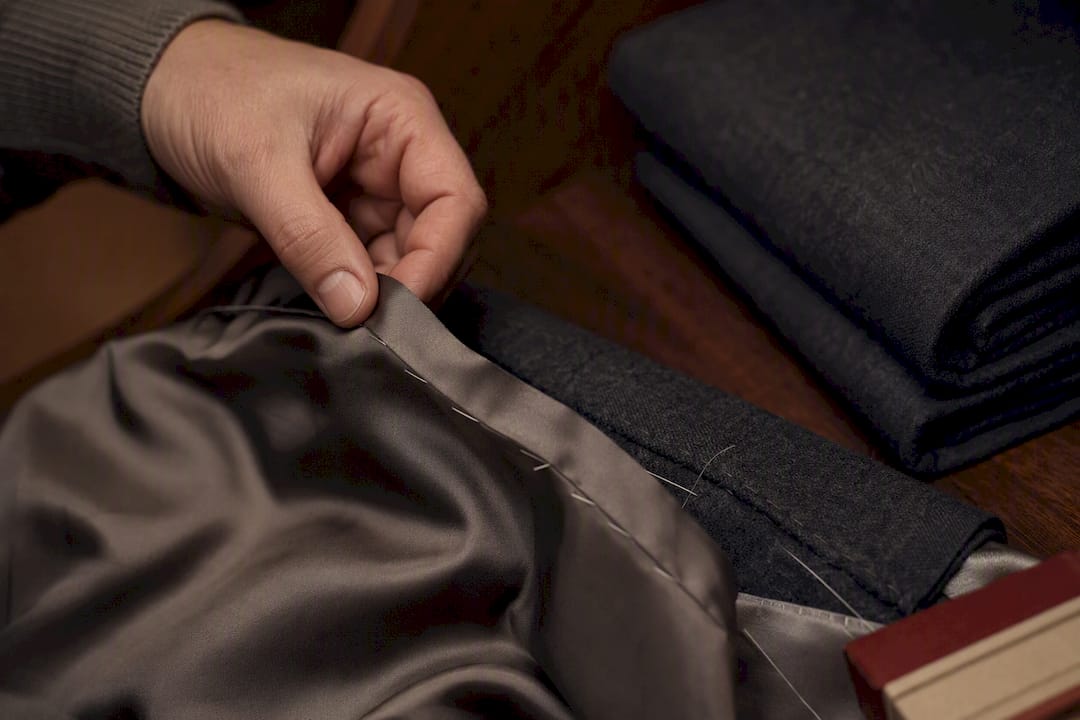
Lining does more for thermal comfort than most people assume. It’s what touches your skin, so it controls moisture and clamminess, and moving between a cold sidewalk and an overheated office is where a bad lining shows itself fastest. Silk and cupro linings manage moisture and reduce clamminess far better than basic polyester when you’re shifting between temperatures, which is exactly why luxury garments tend to favor cupro blends over synthetic linings.
- Silk lining: best hand-feel, breathable, higher cost, dry-clean only in most cases.
- Cupro lining: silk-like drape and breathability at a lower price, biodegradable, good for structured dresses.
- Polyester lining: budget-friendly, durable, but traps moisture and can feel clammy against skin.
For extra insulation without adding bulk, a thin quilted lining or a sewn-in fleece panel across the back and torso works better than doubling up the outer fabric. Keep insulation away from the neckline and sleeve caps, where bulk shows fastest and interfacing should be used sparingly.
Pro Tip: A detachable lining, basted in rather than sewn permanently, lets you wear the same dress in October and January without owning two garments.
Sewing Thick, Piled, and Slippery Winter Fabrics
Heavy or piled fabrics punish careless technique, but a few adjustments fix most problems. Use a heavier needle (90/14 or 100/16) and a walking foot or dual-feed system so thick layers move through the machine evenly instead of shifting. For velvet and corduroy, cut a single layer at a time and mark pattern pieces with chalk on the reverse side to keep the nap running in one direction, since mismatched pile reads as a mistake even when the seams are perfect.
- Grade seam allowances (trim each layer to a different width) to eliminate ridges under lightweight linings.
- Clip curves and corners before pressing to avoid puckering on bulky seams.
- Lengthen your stitch slightly on thick wool or velvet to reduce puckering and skipped stitches.
- Staystitch necklines and armholes before fitting, since heavy fabric distorts easily off-grain.
Thick or textured fabric often hides small sewing errors, which is forgiving for beginners but no excuse for skipping the walking foot on a slippery velvet.
Fora Leonara’s Approach to Winter Fabric Selection
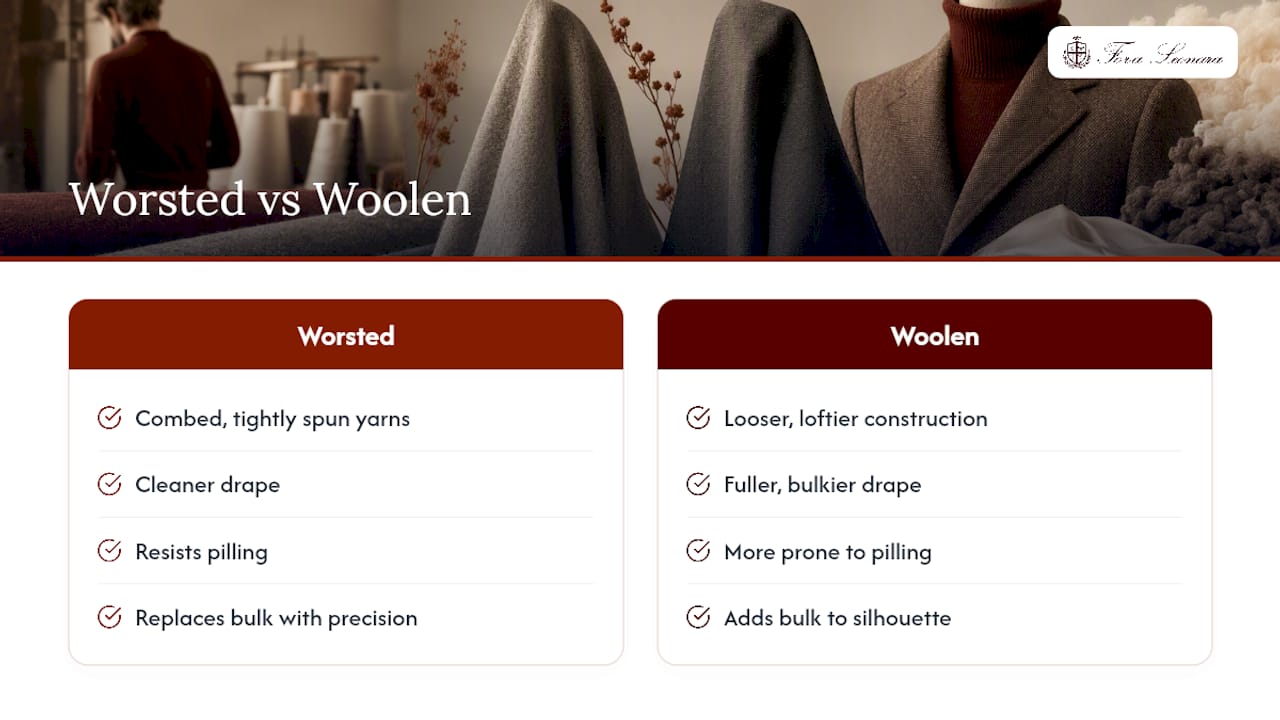
Fora Leonara sources its wool and knitwear through its own European atelier, a discipline founder Rafael Zard built the house around rather than outsourcing to whichever mill offers the lowest price. That sourcing control matters most in the distinction between worsted and woolen construction: worsted yarns, combed and tightly spun, give a cleaner drape and resist pilling, which is why Fora Leonara favors worsted wool for tailored dress silhouettes over the looser, loftier woolen alternative. You can see that principle applied in the Gray Wool Refined Coat, where a clean worsted line replaces bulk with precision. The same logic governs every dress in the house’s ready-to-wear lineup.
Caring for Winter Dress Fabrics Season After Season
Fiber determines the care routine, and getting it wrong shortens a garment’s life fast. Dry-clean wool, cashmere, and velvet unless the label states otherwise; hand-wash merino knits in cool water with a wool-safe detergent; save the gentle machine cycle for sturdy ponte and synthetic blends; spot-clean flannel between full washes to avoid overworking the nap.
- Store wool and cashmere in breathable garment bags, never sealed plastic, to prevent moisture buildup.
- Use cedar blocks or lavender sachets instead of mothballs to deter moths without the smell.
- Fold heavy knits rather than hanging them to avoid stretching at the shoulders.
- Reline a dress once the interior fabric thins or pills; take structural repairs like shifted seams to a tailor rather than patching them yourself.
Do Winter Dress Fabrics Actually Wick Moisture or Resist Water?
Most classic winter dress fabrics were not engineered for moisture-wicking the way athletic textiles are, but fiber choice still changes how a dress performs against sweat and light precipitation. Wool is the exception worth knowing: it absorbs moisture vapor from skin and releases it slowly, which is part of why wool-blend constructions rank among the warmest, most practical cold-weather materials even in damp conditions. Cotton and rayon blends do the opposite, holding moisture against the skin and feeling cold once wet.
Water resistance is a separate issue from wicking. None of the fabrics in this guide are truly waterproof, and treating a wool or velvet dress with a spray-on water repellent can stiffen the hand and dull the finish, so it’s rarely worth doing on a fashion dress meant for indoor wear. For genuine outdoor exposure, a wool coat or a treated outer layer worn over the dress does the job better than trying to weatherproof the dress fabric itself. Wool’s natural lanolin content also gives it modest water resistance untreated, letting light drizzle bead rather than soak in immediately, though sustained rain will eventually work through any woven wool.
Where moisture management matters most is indoors, not outdoors. A silk or cupro lining pulls sweat away from skin far more effectively than polyester, which is the practical reason those linings matter more for comfort than whatever water-resistance claims appear on the outer fabric’s label.
Find Your Winter Dress at Fora Leonara
Everything in this guide, worsted wool for clean structure, cashmere for lightweight warmth, cupro linings for comfort against skin, is the exact reasoning Fora Leonara applies to its own ready-to-wear dresses. Rather than sorting through bolt after bolt of fabric or guessing whether a blend will hold its shape after one dry-cleaning cycle, you can shop pieces already built to those standards.

Fora Leonara’s dresses come from the same European atelier and sourcing discipline behind The Wall Street Reserve, the house’s signature line for understated, investment-grade dressing. No loud branding, no fast-fashion fiber shortcuts, just tailored construction meant to last multiple winters rather than one season. If you’d rather see the fabric principles applied to a finished garment than start from a bolt of cloth, browse the women’s collection for dresses built with the worsted wool, cashmere, and cupro-lined construction covered above, and check current sizing and availability before the season’s pieces sell through.
Sources
- Cashmere wool - Wikipedia
- Fall & Winter Fabrics by the Yard — Mood Fabrics
- Fabrics that retain heat — Icewear
FAQ
What are the best types of fabrics to wear in winter?
Wool and worsted blends, cashmere, heavy knits or ponte, velvet, flannel, and lined silk blends perform best for winter dresses, balancing warmth against drape depending on the silhouette.
Which fabric is best for winter for ladies?
For most women’s winter dresses, worsted wool or a wool-cashmere blend offers the best combination of warmth, structure, and clean drape, especially when paired with a cupro or silk lining.
What is the warmest fabric to wear in winter?
Wool and wool-blend constructions consistently rank among the warmest garment materials available, with cashmere and alpaca offering comparable warmth at a lighter weight.
What kind of fabric is suitable for the cold season?
Natural fibers like wool, cashmere, and alpaca suit cold weather best because they insulate while managing moisture, though heavy knits like ponte work well when a dress also needs stretch and fit.
